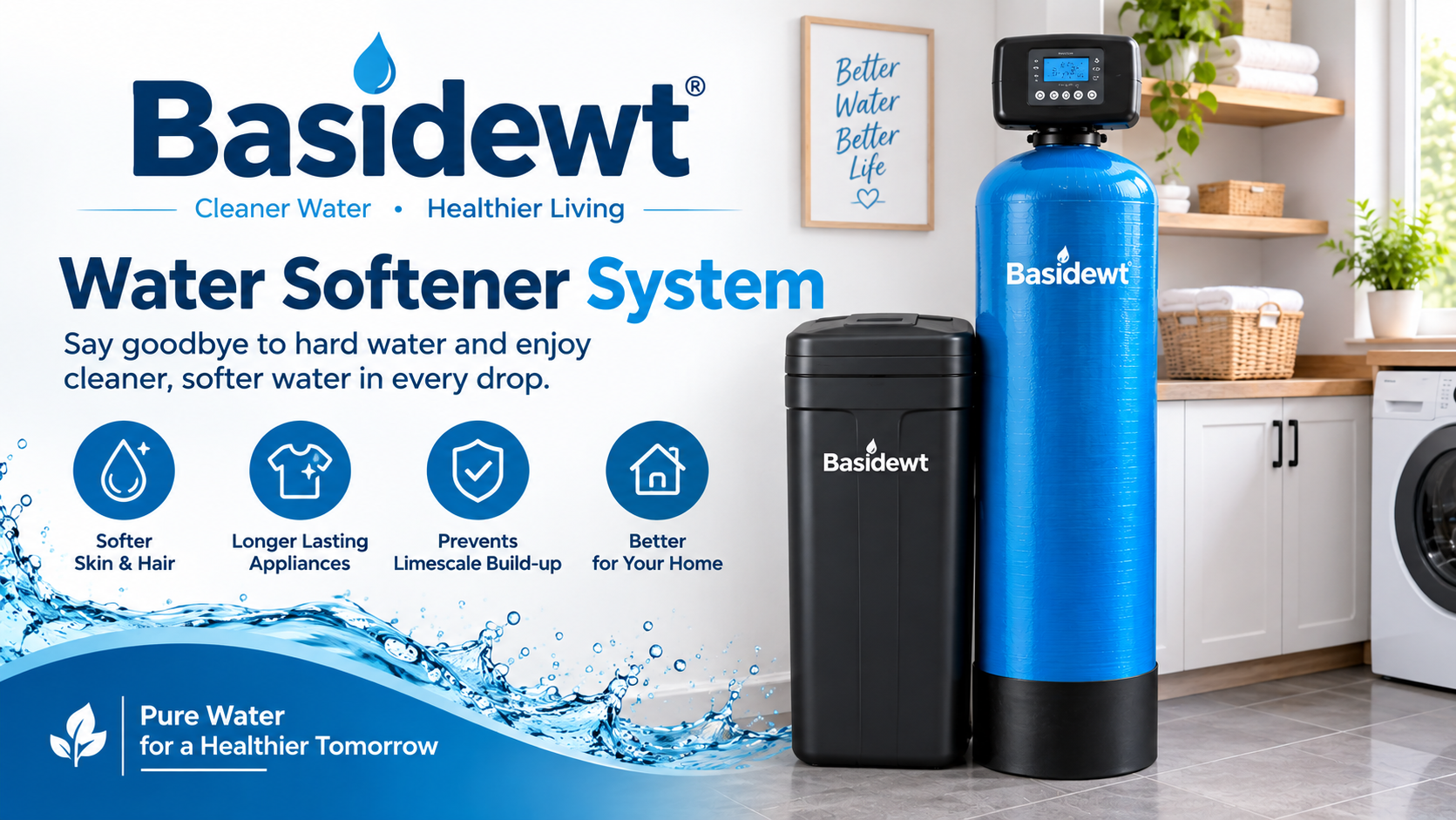
Hard water is a common household concern that can influence cleaning, plumbing, appliances, and daily comfort. Although water containing calcium and magnesium is generally suitable for many ordinary uses, excessive mineral content can create visible deposits and make routine cleaning more demanding. Homeowners who understand the causes of hardness and the available treatment methods can make better decisions about protecting their property and improving everyday water use.
Understanding What Makes Water Hard
Water becomes hard when it collects dissolved minerals while moving through underground formations. Calcium and magnesium are the primary minerals associated with hardness. The amount present depends largely on the local geology and the source of the household water supply.
Hardness is often noticed through white residue around faucets, showerheads, sinks, and glass surfaces. These deposits appear when water evaporates and leaves minerals behind. If buildup is allowed to continue, removing it may require more frequent cleaning.
Hard water can also affect the way soaps and detergents behave. Mineral reactions may reduce lather and leave residue on surfaces. Some homeowners respond by using more cleaning products, although treating the underlying water condition may be a more practical long-term approach.
A water softener system can reduce calcium and magnesium levels through an ion exchange process. Before choosing one, however, homeowners should determine whether hardness is the main issue affecting their water.
Testing Water for Better Decisions
Water testing is one of the most useful steps before purchasing treatment equipment. A basic test can identify hardness, while a comprehensive analysis can provide information about other water characteristics.
Private wells may require broader testing because their water chemistry can vary considerably. Iron, manganese, sediment, pH, and other factors can influence the selection and performance of treatment equipment.
Municipal water supplies may also benefit from testing when persistent mineral deposits or other unusual characteristics are noticed. Testing helps homeowners identify the actual problem instead of selecting equipment based on assumptions.
Understanding Hardness Measurements
Water hardness may be expressed in grains per gallon or milligrams per liter. Knowing the measurement used by a test makes it easier to compare results with treatment equipment specifications.
The hardness concentration should be considered alongside daily household water consumption. Higher water usage generally means greater treatment demand.
How Modern Softening Technology Functions
Many residential treatment units rely on ion exchange resin. Water enters a tank containing resin beads that attract calcium and magnesium ions. As water moves through the resin, hardness minerals are captured.
Eventually, the resin reaches its treatment capacity. Regeneration restores the resin by using a concentrated solution to remove accumulated hardness minerals. The system then rinses the resin before returning to normal service.
A water softener system may include automatic controls that manage regeneration according to household water usage or programmed settings. Modern designs can help reduce unnecessary treatment cycles when properly configured.
The Purpose of Regeneration
Regeneration is essential for restoring treatment capacity. Its frequency depends on water hardness, household consumption, resin capacity, and equipment programming.
Incorrect settings can lead to inefficient operation. Excessive regeneration may increase salt and water consumption, while insufficient regeneration can allow hard water to pass through.
Selecting the Right Capacity
Equipment capacity should be matched to the home’s actual needs. Household size is useful for estimating demand, but it should not be the only consideration.
Daily water usage, number of bathrooms, appliance consumption, and hardness level all contribute to the required capacity. A larger household may need more capacity than a smaller property, especially when water usage is consistently high.
The capacity of a water softener system should provide adequate treatment between regeneration cycles without creating unnecessary resource consumption.
Planning for Future Changes
Household water needs can change over time. Families may grow, occupants may change, or water consumption may increase because of new appliances or lifestyle changes.
Selecting equipment with reasonable flexibility can help accommodate moderate future changes. However, excessive oversizing may also be inefficient.
Preparing for Proper Installation
The installation area should provide enough space for equipment and allow easy access for maintenance. Many systems are installed near the home’s primary water entry point.
Drainage must be considered because regeneration wastewater requires an appropriate discharge connection. Some equipment also requires electrical access for automatic controls.
A water softener system should be installed according to manufacturer instructions and local plumbing requirements. Proper connections and positioning can help reduce leaks and operating difficulties.
Maintaining Equipment Over Time
Regular maintenance helps preserve treatment performance. Salt-based systems require monitoring of the salt supply and periodic inspection of the brine tank.
Homeowners should also watch for visible leaks and unusual operating behavior. Equipment settings may need adjustment if household water use changes significantly.
A water softener system should not be ignored after installation. Routine checks can identify developing problems before they become more expensive or disruptive.
Responding to Performance Changes
If mineral spots return or water begins behaving differently, homeowners should investigate. Possible causes include an empty salt supply, incorrect settings, high water demand, mechanical problems, or changes in water chemistry.
Simple checks may resolve minor issues. Persistent problems may require professional service or further water testing.
Improving Daily Operating Efficiency
Efficient treatment begins with appropriate sizing and programming. Systems that regenerate according to actual water consumption may avoid unnecessary cycles compared with fixed schedules.
Water conservation can also reduce treatment demand. Repairing leaks, using appliances efficiently, and avoiding unnecessary water consumption can lower the amount of water processed by treatment equipment.
A water softener system should be configured according to actual household conditions rather than generic assumptions. Efficient settings can support both performance and resource conservation.
Combining Softening With Filtration
Hardness is only one potential water quality issue. Some homes may also have sediment, iron, odors, chlorine, or other characteristics requiring specialized treatment.
Filtration and softening can sometimes work together. Sediment filtration can remove particles, while carbon filtration may help address certain taste and odor concerns. Other conditions may require more specialized treatment.
A water softener system should therefore be selected as part of an overall water quality strategy when multiple concerns exist. Testing should guide the choice of additional equipment.
Protecting Plumbing and Appliances
Hardness minerals can accumulate inside plumbing and appliances. Equipment that heats water can be especially susceptible to scale formation.
Reducing excessive hardness can help manage mineral deposits in suitable household applications. Faucets, showerheads, sinks, and other fixtures may also be easier to maintain when less mineral residue forms.
A water softener system can contribute to this protection by reducing hardness before treated water reaches household fixtures and equipment. Regular appliance maintenance remains important regardless of treatment.
Considering Long-Term Costs
The cost of treatment should be evaluated over the entire ownership period. Purchase price, installation, salt consumption, water use, maintenance, and possible servicing all contribute to total expenses.
A system with efficient controls may provide better long-term value if it reduces unnecessary regeneration and resource consumption. However, advanced features are only useful when they match household needs.
Homeowners should compare equipment based on performance, capacity, reliability, and maintenance requirements rather than price alone.
Conclusion
Managing hard water effectively requires a clear understanding of household water conditions. Calcium and magnesium can create mineral deposits, interfere with cleaning, and contribute to scale in plumbing and appliances.
Testing the water provides a useful starting point. From there, homeowners can evaluate treatment capacity, installation requirements, maintenance needs, and operating efficiency. It is also important to recognize that softening does not automatically address every possible water quality concern.
When correctly selected, installed, and maintained, a water softener system can become a practical part of household water management. A thoughtful approach can improve daily convenience, reduce hardness-related maintenance, and support more efficient use of household resources.