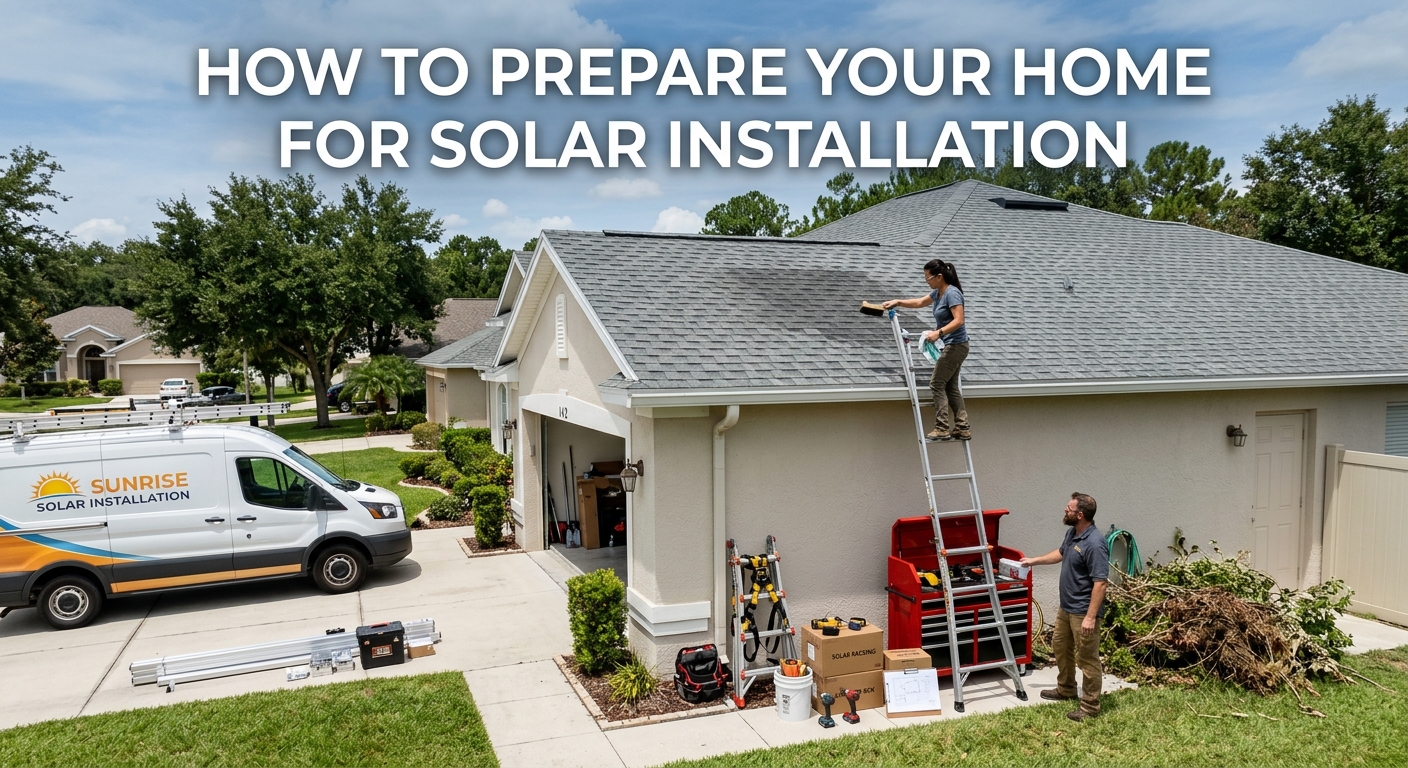
Getting a home ready for solar panels is not just about clearing the roof. A few checks before the installers arrive can prevent delays, uncover problems early and make it easier to choose a system that suits the property.
The best preparation starts with the parts of the home that will affect the installation. The roof, electrical system, access arrangements and household electricity use all deserve attention before work begins.
Is Your Roof Ready For Solar Panels?
Start by looking at the condition of the roof. Solar panels are expected to remain in place for many years, so fitting them onto a roof that already needs major repairs can create unnecessary work later.
Look for obvious signs of damage, such as cracked or missing tiles, leaks, sagging areas or other deterioration. A professional assessment should still be carried out because some problems are not visible from ground level.
The roof structure and covering can also affect the type of mounting equipment required. Pitched roofs, flat roofs and different roofing materials may need different approaches.
If the roof is approaching the end of its useful life, repairing or replacing it before the panels go on may be more practical than removing the system later.
Should You Check How Much Electricity Your Home Uses?
Your current electricity consumption gives the installer useful information when designing the system.
Look through recent electricity bills to get an idea of how much energy the household uses. It can also help to consider when that electricity is consumed. A home that uses most of its power during daylight hours may use solar generation differently from a household whose main demand comes in the evening.
Think about planned changes too. An electric vehicle, heat pump or other high-consumption appliance could increase future electricity demand.
You do not need to calculate the final system size yourself. The purpose of checking your usage is to give the installer a better picture of what the property may need.
What Should You Clear Before The Installers Arrive?
Installers need safe and practical access to the areas where they will work. Moving garden furniture, vehicles or other obstacles away from access points can make the day run more smoothly.
If scaffolding is required, there may also need to be enough space around the property for it to be positioned safely.
Inside the home, the area around the inverter, consumer unit or battery location should remain accessible. The installer can confirm the exact requirements before work begins.
You should also mention anything that could make access difficult, such as locked gates, narrow passages or shared access arrangements.
Does The Electrical System Need Checking?
Solar panels will eventually connect into the property’s electrical system, so the existing setup needs to be suitable.
An installer can check the consumer unit, wiring and available space for the necessary equipment. Older electrical installations may require additional work before the solar system can be connected safely.
The location of the inverter also needs some thought. It should be somewhere suitable for the equipment and accessible if inspection or maintenance is required.
If you are planning to add a battery, tell the installer early. Battery storage can affect the overall system design and where equipment needs to be installed.
What Should You Discuss With Your Installer Before Work Starts?
A detailed conversation before installation can prevent misunderstandings later. Ask what equipment will be installed, where the panels and inverter will be positioned, how cables will be routed and whether battery storage is included.
It is also useful to confirm what preparation you need to complete yourself. A professional solar system installation service should explain the practical requirements rather than leaving you to work them out on installation day.
Check the expected schedule as well. Weather, roof access and any additional electrical work can affect how long the job takes.
Having these details agreed beforehand makes it easier to identify anything that needs attention before the installers arrive.
Do You Need To Think About Planning Permission?
Many domestic solar installations can fall under permitted development rights in England, but this depends on meeting the relevant conditions and limitations.
Properties in conservation areas, listed buildings or locations with other restrictions may need additional checks. Planning rules can also differ between England, Scotland, Wales and Northern Ireland.
If you are unsure about your property, raise the question before installation rather than assuming permission is unnecessary.
The installer can help identify potential issues, but homeowners should make sure any required approvals are dealt with before work begins.
How Should You Plan Your Budget?
The price of a solar system depends on much more than the number of panels. Equipment choices, roof design, access, electrical work and optional battery storage can all change the final figure.
When comparing quotations, look beyond the headline price. The solar panel installation cost should be considered alongside what the quotation actually includes.
Check whether the price covers the panels, inverter, mounting equipment, labour, electrical work, commissioning and relevant documentation. If battery storage or monitoring equipment is optional, make sure the additional price is clearly stated.
This makes it easier to compare like-for-like quotations rather than choosing between figures that cover different levels of work.
What Should You Do On The Day Of Installation?
Once preparation is complete, there is usually little for the homeowner to do during the physical work. Make sure installers can access the property and any agreed working areas.
Keep children and pets away from the work zone, particularly where scaffolding or electrical equipment is involved.
It can also help to keep the agreed installation plan available so you can quickly clarify equipment locations or other details if something changes.
After the physical work is finished, the system should be tested and commissioned before it is handed over.
What Should You Check Before The Installation Is Signed Off?
Do not treat the final handover as an afterthought. Make sure you understand how the system operates and where to find the relevant equipment.
The installer should provide information about the system and its operation, along with the appropriate documentation. If monitoring software or an app is included, check that it has been set up and that you know how to view the system’s performance.
It is also worth checking that the agreed equipment has been installed and that any outstanding work has been discussed.
Good preparation makes the installation easier, but a proper handover ensures you know what has actually been installed and how to use it.