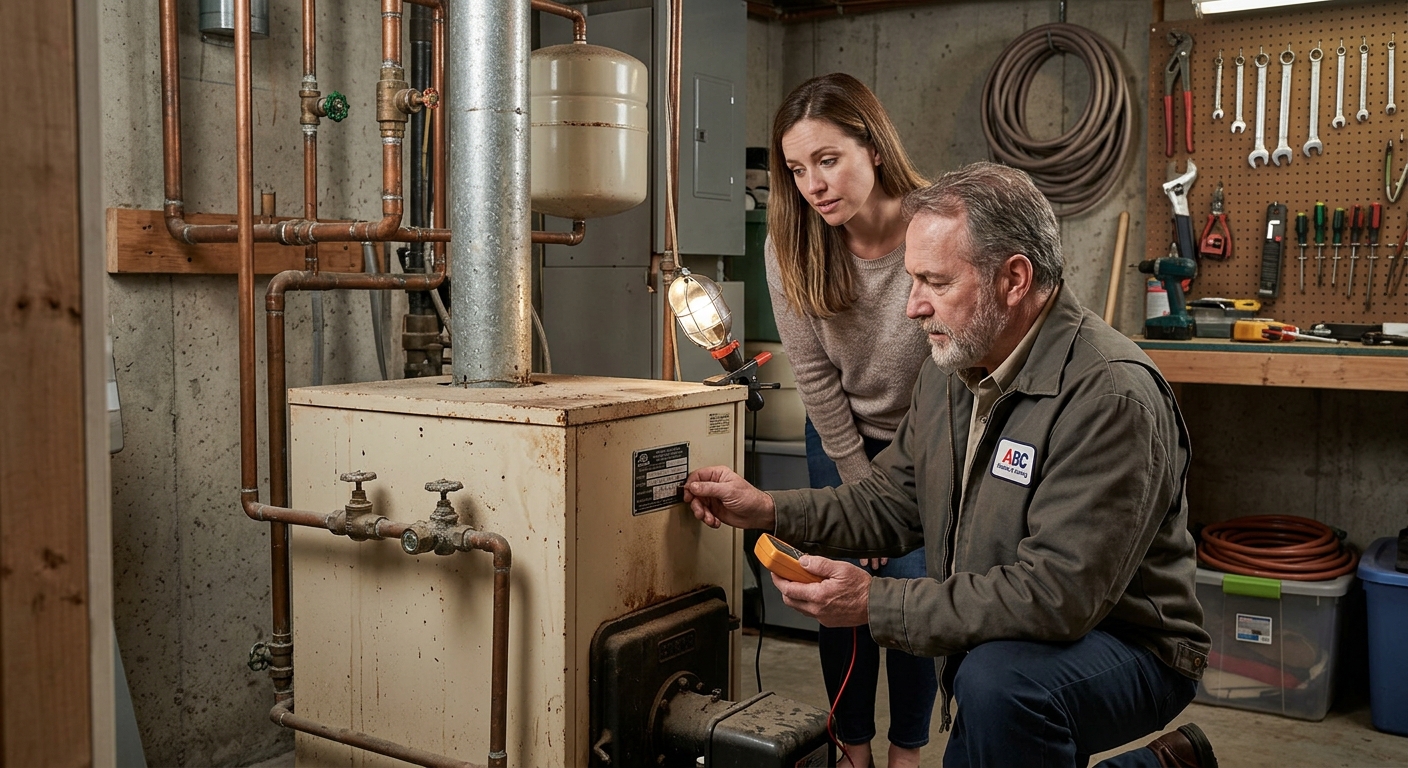
A 20-year-old boiler does not automatically need replacing. Some older systems continue to work reliably when they have received regular servicing and repairs. Age alone, however, is a good reason to look closely at its condition, running costs and reliability.
Older boilers can also lose more heat during operation than modern condensing models. Once breakdowns become frequent or repair bills start adding up, keeping the existing unit may no longer make financial sense.
When Should You Replace A 20-Year-Old Boiler?
There is no fixed age at which every boiler must be removed. Its condition tells you much more than its installation date.
Replacement becomes more worth considering when you notice:
- Frequent breakdowns or recurring faults
- Increasing repair costs
- Difficulty finding replacement parts
- Uneven or inadequate heating
- Rising energy bills without a clear change in usage
- Unusual noises, leaks or pressure problems
- An engineer advising that the appliance is becoming unreliable
A boiler that still performs well may continue for some time. On the other hand, waiting until a 20-year-old system fails completely can leave you arranging an emergency replacement at an inconvenient time.
Can You Get Help With Replacing An Old Boiler?
Potentially, but having an old boiler does not automatically qualify a household for a free boiler scheme.
Different government-funded programmes have different eligibility rules. The Boiler Upgrade Scheme, for example, supports eligible homeowners who replace certain fossil-fuel heating systems with qualifying heat pump installations rather than providing a general grant for replacing an old gas boiler with another gas boiler.
Your household circumstances, property and proposed heating system therefore matter when checking available support. It is better to check the requirements of the specific programme than assume that the boiler’s age is enough.
Is A New Boiler Better Than Repairing The Old One?
The answer depends on what is actually wrong with the existing system.
A relatively inexpensive repair can be sensible when the boiler remains dependable and the fault is isolated. Spending repeatedly on an appliance that is already two decades old is a different proposition.
Think about the likely cost over the next few years rather than looking only at today’s repair bill. A replacement may also give you better control over heating and reduce the risk of unexpected breakdowns.
Your property’s heating requirements matter too. Replacing an old boiler with another boiler is not the only option, particularly for homeowners considering a move towards lower-carbon heating.
Does Being Over 60 Qualify You For A Boiler Grant?
Not automatically.
Searching for a boiler replacement scheme over 60s can give the impression that reaching a particular age guarantees a free replacement. In reality, age may form part of the eligibility criteria for some support programmes, but it is not a universal qualification for a new boiler.
Other factors can be relevant, such as household income, benefits, property characteristics and the specific scheme available in your area. Always check the current requirements before assuming that you qualify.
What Should You Do With A 20-Year-Old Boiler?
If the boiler remains safe and dependable, there may be no need for an immediate replacement. Arrange regular servicing and keep an eye on repair costs and performance.
If faults are becoming common, ask a qualified heating professional whether another repair is sensible or whether replacement would be more practical. At that point, compare the available heating options instead of automatically choosing another boiler.
A 20-year-old boiler has reached an age where replacement planning makes sense, but age by itself is not a reason to replace a perfectly serviceable system. Its safety, reliability, repair costs and the heating needs of your home should guide the decision.