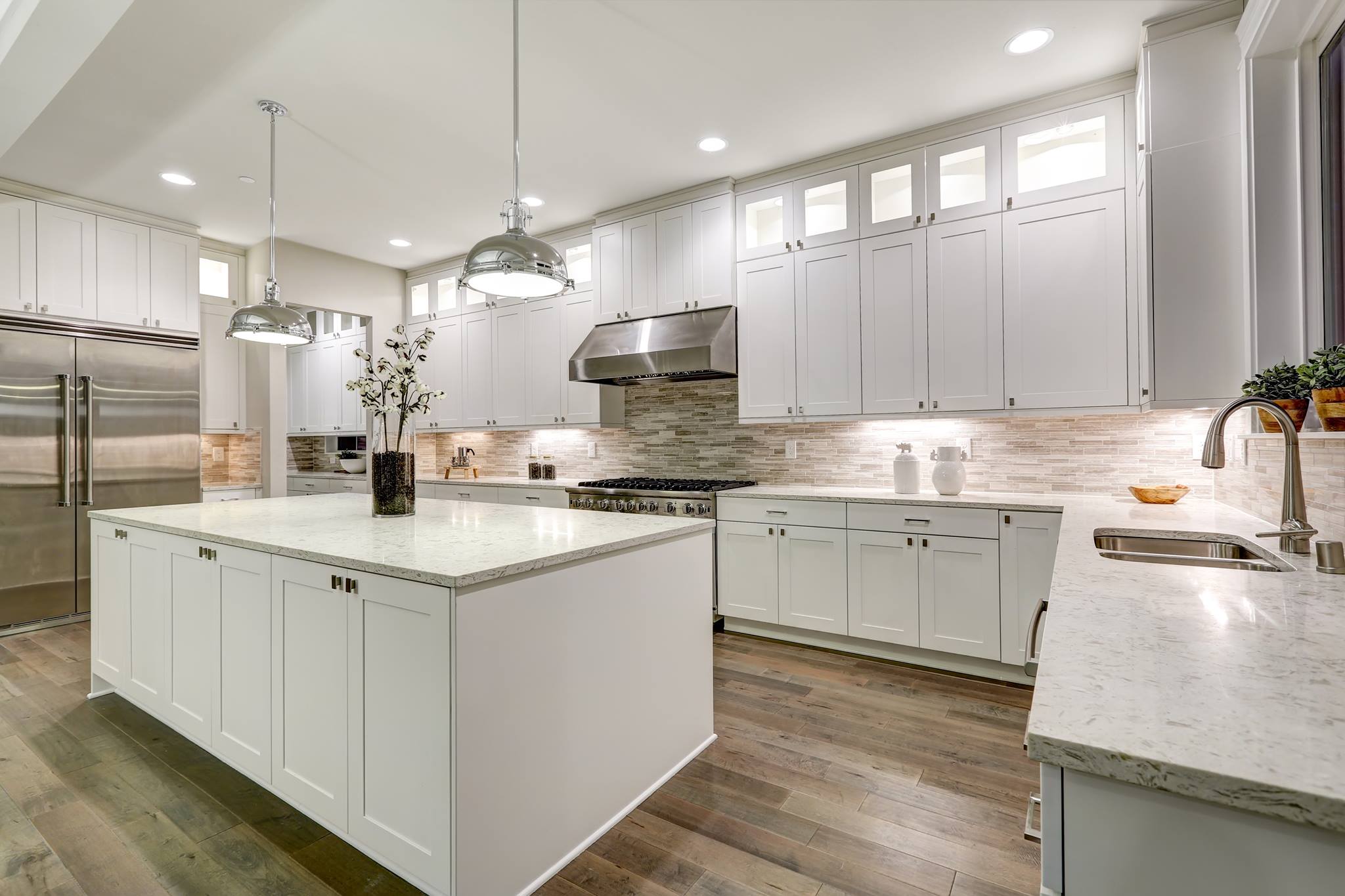
Kitchen design trends change regularly, but some choices continue to appeal to homeowners across different design styles. White cabinets are one of those choices. Their clean appearance, versatility, and ability to work with different materials have helped them remain popular in kitchens of many sizes.
The appeal of white cabinetry goes beyond appearance. Cabinet color can influence how a room feels, how other design elements are perceived, and how easily the kitchen can adapt to future updates.
For homeowners considering a renovation, white kitchen cabinets can provide a flexible foundation for a range of design directions. They can support traditional interiors, contemporary layouts, transitional spaces, and many combinations of countertops, flooring, hardware, and lighting.
Why Cabinet Color Matters
Cabinets cover a significant portion of the kitchen, so their color has a strong influence on the overall appearance of the room. A darker cabinet finish can create contrast and depth, while lighter cabinetry can contribute to a brighter visual atmosphere. White is particularly flexible because it can work with many surrounding colors and materials.
This flexibility gives homeowners more freedom when choosing countertops, flooring, backsplashes, and decorative elements. Cabinet color can also influence how easily a kitchen can be updated later. A neutral foundation allows homeowners to change smaller design elements without replacing the entire cabinet system.
How White Cabinets Can Make a Kitchen Feel Brighter
Natural and artificial lighting both affect the appearance of cabinetry. White surfaces can reflect available light and help create a bright visual environment. This can be particularly useful in kitchens with limited natural light. Instead of making the room feel darker, lighter cabinetry can contribute to an open appearance. However, the final result depends on more than cabinet color. Lighting temperature, countertop material, wall color, and flooring all influence how white cabinets appear.
Homeowners should therefore consider the entire room rather than expecting cabinet color alone to determine the atmosphere.
White Cabinets Work With Different Design Styles
One reason white cabinetry remains popular is its ability to adapt to different interior styles. In a traditional kitchen, detailed white cabinet doors can create a classic appearance. In a modern space, simple door profiles can produce a clean and understated look.
White cabinetry can also support transitional kitchens that combine traditional and contemporary elements. This versatility makes white cabinets useful for homeowners who want a design that can evolve over time. Changing hardware, lighting, countertops, or accessories can alter the appearance without requiring a complete cabinet replacement.
Combining White Cabinets With Countertops
Countertops are one of the most important elements to consider alongside cabinet color. White cabinets can work with a wide range of countertop materials and patterns. A subtle countertop can create a calm and consistent appearance, while a bold stone pattern can become a focal point against a lighter cabinet background.
The relationship between cabinet and countertop colors should be considered before final selections are made. Samples viewed under actual kitchen lighting can provide a better understanding of how the materials will work together.
This approach helps reduce surprises after installation.
Choosing Hardware for White Cabinetry
Hardware provides another opportunity to influence the appearance of white cabinets. Different finishes can create very different visual effects. Dark hardware can add contrast, while metallic finishes can provide a warmer or more traditional appearance. Simple hardware can support a minimalist kitchen, while more decorative choices may complement traditional cabinetry.
The hardware does not need to match every other metal in the room perfectly, but it should contribute to a cohesive overall design. Small details can have a significant effect when repeated across a large cabinet system.
White Cabinets and Kitchen Organization
Although color is primarily a visual consideration, cabinet design still needs to support practical storage. Homeowners should evaluate the number of cabinets required, their sizes, internal configurations, and placement before selecting a finish. The best white kitchen cabinets are those that combine the desired appearance with adequate storage and accessibility.
A beautiful cabinet system can still become frustrating if frequently used items are difficult to reach or if there is not enough space for everyday supplies. Function should therefore remain central to the planning process.
Considering Maintenance and Everyday Use
White surfaces can make dust, spills, and certain stains more noticeable than some darker finishes. This does not mean they are unsuitable for busy kitchens, but homeowners should consider maintenance requirements. Regular cleaning can help maintain the appearance of white cabinets. Choosing durable finishes and using appropriate cleaning methods can also support long-term appearance. Households with children or heavy kitchen use may want to consider how cabinet surfaces will respond to daily activity.
The right choice depends on lifestyle as much as visual preference.
Using White Cabinets in Smaller Kitchens
Small kitchens often benefit from careful visual planning. White cabinetry can help maintain a brighter and more open appearance, particularly when paired with suitable lighting. However, adding too much white without contrast can make the room feel flat. Countertops, flooring, hardware, lighting, and accessories can introduce visual variation. A balanced design uses white cabinetry as a foundation while allowing other materials to provide texture and depth.
This can create a small kitchen that feels clean without becoming visually monotonous.
Creating Contrast With Darker Elements
White cabinets can also provide an effective background for darker design elements. Dark countertops, hardware, flooring, or appliances can create contrast and give the kitchen a more defined appearance. The amount of contrast should reflect the desired style. A few darker accents can create subtle definition, while stronger contrasts can produce a more dramatic result.
Homeowners should consider how these elements interact under both natural and artificial lighting.
Why White Cabinetry Can Support Future Updates
One advantage of a neutral cabinet color is adaptability. Homeowners may change other elements of the kitchen without needing to replace the cabinets.
For example, hardware can be updated, walls can be repainted, and lighting can be changed while the existing white cabinetry remains relevant.
This can make the design easier to refresh over time. A flexible cabinet color can therefore provide value beyond the initial remodeling project.
Finding the Right Cabinet Design
Not all white cabinetry has the same appearance. Door profiles, finishes, construction, hardware, and cabinet proportions all affect the final result. Homeowners should compare samples and consider how the cabinets will interact with their existing kitchen elements. Those researching a kitchen cabinet showroom can benefit from seeing different finishes and styles in person rather than relying only on digital images. This can make it easier to judge color, texture, and overall quality.
Conclusion
White kitchen cabinets remain a popular choice because they offer a flexible combination of visual simplicity and design adaptability. They can work with many interior styles, countertop materials, hardware finishes, and lighting arrangements. The strongest results come from considering cabinet color alongside layout, storage, maintenance, and the overall kitchen environment.
When properly planned, white kitchen cabinets can provide a lasting foundation that homeowners can update around as their preferences change. Their versatility makes them a practical option for both traditional and modern kitchen designs.