Scotch whisky is closely connected with the landscapes where it is produced. Factors such as climate, water source, local ingredients, production methods, and maturation conditions can all contribute to the character of a whisky. Scotland’s whisky-producing regions are often associated with particular styles, and island whiskies are especially known for their distinctive maritime influences.
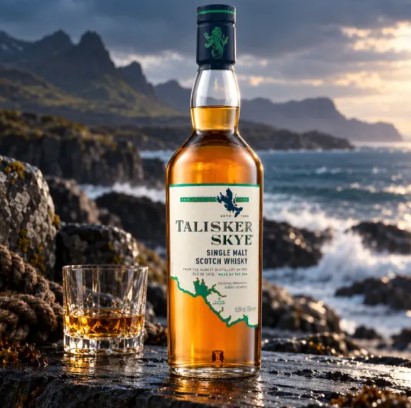
Among these expressions, whisky Skye Island refers to single malt Scotch whisky produced on the Isle of Skye, one of Scotland’s Inner Hebridean islands. The region is known for dramatic coastal scenery, changing weather conditions, and a long association with whisky production. Talisker Skye is one example of an island single malt that reflects this environment through its smoky, maritime, and balanced flavour profile.
What Is Whisky Skye Island?
Whisky Skye Island describes whisky connected with the Isle of Skye, a location recognised as one of Scotland’s whisky-producing areas.
Unlike blended whisky, single malt Scotch whisky is produced at one distillery using malted barley. It must also follow specific Scotch whisky regulations, including being matured in Scotland for a minimum of three years in oak casks.
Talisker Skye is a single malt Scotch whisky produced at the Talisker Distillery on the Isle of Skye. The expression is designed to highlight the distillery’s coastal character while offering a smoother and more approachable profile compared with some heavily peated island whiskies.
What Makes Isle of Skye Whisky Different?
The character of whisky Skye Island is influenced by more than just the ingredients used during production.
The Isle of Skye has a coastal environment with strong Atlantic weather conditions. Many whisky enthusiasts associate island-produced whiskies with maritime notes, which can include hints of saltiness, smoke, sea air, and mineral qualities.
However, these characteristics do not come from whisky absorbing seawater or ocean flavours directly. Instead, the overall style develops through a combination of factors, including distillation methods, peat use, maturation, and the choices made by the distillery.
The result is a whisky style that is often more expressive and distinctive than lighter, less smoky varieties.
How Is Talisker Skye Produced?
Talisker Skye follows the traditional principles of single malt Scotch whisky production.
The process begins with malted barley, which is fermented and distilled before being matured in oak casks. During maturation, the spirit interacts with the wood, developing colour, aroma, and flavour complexity.
The specific casks selected during maturation play an important role in shaping the final whisky. Different types of oak can contribute flavours such as vanilla, spice, dried fruit, caramel, and toasted notes.
Talisker Skye uses a combination of cask influences to create a balance between smoky elements and sweeter characteristics.
What Does Whisky Skye Island Taste Like?
The flavour profile is one of the main reasons people explore whisky Skye Island expressions.
Talisker Skye is generally described as having a combination of smoky, spicy, and slightly sweet characteristics. Common tasting notes associated with the whisky include:
- Smoke and peat
- Black pepper spice
- Citrus notes
- Light sweetness
- Maritime influences
- Rich oak character
The whisky offers a balance between intensity and smoothness. The smoky elements provide depth, while sweeter notes help create contrast.
Taste perception can vary significantly between individuals. Factors such as glass shape, serving temperature, water addition, and previous whisky experience can influence how flavours are noticed.
What Is the Alcohol Strength of Talisker Skye?
Talisker Skye is bottled at 45.8% alcohol by volume (ABV).
ABV indicates the percentage of alcohol contained within the total liquid volume. Since whisky is a concentrated spirit, it typically has a much higher ABV than beer or wine.
For example, a spirit bottled at around 40% to 46% ABV contains considerably more alcohol by volume than many other alcoholic beverages.
This is why whisky is traditionally served in smaller measures. The amount poured has a significant effect on the total alcohol consumed.
How Should Isle of Skye Whisky Be Served?
There are several common ways to enjoy whisky Skye Island, depending on personal preference.
Many whisky drinkers prefer tasting single malt whisky neat to experience the full aroma and flavour profile. Using a tulip-shaped whisky glass can help concentrate aromas and make tasting more detailed.
Adding a small amount of water is another common approach. Water can reduce the alcohol intensity and may allow certain aromas and flavours to become more noticeable.
Some people also prefer whisky with ice, although lower temperatures can reduce aroma release and change the tasting experience.
There is no single correct method. The best serving style depends on whether the focus is on detailed tasting or casual enjoyment.
How Does Island Whisky Compare With Other Scotch Styles?
Scotch whisky is divided into several traditional regions, including Highlands, Lowlands, Speyside, Campbeltown, and Islay, along with island expressions.
Each region can contain a wide range of styles, so regional descriptions should be viewed as general guides rather than strict rules.
Speyside whiskies are often associated with fruity and elegant profiles, while some Islay whiskies are known for stronger peat smoke. Island whiskies, including whisky Skye Island, are often recognised for combining maritime influences with smoke, spice, and richness.
Individual distillery choices remain the most important factor in determining the final character. When exploring selections from retailers such as R&V Drinks, understanding factors such as region, ABV, bottle size, and flavour profile can help consumers compare different whisky options more effectively.
What Should You Consider When Buying Whisky?
When choosing a whisky, several factors can help guide the decision:
- Whisky type, such as single malt or blended
- Region of production
- Alcohol percentage
- Age statement, if provided
- Flavour profile
- Bottle size
Bottle size is particularly relevant for people comparing different purchasing options. A whiskey 1 litre format, for example, provides a larger volume than a standard 70cl bottle but does not necessarily indicate a different whisky style or strength.
The label provides the most reliable information about the specific product.
Conclusion
Whisky Skye Island represents a style of Scotch whisky connected with the coastal environment of the Isle of Skye. Expressions such as Talisker Skye demonstrate how location, production techniques, and maturation choices combine to create whisky with smoky, spicy, and maritime characteristics. Whether comparing a coastal single malt with other Scotch styles or considering formats such as whiskey 1 litre, learning about production methods and serving preferences provides greater insight into the wide range of characteristics found across the whisky category.