

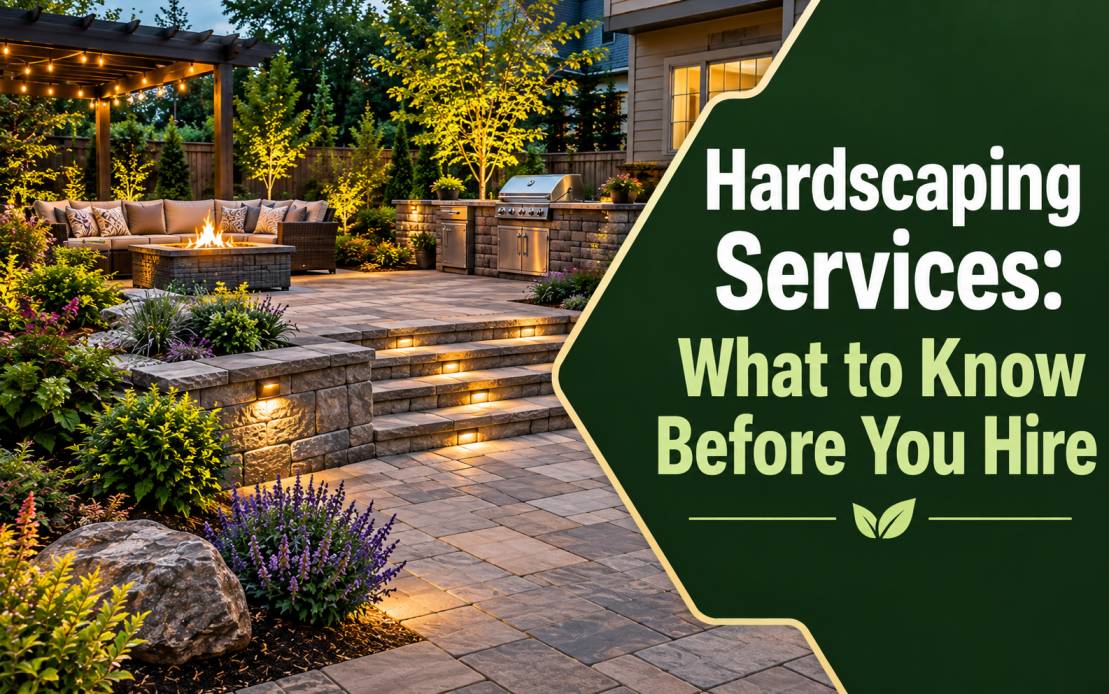
Hiring hardscaping services for the first time usually starts with a simple goal, a patio to relax on, a walkway that doesn’t turn to mud, a wall to hold back a sloped yard. What most homeowners don’t realize going in is how much technical work sits underneath that simple goal.
A patio or retaining wall isn’t just a surface feature. It involves grading, drainage planning, material selection, and in some cases permits and engineering, all before the finished look ever comes into play. Skipping past these details is exactly how projects end up cracking, shifting, or flooding within a year or two.
That gap between the visible result and the work required underneath it is usually where homeowners start asking more careful questions before signing a contract.
Hardscaping services can vary enormously in quality depending on how thoroughly a contractor addresses site conditions before installation begins. Knowing what separates a durable project from one that needs early repair makes it much easier to evaluate a contractor’s proposal.
What’s Actually Involved in Hardscape Installation
Hardscape installation covers the full process of building patios, walkways, retaining walls, and other structural outdoor features, starting with excavation and base preparation, not just laying the visible surface material. The base, typically compacted gravel topped with sand, is what determines whether a patio stays level or starts shifting within a season or two.
Skipping proper base depth is one of the most common shortcuts that shows up later as sunken pavers, separated joints, or uneven walking surfaces. A contractor who talks through base specifications before discussing material color is usually planning for durability, not just appearance.
Why Drainage Planning Comes Before Material Selection
Water management needs to be part of the plan from the very beginning, not something addressed after installation. A patio built without a slight grade away from the house, or without a drainage swale where needed, can direct runoff straight toward a foundation.
This matters more in areas with clay heavy soil, which expands and contracts with moisture and worsens the effects of poor drainage. Any hardscaping services proposal that doesn’t mention how water will be redirected away from structures is worth questioning before signing anything.
Comparing Common Hardscape Materials
Pavers, natural stone, and poured concrete each come with different tradeoffs beyond simple appearance. Pavers are modular and relatively easy to repair individually if one shifts or cracks. Natural stone like flagstone offers a more organic look but requires more skilled hand fitting during hardscape installation. Poured concrete is generally more budget friendly upfront but needs proper reinforcement to handle freeze thaw cycles without cracking.
The right material often depends less on preference and more on the specific application, slope, drainage needs, and how the space connects to the rest of the property.
Permits and Code Requirements for Retaining Walls
Retaining walls above a certain height, commonly four feet depending on the township, typically require a permit and sometimes an engineer’s stamp. This is a detail that should come up early in any conversation about hardscaping services, not after construction has already started.
A reliable contractor will flag permit requirements upfront rather than let a homeowner discover mid project that a wall needs modification to meet code.
Common Mistakes That Lead to Early Repairs
A handful of recurring issues show up across hardscape projects that need rework sooner than expected. Skipping adequate base depth is the most frequent, followed by ignoring drainage until after installation, and using materials poorly suited to a specific slope or soil condition.
Contractors who have worked extensively in a specific region, including firms like Greenstone Gardens, tend to build deeper and better draining bases specifically because they’ve seen what a generic national standard misses in clay heavy soil.
Timing and Seasonal Considerations
Hardscape installation typically runs from late spring through fall in this climate, when the ground isn’t frozen and base compaction can happen properly. Late fall and early winter work is possible during mild stretches, but cold temperatures slow curing and compaction significantly.
Homeowners who plan projects during the off season for a spring start tend to have more scheduling flexibility, since demand for hardscaping services spikes heavily once warmer weather arrives.
Frequently Asked Questions
How much do hardscaping services typically cost?Costs vary widely based on square footage, material choice, and site conditions like slope or existing drainage issues. Getting multiple detailed quotes that break down base preparation and material costs separately makes comparison much easier.
How long does a typical hardscape installation take?A standard patio or walkway project usually takes one to two weeks from excavation to completion, weather permitting. Larger projects involving retaining walls or extensive drainage work can take longer.
Do I need a permit for hardscaping services in my area?It depends on the specific project and local township regulations. Flat patios often don’t require permits, but retaining walls above a certain height, or structures attached to the home, usually do.
What’s the biggest factor in how long hardscaping lasts?Base preparation and drainage planning matter more than the surface material itself. A properly built base with adequate drainage will outlast a premium material installed over an inadequate foundation.
Final Thoughts
The quality of hardscaping services comes down almost entirely to what happens before the visible surface ever goes in, the excavation, the base, the drainage planning. Homeowners who ask detailed questions about these steps before signing a contract are far more likely to end up with a project that holds up for decades rather than one that needs early repair.
If you’re evaluating hardscaping services for an upcoming project, ask specifically about base depth and drainage strategy before discussing material style.Greenstone Gardens, a family owned hardscaping contractor serving Wayne, Newtown Square, and the surrounding Main Line region, builds every project around exactly these local soil and climate conditions.

