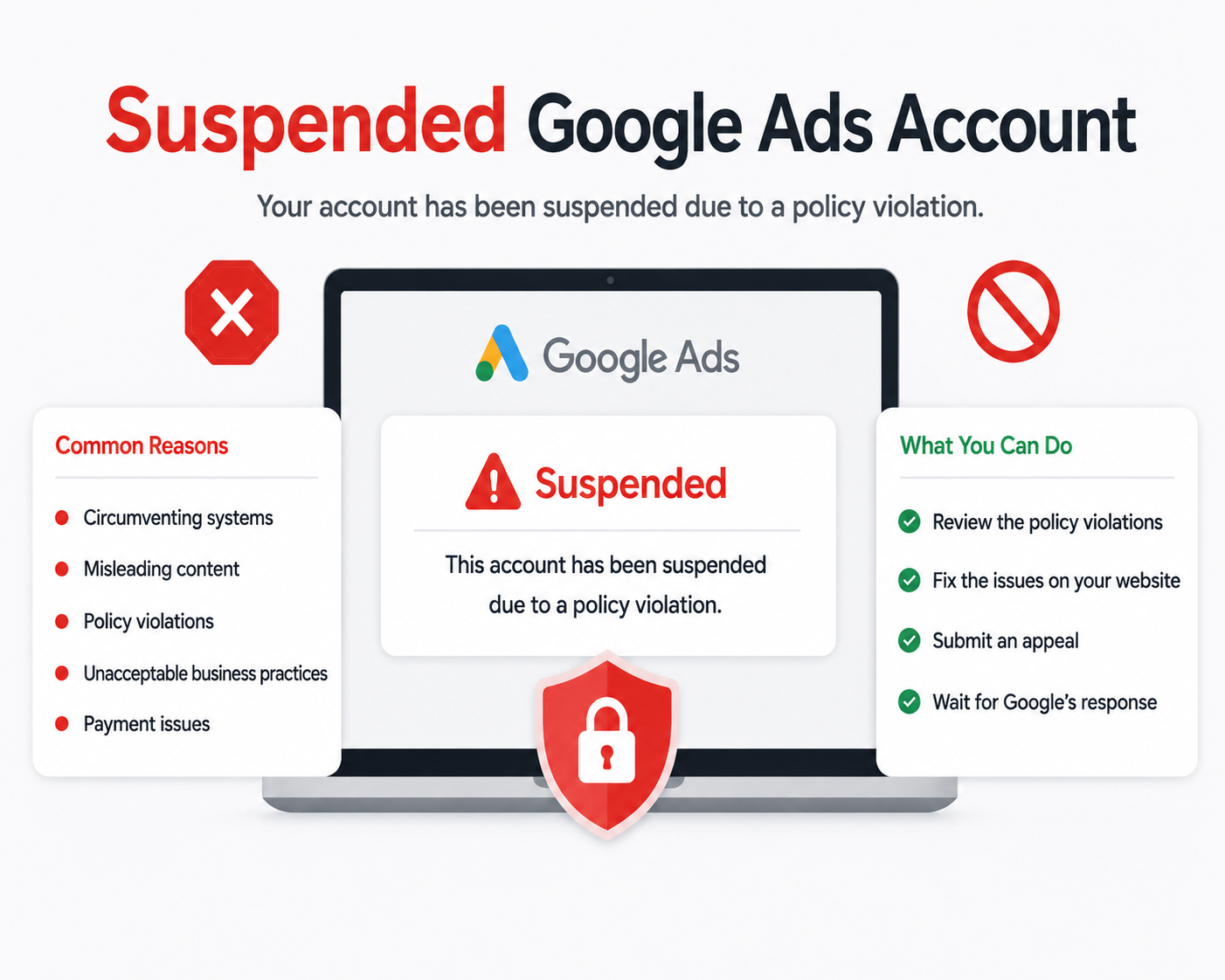
What Is a Suspended Google Ads Account?
A suspended Google Ads account means that Google has suspended an advertiser’s account because of potential violations of Google Ads policies, payment issues, or security concerns. When an account is suspended, its campaigns across Google Search, Google Display Network, and YouTube stop running.
To recover a suspended account, advertisers need to identify the specific policy violation, resolve compliance problems affecting their domain and landing pages, and submit an appeal with relevant supporting documents. Traffic-monitoring tools such as TrafficSaviour may help identify suspicious traffic and invalid clicks, but they cannot guarantee that a Google Ads account suspension will be prevented.
Main Reasons for Google Ads Suspension
1. Unacceptable Business Practices
Unacceptable business practices include false promises, misleading ad copy, deceptive claims, and missing or unclear business disclosures. Advertisers should ensure that their ads, landing pages, and business information accurately represent the products or services they offer.
2. Circumventing Systems
Circumventing systems involves attempts to bypass Google’s advertising policies or enforcement systems. Examples may include unauthorized redirects, deceptive landing-page behavior, or creating another account to avoid an existing suspension.
3. Payment and Billing Issues
Payment issues can result from unconfirmed credit cards, chargebacks, failed payment authorisations, or unpaid account balances. Advertisers should review their billing information, verify their payment methods, and resolve outstanding balances.
4. Malware and Compromised Domains
A compromised website or domain may contain malware, malicious third-party scripts, unauthorised redirects, or injected code. Regular website security audits can help identify these issues before they affect advertising campaigns.
Industry Statistics Related to Ad Account Compliance
1. Scale of Google Ads Enforcement
According to Google’s advertising safety reporting, the company has blocked or removed billions of ads and suspended millions of advertiser accounts in its enforcement efforts. Advertisers should consult the latest official Google Ads Safety Report for the most recent figures and reporting period.
2. Prevalence of Invalid Traffic
Invalid traffic can include automated bots, web scrapers, data-center proxies, and other suspicious visits. Such activity can distort campaign metrics and make it harder to evaluate genuine advertising performance. Statistics attributed to FraudScore should be verified against the original report before publication.
How to Recover a Suspended Google Ads Account
Recovering a suspended Google Ads account requires a systematic approach that addresses the underlying issues before you submit an appeal.
1. Review the Suspension Notice.
Check the Google Ads dashboard and the email notification associated with the account. Identify the stated policy or suspension reason, such as circumventing systems or unacceptable business practices, and review the relevant policy requirements.
2. Audit Website Content and Domains
Conduct a complete website compliance audit to identify misleading claims, hidden redirects, missing business information, suspicious scripts, or other policy concerns. Review the landing pages and domain behaviour that users and Google’s systems can access.
3. Fix Technical and Traffic Vulnerabilities
Remove malicious code, correct non-compliant ad copy, and resolve unauthorised redirects. Review traffic patterns to identify potential invalid clicks, bot traffic, and suspicious visits.
Tools such as TrafficSaviour may help monitor traffic quality and flag suspicious activity. However, traffic filtering alone does not resolve every policy issue or guarantee account reinstatement.
4. Collect Identity, Domain Ownership, and Business Documents
Prepare the documents relevant to the verification request, which may include:
- Government-issued identification, if requested.
- Proof of address, where required.
- Domain ownership verification.
- Business registration documents, if applicable.
- Invoices or payment records for billing-related issues.
Ensure that the information matches the details associated with the Google Ads account and its billing profile.
5. Submit the Google Ads Appeal.
Use the official Google Ads appeal process to explain the suspension and the corrective actions taken. Provide a clear, factual account of the issue, the steps completed to resolve it, and any relevant supporting evidence.
Avoid submitting repeated appeals without addressing the original problem. Review the account and website carefully before sending the appeal.
Types of Google Ads Suspensions
Understanding the type of Google Ads suspension helps advertisers identify the appropriate corrective actions.
1. Account-Level Policy Violations
Account-level policy violations may result from serious or repeated problems involving ads, landing pages, business practices, or account activity. A thorough review of the website content, advertising history, and policy compliance may be necessary.
2. Payment and Billing Issues
Payment-related suspensions may involve failed transactions, billing verification problems, outstanding balances, or inconsistencies in account information. Advertisers should review the billing profile and provide the requested payment verification documents.
3. Circumventing Systems Flags
Circumventing systems suspensions can involve attempts to bypass Google’s enforcement mechanisms, deceptive redirects, or other prohibited behaviour. Advertisers should audit their server-side code, redirects, landing-page delivery, and domain configuration to identify and correct any violations.
Common Mistakes When Filing a Google Ads Suspension Appeal
1. Appealing Without Fixing the Problem
An appeal may be rejected if the underlying Google Ads policy violation remains unresolved. Identify the root cause and correct the issue before submitting an appeal.
2. Submitting an Appeal Too Early
Submitting an appeal before completing the website audit, correcting compliance problems, or collecting required documents can weaken the case. Take time to verify that the necessary corrective actions have been completed.
3. Creating Another Google Ads Account
Creating another account to bypass an existing suspension can be treated as circumventing systems and may lead to further enforcement. Address the original suspension through the official appeal process instead.
4. Ignoring Payment Verification
Incomplete billing information, failed payments, or mismatched details may delay the review. Provide accurate billing records and verification documents when requested.
5. Using Emotional or Accusatory Language
An effective Google Ads appeal letter should be factual, clear, and professional. Explain what happened, what caused the issue, and what corrective actions were taken instead of using accusatory language or unsupported claims.
Advanced Tips for Protecting Google Ads Infrastructure
Ongoing monitoring and compliance reviews can help advertisers reduce avoidable account risks.
1. Apply Bot Protection and Traffic Monitoring
Use suitable traffic-monitoring tools to identify unusual visitor patterns, potential bot activity, suspicious proxies, and invalid clicks. Platforms such as TrafficSaviour may help advertisers monitor incoming traffic and investigate suspicious activity, but they cannot guarantee protection from account suspension.
2. Maintain Billing Compliance
Keep the billing name, payment method, business details, and account information accurate and consistent with Google’s verification requirements. Respond promptly to legitimate requests for additional documentation.
3. Secure the Website Environment
Keep the website, plugins, server software, and third-party scripts updated. Review redirects, landing-page behaviour, and access permissions to reduce the risk of unauthorised changes or compromised content.
4. Monitor Domains and Server Activity
Regularly review server logs, website files, redirects, robots.txt, and index files for unexpected changes. Investigate unauthorised file injections and suspicious activity as soon as they are detected.
5. Review Advertising Policies Regularly
Google Ads policies can change over time. Review the current requirements for your industry, ad format, landing pages, and business model to maintain advertising policy compliance.
Frequently Asked Questions About Google Ads Account Suspensions
1. How Long Does Google Take to Review a Suspension Appeal?
The review time for a Google Ads suspension appeal can vary depending on the reason for suspension, the complexity of the case, and whether additional verification is required. Some cases may receive a response within a few business days, while others can take longer. Check the official Google Ads support and appeal guidance for current expectations.
2. Can My Google Ads Account Be Permanently Suspended?
Yes. Permanent Google Ads account suspension is possible, particularly in cases involving serious policy violations, repeated non-compliance, fraud, or attempts to circumvent enforcement systems. The outcome depends on the circumstances and Google’s review of the account.
3. Can TrafficSaviour Prevent Google Ads Account Suspension?
TrafficSaviour may help monitor incoming traffic and identify suspicious activity, including potential bot traffic and invalid clicks. However, no traffic protection tool can guarantee that an account will never be suspended. Advertisers must also comply with Google Ads policies, maintain accurate billing information, and keep their websites secure.
4. Should I Create a New Account After a Google Ads Suspension?
Creating a new account to bypass a suspension may be considered circumventing systems. Advertisers should review the suspension reason, resolve the underlying issues, and follow the official Google Ads appeal process rather than attempting to avoid enforcement.
Conclusion
Recovering a suspended Google Ads account starts with identifying the policy violation, correcting compliance issues, verifying business information, and resolving technical or billing problems. A well-prepared Google Ads appeal should clearly explain the issue and document the corrective actions taken.
Ongoing website security checks, billing compliance, policy reviews, and traffic monitoring can help reduce avoidable risks. Tools such as TrafficSaviour may support the monitoring of suspicious traffic, but successful account recovery and long-term compliance depend on addressing the actual reasons for suspension.