The crushing season leaves zero room for error. When juice heaters, evaporators, and vacuum pans run around the clock, raw sugar juice leaves behind heavy mineral deposits along the tube walls. That scale acts like an insulating blanket. It traps heat, forces your boilers to burn through extra bagasse, and slows down your whole factory output.
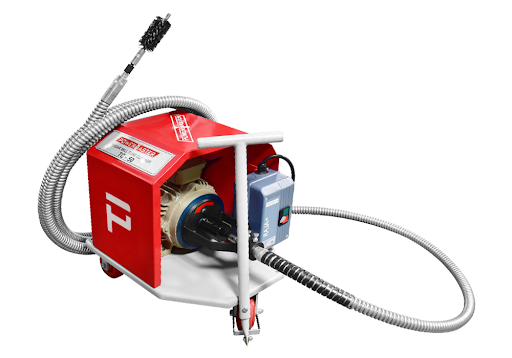
Getting that scale out fast requires a solid sugar factory tube cleaner. But if your maintenance crew rushes or uses the wrong gear, you end up ruining expensive tubes instead of clearing them.
Here are five costly tube cleaning mistakes sugar mills make every season, and how you can avoid them.
1. Using the Same Cutter Head for Every Vessel
Not all scales in a sugar mill are built the same way. Juice heater tubes accumulate soft organic sludge. Evaporator tubes, on the other hand, build up a rock-hard silicate scale that bakes on under intense heat.
Grabbing one type of cutter head and using it across your entire plant just doesn’t work. A heavy drill bit will gouge soft metal walls inside juice heaters. Flip that around, and a soft wire brush won’t even make a dent in the hard evaporator crust.
Always match your sugar factory cleaning tools directly to what’s inside the tube:
- Hard mineral scale: Heavy-duty carbide drill heads.
- Medium-to-soft deposits: Flexible, expandable arm cutters.
- Light residue or polishing: Steel wire brushes.
2. Waiting for Temperature Drops Before You Clean
A lot of plants wait until juice temperatures crash or operating pressure spikes before scheduling a clean. By then, you’re already burning money.
As scale sits inside running equipment, constant heat bakes it into a dense crust. The thicker that crust gets, the harder it is to scrape out later.
Postponing routine maintenance forces your boilers to work overtime just to keep evaporation moving. Set a strict calendar schedule instead. Removing a thin scale takes half the time, uses less power, and keeps your production line moving without surprise shutdowns.
3. Cutting Off the Cooling Water Line
The mechanical tube cleaner depends on a continuous flow of water through the flexible tube casing as the tool rotates. This water has two important roles; to prevent the cutter head from burning and to flush out any dislodged scales from the barrel.
Should the operator turn off the water supply or lower the water pressure, the loose scale turns to a sticky mud in the tube.
That mud causes three immediate problems:
- Cutter blades overheat and dull in seconds.
- The shaft binds up and snaps inside the tube casing.
- Hot debris bakes itself right back onto the metal walls.
Check your water pressure first every single time before flipping the motor switch on.
4. Forcing the Wrong Shaft Sizes Into the Tube
Using any shaft that happens to be lying around the workshop will result in damaged equipment. If you choose an improper shaft for your sugar factory tube cleaner that is smaller than the tube inner diameter, it will whip around wildly in the barrel and lead to missed areas of scale as well as nicking the tube walls. However, trying to force an oversized shaft into a small tube will lead to excessive friction as well as breakage of the core shaft.
It is important to get accurate measurements of your tube inner diameter before buying the right size shaft and barrel.
5. Ramming Cutter Heads Through Clogged Tubes
When factory downtime is costing money every minute, operators naturally try to push tools through stubborn blockages by force. But jamming a spinning cutter head forward makes the blades bite straight into the tube wall instead of shaving down scale.
Pushing tools by raw force thins out tube metal, creates pinhole leaks, and leads to expensive re-tubing jobs midway through the season. Let the motor speed and tool geometry do the cutting. A steady, gentle pass clears scale safely without destroying your heat exchangers.
Conclusion
Operating efficiency at an optimal level in the sugar mill is dependent on efficient heat transfer in all evaporators, juice heaters, and vacuum pans. By avoiding these five errors, using the wrong cutter heads, postponing cleaning, running shafts without lubrication, choosing improper shaft sizes, and forcing tools through heavy scale, and utilizing the right sugar factory cleaning tools, you can prevent severe equipment damage. Following a routine maintenance schedule and using the correct equipment allows you to maintain optimal thermal performance and minimize fuel loss throughout the crushing season.