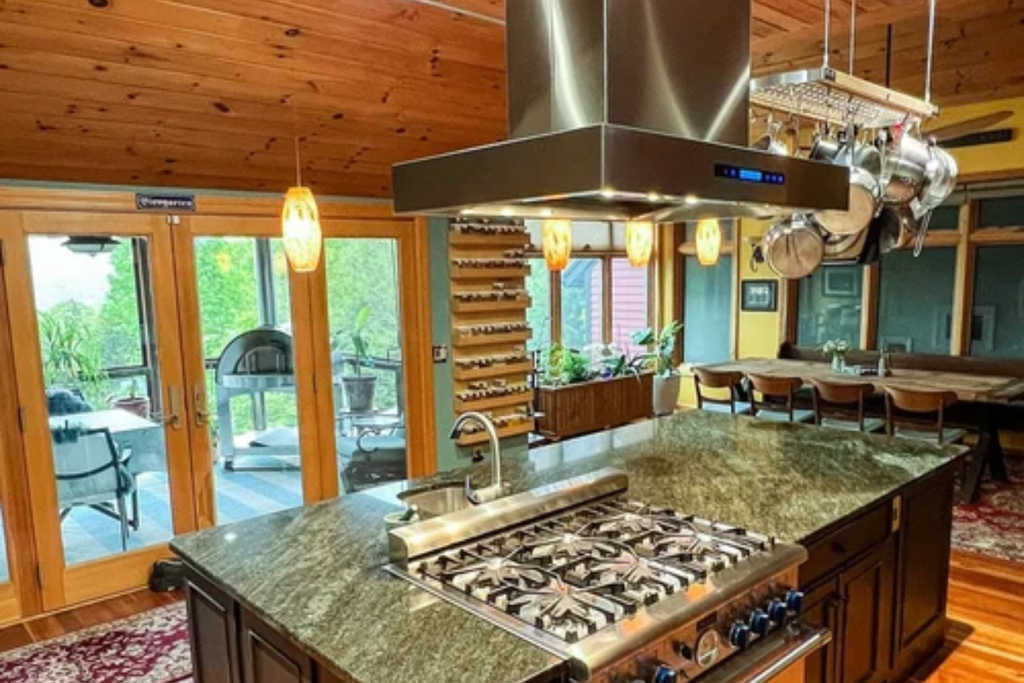
Island cooking areas create a different ventilation challenge from ranges positioned against a wall. With no wall behind the cooking surface to help contain rising heat and airborne pollutants, the hood must capture cooking effluent from all sides. That makes hood dimensions, airflow, mounting height, ductwork, and the surrounding kitchen environment important factors when choosing a 30-inch island range hood. Island ventilation is not simply about selecting a hood that matches the width of a cooktop. The way air moves around an open island can affect how effectively smoke, grease, steam, and heat are captured. Understanding these differences helps homeowners select equipment that is appropriately sized and installed for the cooking setup.
Why Island Hoods Have Different Ventilation Dynamics
A wall-mounted hood benefits from the nearby wall, which can help influence the movement of rising cooking plumes toward the hood. An island hood does not have that advantage. Its canopy is exposed on every side, so cooking emissions can escape laterally before reaching the filters.
ASHRAE identifies island canopy hoods as a more demanding capture-and-containment application than wall-mounted canopy hoods. Its research indicates that single-island hoods can require substantially higher exhaust airflow than comparable wall-mounted systems depending on the cooking equipment and duty level.
Hood Width Creates the Capture Zone
Width is one of the first specifications to consider. A hood should generally be at least as wide as the cooking surface, while additional width can provide greater capture coverage. For island installations, some manufacturers recommend extending the hood beyond the cooking surface on each side. For example, Thermador’s installation guidance recommends at least a 3-inch overhang on each side for island applications, while other manufacturers provide similar 3-to-6-inch recommendations. This is particularly relevant when selecting a 30-inch island range hood. If the cooking surface is 30 inches wide, the hood provides coverage across the appliance’s primary cooking area. The exact dimensions should still be checked against the range hood and cooking appliance manufacturer’s installation instructions.
CFM Is Only One Part of Performance
A higher CFM rating does not automatically mean a hood will perform better in every kitchen. Effective ventilation depends on whether the hood can capture and contain the cooking plume before it escapes.
Mounting Height Changes Capture Efficiency
The distance between the cooking surface and hood also affects performance. If an island hood is mounted too high, the cooking plume has more opportunity to spread before reaching the capture area. If it is mounted too low, it may interfere with cooking or fail to meet required clearances.
Installation guidance varies by hood and appliance. For example, one major manufacturer’s 30-inch island range hood instructions specify a minimum 30-inch distance while advising installers to consult the appliance manual for the appropriate height.
Therefore, the correct mounting height should never be determined from hood size alone. The hood model, cooking appliance, fuel type, ceiling height, and manufacturer’s clearance requirements all need to be considered.
Makeup Air May Also Matter
When a ventilation system removes a significant volume of air, replacement air may need to be considered, particularly in tightly sealed homes. Without sufficient replacement air, pressure differences can affect ventilation operation.
For a standard 30-inch cooking surface, a 30-inch island range hood can provide an appropriately sized starting point when its specifications match the appliance and installation conditions. However, a wider hood may provide additional capture area where space permits.
Choosing the Right Island Hood
The best island hood is determined by more than appearance. Start with the cooking surface width, then consider the desired capture area, appliance output, mounting height, duct route, blower capacity, and applicable installation requirements. The Critical Differences in Island Range Hood Ventilation Dynamics become especially important when these factors work together to determine how effectively the hood captures smoke, grease, heat, and airborne cooking pollutants.
Ultimately, effective island ventilation comes from coordinating the hood, cooking equipment, airflow, and installation environment as one system. Careful planning can reduce escaped smoke and grease while creating a more comfortable and functional kitchen.