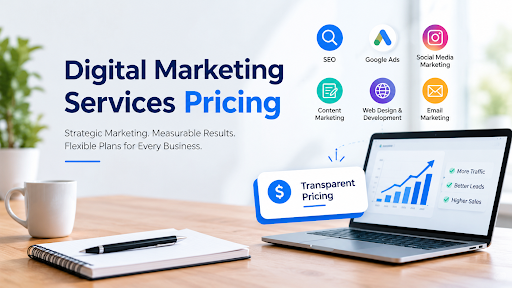
In today’s competitive online marketplace, businesses need effective digital strategies to reach their target audiences and generate consistent results. From search engine optimization and paid advertising to social media campaigns and content marketing, digital channels offer several opportunities to connect with potential customers. However, choosing the right services and managing marketing expenses can be challenging, particularly for businesses with limited budgets.
This is where digital marketing pricing packages become valuable. They allow businesses to understand the services included in a marketing plan, estimate their expenses, and select solutions that align with their objectives. Instead of purchasing individual services without a clear strategy, companies can invest in a coordinated approach designed to support their growth.
The real value of a marketing package goes beyond its price. Businesses should consider the quality of services, campaign management, reporting, audience targeting, and potential return on investment. Understanding these factors can help companies make informed decisions and choose a package that delivers meaningful long-term benefits.
Understanding Digital Marketing Pricing Packages
Digital marketing packages combine different online marketing services into a structured plan offered at a specific price. Depending on the agency and the company’s requirements, a package may include SEO, paid advertising, social media management, content creation, email marketing, and performance reporting.
These packages simplify the process of selecting marketing services because businesses can review available options and compare their features before making a decision. They also help establish expectations regarding deliverables, campaign activities, and ongoing support.
For example, a small business that wants to improve its search visibility may benefit from a package focused on SEO and content optimization. An established ecommerce company may require a broader plan that combines paid advertising, conversion optimization, and remarketing.
The most suitable option depends on the business model, competition, target audience, and marketing goals. A package should address specific business needs rather than include services that contribute little to the overall strategy.
Why Digital Marketing Services Pricing Matters
Understanding digital marketing services pricing is essential for allocating resources effectively. Marketing expenses can vary significantly depending on the complexity of campaigns, the number of channels involved, the competitiveness of the industry, and the experience of the professionals managing the work.
A transparent pricing structure helps businesses understand what they are paying for and whether the proposed services align with their objectives. It also makes it easier to compare different providers without focusing exclusively on the lowest price.
For instance, an agency offering a lower monthly fee may provide limited optimization and reporting, while another provider may include strategic planning, regular performance analysis, and ongoing campaign improvements. The second option could offer greater value if its additional services contribute to stronger results.
Businesses should therefore evaluate pricing alongside service quality, communication, expertise, and measurable outcomes. A well-planned investment can support sustainable growth, whereas choosing a provider based only on cost may lead to missed opportunities and inefficient spending.
What Makes Digital Marketing Agency Pricing Worth the Cost?
The value of digital marketing agency pricing depends on the expertise, resources, and strategic support an agency brings to a business. Professional marketers can help companies identify suitable channels, understand customer behavior, develop relevant content, and improve campaign performance.
Managing multiple marketing activities internally often requires hiring specialists, purchasing tools, and dedicating time to planning and analysis. Working with an agency can provide access to a broader range of skills without requiring a business to build an entire in-house team.
An experienced agency can also use campaign data to identify opportunities and adjust strategies as market conditions change. For example, if paid advertising generates clicks but few enquiries, the agency can review audience targeting, landing page content, and conversion tracking to identify possible problems.
However, hiring an agency does not automatically guarantee success. Businesses should look for a clear strategy, realistic expectations, transparent reporting, and a process for measuring progress. When these elements are present, agency services can become a valuable part of a company’s overall growth plan.
How Digital Marketing Packages Support Different Business Goals
Businesses operate at different stages of growth, so their marketing requirements are rarely identical. A new company may prioritize brand awareness and website visibility, while an established organization may focus on increasing qualified leads, online sales, or customer retention.
Well-designed digital marketing packages provide flexibility by combining services according to these different objectives. A local service provider might need local SEO, Google Business Profile optimization, and location-focused content. A B2B company may benefit more from SEO, educational resources, and lead generation campaigns.
Ecommerce businesses often require a combination of product page optimization, paid search campaigns, social media advertising, and conversion rate improvements. Meanwhile, companies entering new markets may need audience research, localized content, and targeted advertising to reach potential customers.
The key is selecting services that directly support the intended outcome. A package that generates website traffic may not be sufficient for a business that needs sales-ready leads. Similarly, a company focused on brand recognition may need a different approach from one seeking immediate conversions.
Matching the package to business goals helps prevent unnecessary expenses and creates a more focused marketing strategy.
The Role of Online Marketing Packages in Building Brand Visibility
Consistent visibility is important for businesses that want to establish credibility and remain competitive. Customers may encounter a brand through search engines, social media platforms, online advertisements, or informative articles before deciding to make a purchase.
Online marketing packages can coordinate these channels to create a more consistent customer experience. For example, SEO can help a website appear in relevant search results, while social media content can introduce the brand to new audiences. Paid advertising can provide additional exposure, and email campaigns can help maintain relationships with existing customers.
When these activities support a common strategy, businesses can reach potential customers at different stages of the buying journey. Someone who first discovers a company through a social media post might later visit its website, read a helpful article, and eventually submit an enquiry.
This approach is particularly useful when customers need time to research their options before making a decision. Consistent messaging, useful content, and a professional online presence can help businesses build recognition and trust over time.
However, results depend on the quality of execution, audience relevance, competition, and available resources. Visibility becomes more valuable when it reaches people who are genuinely interested in the products or services being offered.
Important Factors That Influence Digital Marketing Package Costs
Several factors determine how much a business should expect to invest in digital marketing. The scope of work is one of the most important considerations. A package covering SEO alone will generally require a different level of effort from a campaign involving SEO, paid advertising, content creation, social media management, and email marketing.
Industry competition also affects pricing. Businesses operating in competitive markets may need more extensive research, stronger content, additional advertising resources, and continuous optimization to achieve their objectives.
The condition of an existing website can influence the required investment as well. A website with technical SEO problems, slow loading times, weak landing pages, or poor conversion paths may need improvements before marketing campaigns can perform effectively.
Other considerations include the number of target locations, campaign complexity, content requirements, reporting frequency, and the experience of the service provider. Advertising budgets should also be distinguished from agency management fees because they represent separate expenses in many arrangements.
Before selecting a package, businesses should request a clear breakdown of included services, expected deliverables, additional charges, and contract terms. This makes pricing easier to understand and reduces the possibility of unexpected costs.
How to Measure the Return on Digital Marketing Investment
A marketing package becomes worthwhile when its contribution can be evaluated against business objectives. Although every campaign has different priorities, measurement should focus on outcomes rather than relying exclusively on surface-level metrics.
Website traffic can indicate whether more people are discovering a business, but traffic alone does not necessarily produce revenue. Businesses should also monitor qualified leads, enquiry submissions, phone calls, conversion rates, customer acquisition costs, and sales generated through marketing activities. When evaluating Guaranteed SEO Services, businesses should focus on measurable outcomes rather than traffic growth alone.
For example, an SEO campaign may initially focus on improving visibility for relevant search terms and attracting more visitors. Over time, the business can assess whether those visitors engage with service pages, submit contact forms, or become paying customers.
Paid advertising campaigns can be evaluated by comparing advertising costs with conversions and the revenue generated. For lead generation businesses, the quality of enquiries and the percentage of leads that become customers may be more useful than the total number of form submissions.
Attribution can sometimes be complicated because customers interact with several marketing channels before converting. Therefore, businesses should use appropriate tracking tools, consistent reporting methods, and realistic evaluation periods.
Clear measurement allows companies to identify effective activities, improve underperforming campaigns, and make better decisions about future spending.
Choosing the Right Digital Marketing Pricing Packages for Your Budget
Selecting a suitable package requires balancing available resources with realistic business priorities. Businesses should begin by identifying their main objective, whether that means improving organic visibility, generating leads, increasing ecommerce sales, or building brand awareness.
The next step is to assess the services required to achieve that objective. Rather than paying for every available marketing channel, businesses can prioritize the activities most relevant to their target audience and growth stage.
Comparing providers is equally important. Companies should review their experience, service descriptions, reporting practices, communication standards, and examples of previous work. Case studies can provide useful context, although past performance should not be treated as a guarantee of future results.
Businesses should also consider how easily a package can adapt as their needs change. A small company might begin with a focused SEO plan and expand into paid advertising or social media management when additional resources become available.
Most importantly, the package should offer a clear connection between the services provided and the intended business outcomes. A realistic plan with measurable goals is often more useful than an expensive package filled with activities that lack a defined purpose.
Common Mistakes to Avoid When Investing in Marketing Packages
One common mistake is choosing a provider entirely because of its low price. Affordable services can be useful, but businesses should understand the level of expertise, work, and support included before making a commitment.
Another mistake is expecting immediate results from every marketing channel. Paid advertising through PPC advertising services can generate visibility quickly, while SEO requires ongoing effort to build sustainable organic performance.Expectations should reflect the methods being used and the competitiveness of the market.
Businesses may also overlook the importance of their website experience. Even well-targeted campaigns can struggle when landing pages are confusing, contact information is difficult to find, or the conversion process creates unnecessary friction.
Failing to review performance reports is another problem. Without evaluating results, companies may continue investing in activities that do not support their objectives. Regular communication and data-driven improvements help ensure that marketing decisions remain relevant.
Avoiding these mistakes enables businesses to approach marketing investments more strategically and make better use of their available budgets.
Conclusion
Digital marketing packages can be a worthwhile investment when they provide relevant services, transparent pricing, and a strategy aligned with business goals. Their value comes from combining the right marketing activities, reaching suitable audiences, and measuring the outcomes that matter most.
Before choosing a provider, businesses should compare deliverables, evaluate expertise, understand the factors influencing costs, and establish realistic performance expectations. They should also review results regularly to identify opportunities for improvement.
Ultimately, the best package is not necessarily the cheapest or the most comprehensive. It is the one that addresses a company’s specific needs, uses its budget effectively, and supports measurable progress toward long-term business growth.