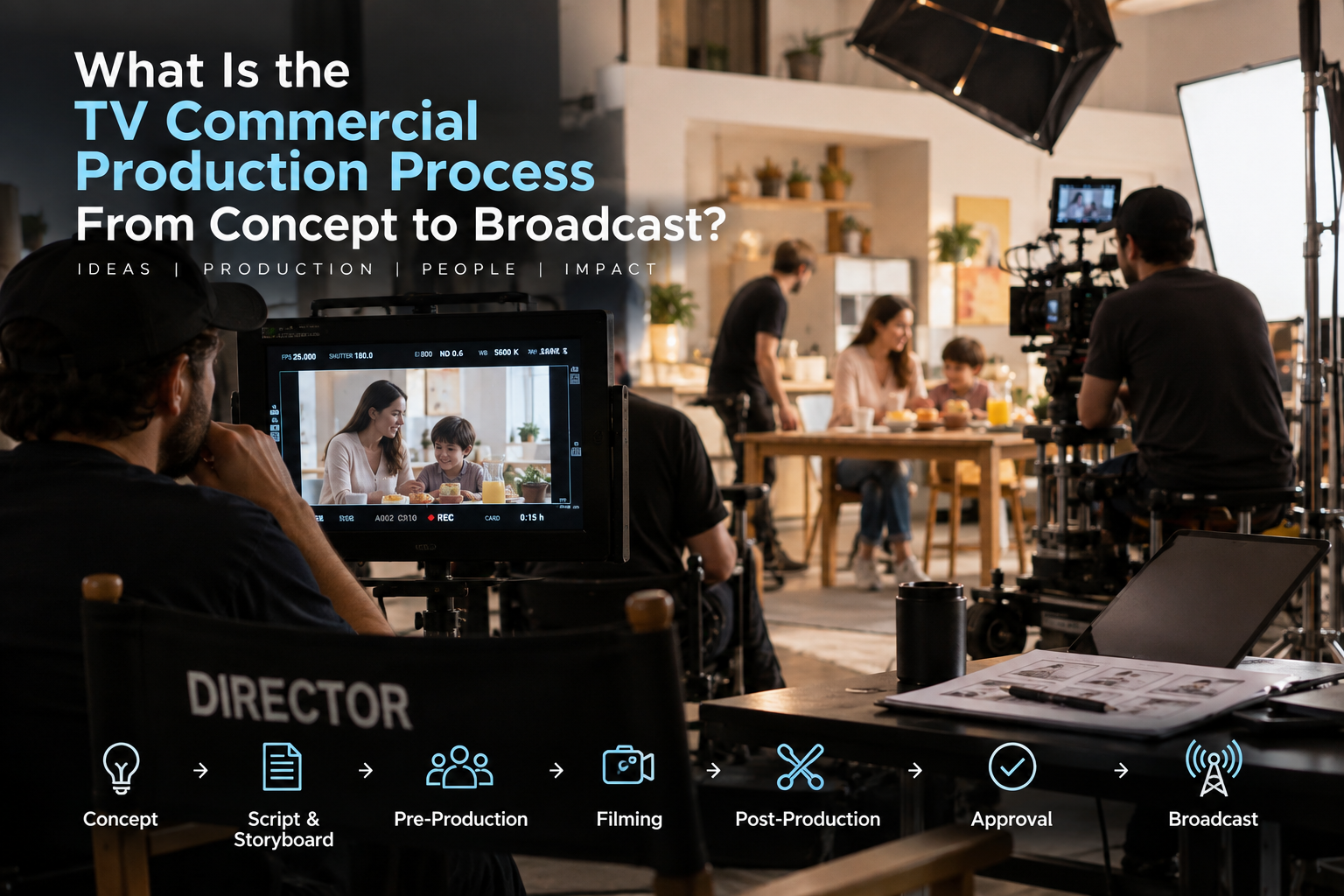
A successful TV commercial may last only a few seconds, but creating it involves careful planning, creative development and technical execution. From the first campaign idea to the final broadcast-ready file, every stage needs to work together to produce a commercial that communicates the brand message clearly.
For brands considering TV advertising, understanding the production process can make it easier to plan budgets, timelines and creative expectations. While individual projects vary in scale and complexity, most TV commercials follow a similar journey from concept to broadcast.
1. Start With the Creative Concept
Every commercial begins with an idea. Before cameras are booked or locations are selected, the production team needs to understand what the advertisement is supposed to achieve.
The initial stage typically involves defining the campaign objective, target audience, key message and desired response from viewers. A brand launching a new product, for example, may need a different creative approach from a company focused on increasing brand awareness.
TV commercial production companies may work alongside a brand or advertising agency to develop the creative direction. The goal is to turn the campaign brief into a concept that can be communicated effectively through a short piece of video.
2. Develop the Script and Storyboard
Once the concept has been established, it needs to become a practical production plan. This usually starts with script development.
The script determines what viewers will see and hear, including dialogue, voice-over, narration and important visual moments. Because commercials have limited running times, every scene and line needs to serve a purpose.
Storyboards can then help visualise the script before filming begins. They give the director, client and production team a clearer understanding of the planned shots, transitions, compositions and overall visual style. This stage also provides an opportunity to make creative changes before significant production costs are incurred.
3. Plan the Production
Pre-production is where the creative idea becomes a detailed shooting plan. This stage can involve casting, location scouting, permits, production design, wardrobe, makeup, equipment selection, crew scheduling and budgeting.
The production team also develops a shooting schedule and prepares the necessary logistics for the shoot. Locations may need to be secured, sets may need to be built and talent arrangements must be confirmed.
Good pre-production helps reduce surprises during filming. It also gives everyone involved a clear understanding of what needs to happen on the shoot day. The specific requirements depend on the commercial, but careful preparation is a common feature of professional TV advertising production. citeturn0search0turn0search3
4. Film the Commercial
Production is the stage most people associate with making a commercial, but it represents only one part of the overall process.
On the shoot day, directors, cinematographers, producers, lighting teams, sound professionals, actors and other crew members work together to capture the planned footage. Depending on the concept, filming may take place in a studio, on location or across several locations.
Multiple takes are often required to capture the right performances, camera movements, lighting and composition. The director oversees the creative execution while the production team manages the practical details needed to keep the shoot moving according to schedule.
The objective is to capture enough high-quality footage to give the post-production team everything needed to create the final commercial.
5. Complete Editing and Post-Production
Once filming is finished, the raw footage moves into post-production. This is where individual shots are shaped into a finished advertisement.
Editors assemble the footage according to the approved concept and script. Additional work may include colour grading, visual effects, motion graphics, sound design, music, voice-over and dubbing.
Not every commercial requires the same combination of services. A simple product advertisement may have relatively straightforward editing, while a larger campaign could require extensive visual effects, animation or multiple language versions.
Post-production is therefore more than simply cutting footage together. It is the stage where the commercial’s visual and audio elements are refined and brought together into a cohesive final piece.
6. Review, Approval and Broadcast Preparation
Before a commercial reaches viewers, the completed version normally goes through review and approval. The client and relevant creative or production teams check the final edit to ensure that it reflects the approved concept and brand requirements.
Any necessary revisions are completed before the commercial is finalised. Depending on the campaign and market, additional considerations may include copyright and usage rights, regulatory requirements, language versions and broadcaster specifications.
The final commercial must then be prepared according to the technical requirements of the intended broadcaster or distribution platform. These requirements can include video format, resolution, audio specifications and other delivery standards. Some markets also require specific advertising clearance or certification before an advertisement can air.
What Should You Look for in TV Commercial Production Companies?
Choosing the right production partner can have a significant impact on how smoothly a commercial moves from an idea to a finished broadcast asset.
Look for a company with relevant commercial production experience, a strong portfolio and the ability to manage the stages your project requires. It is also useful to understand how the company handles creative development, casting, production, post-production and final delivery.
Clear communication and transparent budgeting are equally important. Before production begins, the brand and production team should have a shared understanding of the creative direction, deliverables, timeline and budget.
For more complex campaigns, working with a production company that can coordinate multiple parts of the process can also simplify communication and help maintain consistency from the initial concept through final delivery.
Conclusion
The TV commercial production process involves much more than filming a short advertisement. It starts with a creative concept, develops through scripting and pre-production, comes to life during filming, and is refined through editing and post-production before final approval and broadcast delivery.
Understanding these stages helps brands prepare more effectively and make informed decisions when working with TV commercial production companies. With clear objectives, careful planning and strong collaboration, a creative idea can be transformed into a polished commercial ready to reach its intended audience.