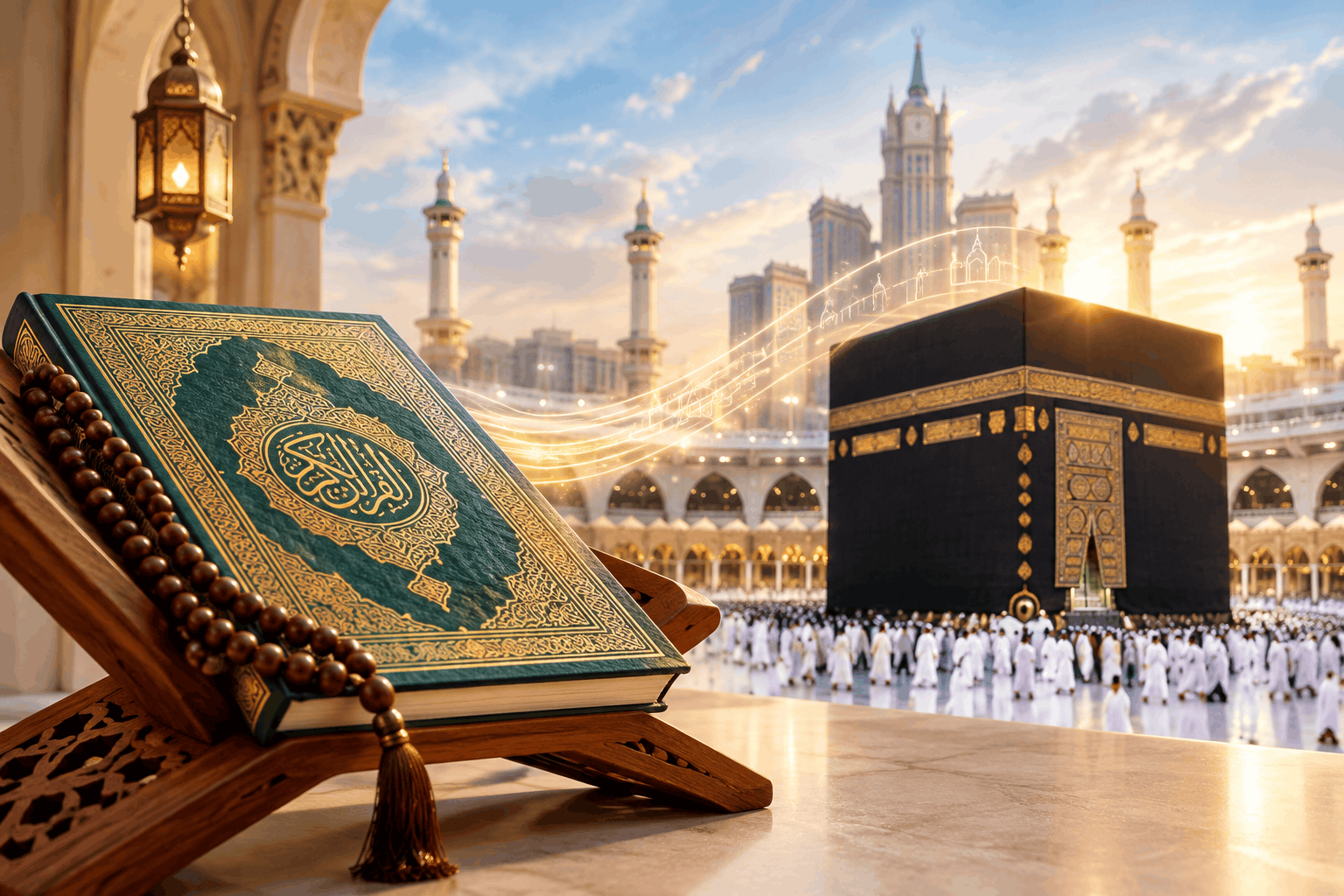
The Quran and the Kaaba hold a central place in Islam, connecting Muslims around the world through faith, worship, and devotion to Allah. The Kaaba, located in Masjid al-Haram in Makkah, Saudi Arabia, is the most sacred site in Islam and the direction Muslims face during their daily prayers. The Quran, the holy book of Islam, explains the Kaaba’s spiritual significance, its historical connection with Prophet Ibrahim (Abraham) and Prophet Ismail (Ishmael), and its role in Hajj and Umrah.
Understanding the connection between the Quran and the Kaaba helps Muslims appreciate the history and meaning behind Islamic worship. For pilgrims planning their spiritual journey, learning about these sacred teachings can also make visiting Makkah more meaningful.
1. The Kaaba in the Quran: A Sacred House of Worship
The Quran describes the Kaaba as a sacred house established for the worship of Allah. It serves as a symbol of unity for Muslims, regardless of their nationality, language, or background.
In Surah Al-Baqarah (2:125), Allah mentions the Kaaba as a place of return and security for people and instructs Prophet Ibrahim and Prophet Ismail to keep His House pure for those who perform Tawaf, remain in devotion, bow, and prostrate in prayer.
This verse highlights the Kaaba’s importance as a place dedicated to worship and spiritual reflection. It also demonstrates that the purpose of visiting this sacred place extends beyond physical travel. Muslims visit Makkah to strengthen their relationship with Allah, seek forgiveness, and renew their commitment to Islamic teachings.
The Kaaba as a Symbol of Muslim Unity
One of the most important connections between the Quran and the Kaaba is the unity they represent. Muslims across the world recite the same Quran and face the same direction when performing Salah.
Although Muslims live in different countries and follow diverse cultural traditions, the Kaaba provides a shared direction for prayer. This unity becomes especially visible during Hajj, when millions of pilgrims gather in Makkah to perform the same acts of worship.
2. Prophet Ibrahim and the Foundations of the Kaaba
The Quran establishes a significant connection between the Kaaba and Prophet Ibrahim, who is highly respected in Islam for his faith, obedience, and devotion to Allah.
Surah Al-Baqarah (2:127) describes Prophet Ibrahim and Prophet Ismail raising the foundations of the House while praying that Allah would accept their efforts. Their supplication demonstrates humility and the importance of seeking Allah’s acceptance when performing acts of worship.
The Dua of Prophet Ibrahim
The Quran also records Prophet Ibrahim’s prayer for Makkah and its people. In Surah Ibrahim (14:35–37), he asks Allah to make the city secure and explains that he settled some of his descendants in a valley near the Sacred House so they could establish prayer.
This passage highlights the relationship between the Kaaba, worship, and the development of a community devoted to Allah. It also explains why Makkah holds such a special place in Islamic history.
For Muslims visiting the city today, these Quranic passages provide an opportunity to reflect on Prophet Ibrahim’s legacy and the spiritual purpose of the pilgrimage.
3. Why Muslims Face the Kaaba During Prayer
The Quran explains the importance of the Kaaba as the Qiblah, the direction Muslims face during Salah.
In Surah Al-Baqarah (2:144), Allah instructs Prophet Muhammad (peace be upon him) to turn towards Al-Masjid al-Haram. This command established the Kaaba as the direction of prayer for Muslims.
The Spiritual Meaning of the Qiblah
Facing the Kaaba is an act of obedience to Allah. Muslims do not worship the Kaaba itself; they worship Allah alone. The Kaaba serves as the designated direction for prayer, reinforcing the unity and structure of Islamic worship.
The Quranic command also reminds Muslims that faith involves following divine guidance. Whether a person prays in the United Kingdom, Pakistan, Canada, or another country, the direction remains the same.
For travellers preparing for Hajj or Umrah, understanding the meaning of the Qiblah can deepen their appreciation of the sacred environment they will experience in Makkah.
4. The Connection Between the Quran, Hajj, and Umrah
The Kaaba is at the heart of several important pilgrimage rituals. The Quran provides guidance concerning the Sacred House, pilgrimage, and the worship associated with Makkah.
Surah Al-Hajj (22:26–29) refers to the Sacred House and includes instructions connected with pilgrimage. Surah Al-Baqarah (2:196) also addresses the completion of Hajj and Umrah for Allah.
Tawaf and Its Spiritual Importance
Tawaf involves walking seven times around the Kaaba in an act of worship. It is one of the central rituals performed during Hajj and Umrah.
Although the Quran does not provide every practical detail of Tawaf, it mentions the importance of the Sacred House and the worship performed there. The Prophet Muhammad’s teachings and established Islamic practices provide further guidance on performing pilgrimage rituals.
Learning Quranic Teachings Before Pilgrimage
Reading relevant Quranic passages before travelling can help pilgrims understand the significance of Makkah and the Kaaba. It is also helpful to learn the practical requirements of Ihram, Tawaf, Sa’i, and other pilgrimage rites from reliable Islamic sources.
Pilgrims travelling from Britain may choose an Islamic Travel UK service that helps them organise their journey while leaving time to study the religious significance of Hajj and Umrah. When evaluating travel providers, travellers should check their credentials, package details, accommodation arrangements, and current visa requirements.
5. The Kaaba and the Spiritual Experience of Umrah
Umrah allows Muslims to visit the Sacred Mosque, perform Tawaf, complete Sa’i between Safa and Marwah, and fulfil the other applicable requirements of the pilgrimage. Unlike Hajj, Umrah can generally be performed at different times of the year, subject to applicable regulations and restrictions.
For many Muslims, seeing the Kaaba for the first time is an emotional and deeply meaningful experience. The Quranic references to the Sacred House, Prophet Ibrahim’s prayers, and the importance of worship can help pilgrims reflect on the purpose of their visit.
How to Prepare for a Meaningful Journey
Before departure, pilgrims can prepare by reading Quranic verses about Makkah, learning the correct pilgrimage rituals, and understanding the etiquette of visiting Masjid al-Haram.
Those planning their journey from Britain can also compare travel arrangements and accommodation options. If you intend to book Umrah packages from UK, consider the distance of your hotel from the Haram, flight schedules, transport arrangements, visa assistance, and the services included in the package.
Choosing a suitable package can reduce logistical stress and allow you to focus more fully on prayer, reflection, and worship.
6. Lessons Muslims Can Learn From the Quran and the Kaaba
The connection between the Quran and the Kaaba offers several lasting lessons for Muslims.
- Faith and obedience: Prophet Ibrahim’s example teaches Muslims to follow Allah’s guidance with sincerity.
- Unity: The shared direction of prayer connects Muslims across nations and cultures.
- Humility: The supplication of Prophet Ibrahim and Prophet Ismail demonstrates the importance of asking Allah to accept one’s deeds.
- Devotion: The Sacred House reminds believers to dedicate their worship to Allah alone.
- Spiritual preparation: Understanding Quranic teachings can make Hajj and Umrah more meaningful.
These lessons apply not only during pilgrimage but also to everyday life. Muslims can reflect on them through prayer, Quran recitation, charitable actions, and efforts to improve their character.
Conclusion
The connection between the Quran and the Kaaba is rooted in faith, worship, history, and obedience to Allah. The Quran describes the Sacred House, recounts the role of Prophet Ibrahim and Prophet Ismail (A.S.) in raising its foundations, and establishes the Kaaba as the direction of Muslim prayer. It also provides important guidance concerning Hajj and Umrah.
For Muslims preparing to visit Makkah, learning about these Quranic teachings can bring greater understanding to every stage of the journey. Whether travelling for the first time or returning for another pilgrimage, reflecting on the significance of the Kaaba helps pilgrims focus on the true purpose of their visit: worshipping Allah sincerely and strengthening their faith. With appropriate spiritual preparation and carefully planned travel arrangements, pilgrims from Britain can approach their journey with greater confidence, knowledge, and devotion.