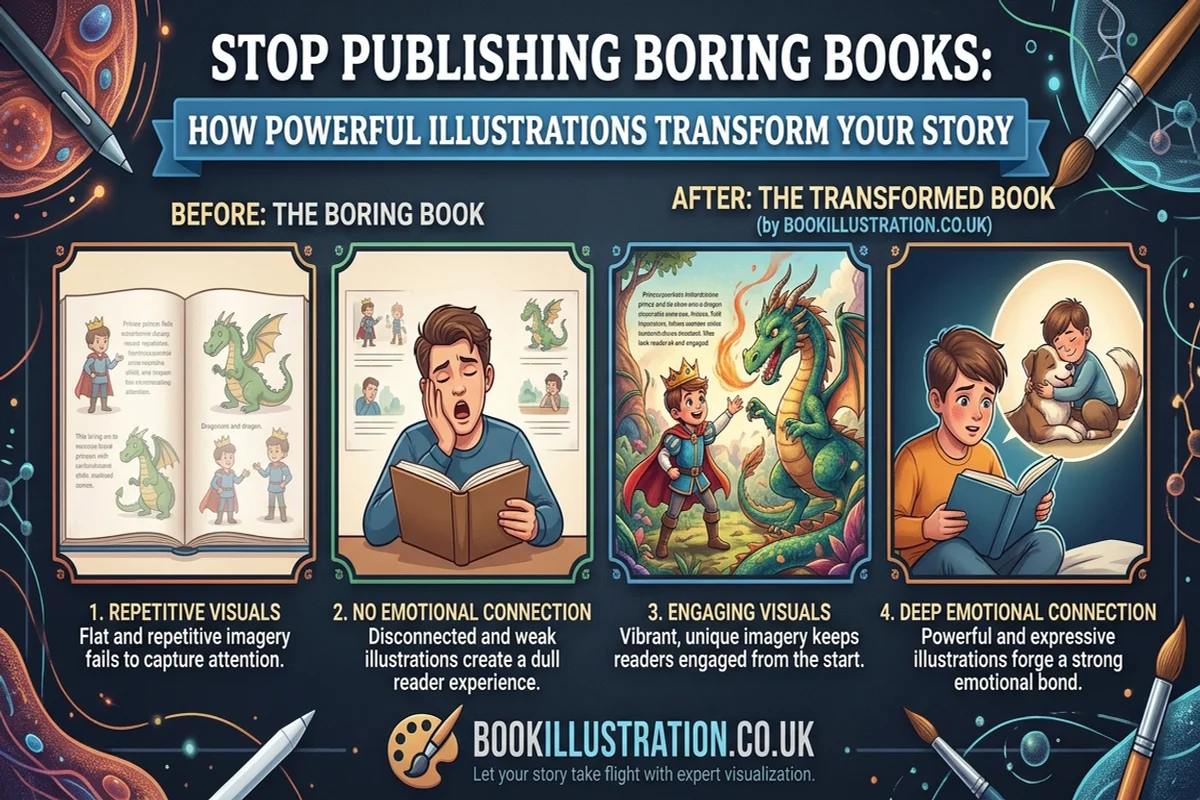
A well-written book deserves to be seen and not just simply read. While strong writing gives a story its voice, illustrations are equally important as they give readers another way to experience its characters, settings and ideas. This does not mean every book needs colourful artwork on every page. The real value of illustration lies in knowing where visuals can strengthen the reading experience.
Scroll down to learn more about how the right illustrations can help a manuscript feel more distinctive and memorable for authors preparing a children’s book or even a creative non-fiction title.
How Illustrations Bring Your Story To Life
A carefully chosen image can establish a mood and easily reveal something about a character that words alone might take several paragraphs to describe (that’s the best part; you get to save your pages from those huge chunks of words)
Here is what more they can do for your book.
- Give Readers a Reason to Turn the Page
Readers respond to more than the information a book contains. They also notice its pacing and visual appeal. The reading experience often feels repetitive when every page follows the same pattern of dense text, especially in books that are made for younger audiences.
Illustrations introduce variety without interrupting the story. A change in composition, an expressive character in a childrens illustration or an intriguing scene can encourage readers to continue.
- In fiction, an image might hint at an important event.
- A diagram or carefully designed illustration could make a complicated explanation easier to follow in non-fiction.
The aim of illustrations is to give readers a visual experience that complements the writing.
- Make Characters Feel Real
Writers often spend a lot of time describing their characters’ appearances, personalities and emotions.
Illustrations offer another way to communicate these details.
A character’s posture and facial expressions can suggest confidence, nervousness, humour or vulnerability. Readers may understand something about a character before they have read a full description.
This is very useful in children’s books, where illustrations can help young readers recognise emotions and follow character relationships, and visual details may carry much of the narrative itself.
But there is one thing to it. Authors should consider how each character needs to appear throughout the book.
Consistent features and proportions help readers recognise familiar characters, even when the setting changes.
- Build a World Readers Can Picture
Descriptions establish a story’s setting, but illustrations are the ones that can make that setting tangible.
A busy city street, an unfamiliar landscape or a fictional kingdom becomes easier to imagine when readers can see its details.
Visuals are especially valuable when a story depends on atmosphere.
- Factors such as the colours, lighting and composition of an illustration can make a place feel welcoming or mysterious.
- Small background details may also reveal information about the period, culture or circumstances in which the story takes place.
Authors should think about what makes their setting different from other books. An illustrator can use those details to create a visual identity that readers associate with the story.
- Choose an Illustration Style That Fits the Book
You can choose from a range of illustration styles for your manuscript,
- Soft watercolours may complement a reflective children’s story
- Bold shapes and contrasting colours might work better for a lively adventure.
- A historical title may call for carefully researched clothing and objects.
Before commissioning artwork, authors should consider their intended audience and overall tone. It helps to collect visual references, discuss the atmosphere they want to establish and explain which details must remain accurate.
The illustrations should feel connected to the writing instead of being added as an afterthought. A consistent visual approach can make the entire book feel more cohesive.
- Use Images to Explain, Not Just Decorate
Illustrations are not limited to fiction, as they can also make practical and educational books easier to understand.
- A cooking guide might use step-by-step images to demonstrate a technique.
- Somewhere, a children’s science book could illustrate how a natural process works
- A historical publication might use visual reconstructions to help readers understand a particular period.
The most useful images answer a question or clarify something that might otherwise be difficult to visualise.
Professional illustration agencies UK suggest that if an illustration repeats information that is already obvious, it may add little value. But it will already have a purpose if it helps readers understand a process or an idea.
This is why authors should decide what each illustration needs to accomplish before finalising the artwork.
When Should You Start Planning The Illustrations?
Waiting until the manuscript is complete can make illustration decisions harder. Some scenes may need more space, certain explanations may benefit from diagrams, and page layouts may need adjustments to accommodate the artwork.
This is why planning visuals early gives authors and illustrators more room to collaborate. They can identify important scenes, discuss image placement and decide where text and artwork should share a page.
Budgeting also matters. The cost of illustrations depends on factors such as:
- The number of images
- Complexity of the artwork present
- Your chosen illustrator’s experience
- The rights agreed for using the images
This is why establishing these details early helps authors plan realistically.
How To Prepare Illustrations for Professional Publishing
Good artwork needs to be prepared properly before it goes into a printed book.
Resolution, colour settings, image dimensions, margins and placement all affect the final result.
- Images that look sharp on a screen may appear less clear in print if they are not supplied at an appropriate resolution.
- Colour can also look different on paper, so authors should follow their printer’s specifications instead of relying entirely on digital previews.
- The layout should leave enough space around images and ensure that important details are not lost near the binding or trimmed page edges.
This is why a final review of the complete book can help catch inconsistencies before publication.
FAQs
No. Illustrations are most useful when they support the subject, audience or storytelling approach. Some books can benefit from extensive artwork, whereas carefully selected visuals can work for others.
Authors should consider illustration needs during the planning stage, especially if their book depends on characters and detailed visual scenes.
Yes. Adding diagrams, examples and explanatory images can make unfamiliar ideas easier to understand and help your readers follow instructions.
Authors should discuss the audience, visual style, number of images, deadlines, budget, revision process and rights for using the finished artwork.
Final Thoughts
A memorable book is the result of several elements that work together. Writing lays the foundation, while illustrations can deepen the experience and help readers connect with the material. All it takes is a clear visual direction, thoughtful image placement, and careful preparation for publication for authors to create books that look as compelling as they read. So don’t focus on simply making your book colorful, but on making every visual choice count!