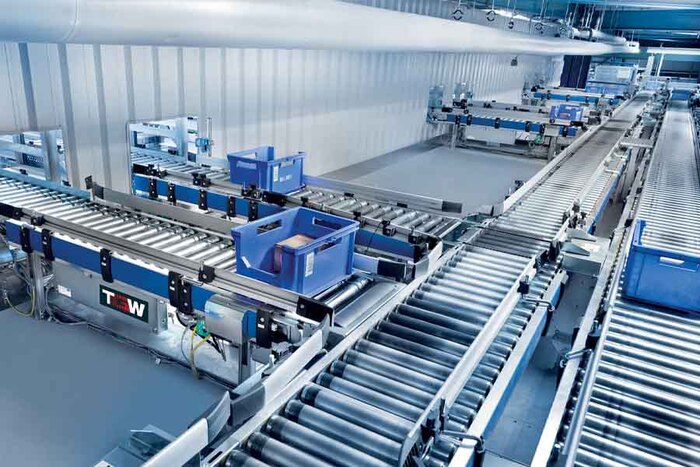
Conveyors are built to last and withstand rigorous use. However, without frequent maintenance, they can break down with time. Conveyor breakdowns often lead to downtime, a fall in productivity, and increased cost.
In the world of manufacturing and warehousing, where every second counts, downtime must be kept to the barest minimum. Conveyor systems may require daily, weekly, or monthly maintenance. Key components of the conveyor parts must be properly cared for, and a mixture of preventative and predictive measures should be taken to ensure long-term use of the conveyor.
Preventative maintenance of conveyor systems
Preventative maintenance is proactive routine checks done to avoid future machine breakdowns. it includes planned maintenance, servicing, and scheduled health checks. Preventative maintenance is necessary to ensure the machine’s lifespan and its parts do not deteriorate. This maintenance also helps to schedule downtime ahead of breakdowns. Some key components of preventative maintenance are:
- Cleaning and inspection: Sometimes, the easiest measures are crucial. Regular conveyor cleaning is necessary to ensure that foreign particles or debris are not interfering with the machine. Inspect regularly for unusual wear patterns, stress points, slacking, and misalignment. Regular cleaning and inspection can expose damaged conveyor parts for swift remedial actions.
- Lubricating: Ensuring the gearbox is well lubricated is key to a functional conveyor system. The pulleys, chains, and bearings rely on oiling to function smoothly and prevent wear and tear.
- Tension checks: Conveyor chain and belt tension must be checked regularly, as these are some of the most prone areas to wear and tear. Belt slippage and mistracking are common issues that occur with frequent conveyor usage and can lead to significant downtime. Ensure that the belt and chain are tensioned according to the product specifications.
- Checks for wear, tear, and related issues: It is important to make regular checks for wear and tear and tackle them before they become full-blown problems that could cause delays and setbacks. If the machine sounds different or moves slower than usual, that could indicate a more significant issue. Proactive measures must be taken to prevent machine breakdown in such cases.
- Alignment checks: Ensure the conveyor chain, belt, rollers, and gearbox are carefully aligned to prevent wear.
Predictive maintenance of conveyor systems
Predictive maintenance of conveyor parts typically uses advanced technological tools and integrations to curb challenges before they happen. It is usually data-driven and employs IoT, machine learning models, and vibration sensors to diagnose faults and abnormalities and classify them according to threat levels.
- Vibration analysis: This technique involves using sensors to gather data on vibration patterns in the conveyor system. The sensors can be attached to specific parts of the machine to collect data, which can then be used to detect imminent machine failure based on changes in vibration patterns. The sensors can also isolate faulty parts based on the vibration data collected from a specific conveyor system part, leading to early detection and repair.
- Operational analysis: This involves collecting data based on the conveyor system’s baseline functioning, analyzing them, and using that data to predict faults or irregularities in the machine if it deviates from its regular functioning. This will help solve issues a lot quicker and get the conveyor system up and running a whole lot quicker.
How experts can handle conveyor maintenance
As much as in-house maintenance can handle small-time faults, a professional must access conveyor systems periodically. All conveyor systems belong to an ecosystem; experts familiar with that ecosystem should be responsible for maintenance. This ensures that your unique machine receives the special care that it deserves.
Liaising with the professionals who manufactured your conveyor system can also help you get detailed assessments of your machine, replace worn-out parts with the originals, and create a bespoke maintenance schedule based on the manufacturer’s specifications.
Conclusion
Conveyor systems are arguably the most important in automation, warehousing, and material handling. Overlooking their maintenance can lead to mistakes that cost money and productive hours. A faulty conveyor system is a handicapped production line. Therefore, regular preventative and predictive maintenance must be carried out to ensure that the conveyor systems function optimally and cut down on dreaded downtime.