A promotional pop up tent is a portable canopy designed to provide shelter while displaying a business logo, colors, graphics, or marketing message. It can transform an ordinary outdoor space into a recognizable branded area within minutes.
These tents are commonly used at trade shows, farmers markets, sporting events, festivals, corporate gatherings, product launches, community activities, and outdoor promotional campaigns. Custom printing allows businesses to turn the canopy into a highly visible marketing asset.
What Is a Promotional Pop Up Tent?
Portable Branding and Shelter
A promotional pop up tent typically combines a folding frame with a fabric canopy that can be customized with branding. The structure is designed for relatively quick assembly and transportation between events.
The main purpose is to combine practical shelter with continuous brand visibility. Unlike a temporary banner that may occupy only one position, a branded canopy can create an entire promotional space around staff, products, displays, or visitors.
How Custom Printing Works
Businesses can usually customize the roof, valance, back wall, and sidewalls depending on the selected configuration. Full-color dye-sublimation is one commonly offered printing method for fabric canopies because graphics can be integrated across large areas.
A strong design generally includes:
- Business logo
- Brand colors
- Short marketing message
- Website or social media information
- Product imagery where appropriate
- Simple visual elements that remain readable from a distance
A promotional tent should communicate the brand quickly rather than overwhelm visitors with excessive text.
Why Businesses Use Promotional Pop Up Tents
Increased Brand Visibility
A branded canopy can act as a large visual landmark within a busy event environment. A consistent logo and color scheme can help visitors identify a business before they reach the booth.
This is particularly useful at outdoor events where multiple vendors compete for attention. A recognizable tent can establish a clear visual identity while also defining the company’s physical space.
Professional Event Appearance
A coordinated canopy, table covering, wall graphics, and signage can create a more polished presentation. Some suppliers offer matching accessories such as flags, table covers, and printed walls to build a complete branded setup.
A professional appearance can be particularly important when businesses are introducing products, meeting potential customers, or representing an organization at a public event.
Protection From Outdoor Conditions
The canopy provides overhead shade and can offer some protection from light weather, depending on its construction and fabric specifications.
However, a promotional pop up tent should not automatically be considered suitable for severe weather. Wind, rain, and other conditions can affect stability, so appropriate weights, stakes, and event-specific safety procedures are important.
Common Promotional Pop Up Tent Sizes
Choosing the Right Footprint
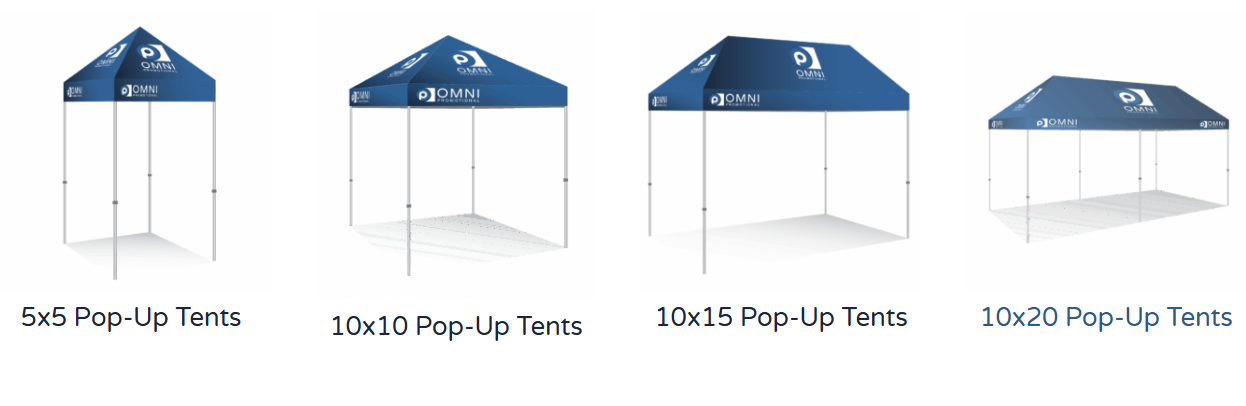
Promotional tents are available in several dimensions. Common configurations include 10×10, 10×15, and 10×20 feet, while smaller and larger options are also available.
| Tent Size | Suitable Uses | Main Advantage |
|---|---|---|
| 5×5 ft | Small promotional spaces | Compact footprint |
| 8×8 ft | Smaller vendor areas | More room than compact models |
| 10×10 ft | Trade shows and standard booths | Balanced space and portability |
| 10×15 ft | Larger displays | Additional product and visitor space |
| 10×20 ft | Major activations and large displays | Broad branded area |
| 20×20 ft | Large outdoor events | Extensive event footprint |
10×10 Promotional Tent
The 10×10 format is one of the most versatile choices for businesses. It can provide enough room for a table, staff members, promotional materials, and selected products without requiring the footprint of a larger event structure.
It is often practical for markets, sporting events, trade shows, community events, and smaller brand activations.
Larger Promotional Tents
Businesses with larger product displays or several staff members may benefit from 10×15 or 10×20 configurations.
A larger footprint can accommodate additional tables, demonstration areas, seating, merchandise, or customer interaction zones. The trade-off is increased transportation and setup requirements.
Important Features to Consider
Frame Construction
The frame is one of the most important components because it determines how the tent folds, travels, and performs during repeated use.
Aluminum frames are commonly used in commercial pop-up systems because they can provide a combination of durability and relatively manageable weight. Some systems also use steel components for additional structural strength.
When comparing frames, businesses should consider:
- Frame material
- Leg construction
- Joint quality
- Height adjustment
- Repeated-use durability
- Carrying weight
- Replacement-part availability
Canopy Fabric
The canopy fabric affects appearance, weather resistance, printing quality, and longevity.
Some commercial products use polyester fabrics such as 600D polyester, while coatings may be applied to improve resistance to water or outdoor exposure. Specifications vary between manufacturers, so buyers should review the actual material and performance claims before purchasing.
Sidewalls and Backwalls
Sidewalls can increase branding space and provide additional separation from surrounding activity. Full walls can also create a more enclosed booth, while half walls can maintain a more open appearance.
Available configurations may include:
- Full backwalls
- Full sidewalls
- Half walls
- Walls with windows
- Printed wall panels
- Mesh sections
Adding a branded backwall can make a simple canopy look more like a dedicated exhibition booth.
How to Design a Promotional Pop Up Tent
Keep Branding Clear
The most effective tent graphics generally prioritize immediate recognition. A visitor should be able to identify the business without studying the canopy closely.
A practical design can follow this hierarchy:
- Logo: The most recognizable brand element.
- Primary message: A short statement describing the business or promotion.
- Supporting graphics: Product imagery or relevant visual elements.
- Secondary information: Website, slogan, or other useful details.
Avoid placing important information close to seams, corners, or areas that may become difficult to see when the canopy is assembled.
Use Consistent Brand Elements
The tent should visually match other promotional materials whenever possible. Matching colors and graphics across the canopy, table cover, flags, banners, and printed walls can create a unified event presence.
Consistency helps turn separate promotional materials into one recognizable brand environment.
Where Can a Promotional Pop Up Tent Be Used?
Trade Shows and Exhibitions
At trade shows, a branded canopy can help define an organization’s space and make the booth easier to identify. Additional walls and displays can be incorporated when more branding or privacy is required.
Farmers Markets and Vendor Events
A promotional pop up tent can provide a practical covered area for products, staff, demonstrations, and customer conversations.
Its portability also makes it useful for businesses that participate in multiple markets or community events throughout the year.
Sporting Events
Sports tournaments, races, and outdoor competitions can provide opportunities for sponsorships, product demonstrations, sampling, registration areas, and promotional activities. Branded tents are frequently used in these environments.
Corporate and Community Events
Companies can use branded tents for employee events, outdoor launches, charity activities, festivals, and community programs.
The canopy can function as a meeting point, information station, promotional booth, or product display area.
Promotional Pop Up Tent vs. Standard Canopy
A standard canopy primarily provides shelter, while a promotional pop up tent is designed to combine shelter with deliberate brand communication.
| Feature | Standard Canopy | Promotional Pop Up Tent |
|---|---|---|
| Shelter | Yes | Yes |
| Custom branding | Limited or optional | Core purpose |
| Logo printing | Sometimes | Common |
| Marketing graphics | Limited | Extensive |
| Sidewall branding | May be available | Common option |
| Event display use | Possible | Primary application |
| Brand visibility | Moderate | High |
The best option depends on the intended use. Someone seeking basic shade may not need extensive custom printing, while a business attending multiple events may benefit substantially from a branded setup.
How to Maintain a Promotional Pop Up Tent
Clean the Canopy Regularly
Dirt and stains can reduce the professional appearance of printed graphics. The canopy should be cleaned according to the manufacturer’s fabric-care instructions.
Dry Before Storage
A wet canopy should generally be dried thoroughly before long-term storage. Storing damp fabric can contribute to unpleasant odors and material problems.
Inspect the Frame
Before and after events, users should inspect joints, legs, connectors, and other moving parts for visible damage or unusual wear.
Transport It Properly
A dedicated carrying case can make transportation easier and protect the folded structure and canopy. Wheeled cases are available with some commercial systems.
What to Look for When Buying
Before purchasing a promotional pop up tent, businesses should compare:
- Tent size: Match the footprint to the available event space.
- Frame material: Consider durability, weight, and frequency of use.
- Fabric quality: Review construction and outdoor-performance specifications.
- Printing method: Look for clear, durable graphics.
- Sidewall options: Determine whether walls are needed.
- Portability: Consider transportation and storage.
- Stability accessories: Check options for weights, stakes, and other supports.
- Replacement graphics: Useful when the same frame will be reused with updated branding.
- Warranty: Review coverage for both structural components and graphics.
Final Thoughts
A promotional pop up tent can serve as both an event shelter and a large-scale branding tool. Its combination of portability, customizable graphics, and practical event space makes it useful for businesses, vendors, organizations, and promotional teams.
The right tent depends on the event environment, available space, expected frequency of use, branding requirements, and transportation needs. A 10×10 model can provide a practical starting point for many businesses, while larger configurations can support more substantial displays.
The most effective promotional pop up tent is not simply the largest or most colorful option; it is the one that combines suitable construction, clear branding, practical size, reliable portability, and appropriate event accessories.