Demolition projects involve much more than bringing down an unwanted structure and hauling away the remains. Before work begins, property owners and contractors may need to address permits, structural conditions, utility connections, hazardous materials, site access, safety controls, and waste management. Professional DFW demolition services help coordinate these important stages so the project can move forward in an organized manner. Understanding what a demolition contractor typically covers can help property owners plan more effectively and avoid preventable complications.
Understanding Permits and Pre-Demolition Requirements
The permit process for demolition can vary according to the property’s location, structure, and scope of work. Local authorities may have their own requirements for demolition permits, inspections, utility disconnections, and related documentation. Property owners should confirm requirements with the applicable city or jurisdiction before scheduling demolition. A professional contractor can help identify which approvals or documentation may be needed, but the exact requirements depend on the location and project circumstances.
Asbestos-related requirements are another important consideration in Texas. The Texas Department of State Health Services states that notification is required before the demolition of a building or facility in applicable circumstances, even when asbestos is not present. The standard notification period is at least 10 working days before the start of demolition or asbestos-abatement activity, except for certain emergency or ordered demolitions.
Conducting a Thorough Site and Structural Assessment
Professional demolition should begin with an evaluation of the structure and its surroundings. Contractors need to understand the building’s construction, condition, accessibility, nearby structures, utility connections, and potential hazards before selecting a demolition method. OSHA requires an engineering survey by a competent person before demolition operations begin to evaluate framing, floors, walls, and the possibility of an unplanned collapse. Adjacent structures where workers could be exposed must also be considered.
The assessment can also reveal conditions that may affect equipment access and project scheduling. Narrow entrances, neighboring buildings, overhead lines, fences, trees, unstable areas, and difficult terrain may require additional planning. A contractor can use this information to establish work zones and determine where machinery, debris containers, and workers can safely operate. Identifying these challenges before demolition begins is an important part of responsible project preparation.
Addressing Utilities and Safety Before Demolition
Utility coordination is one of the most important pre-demolition responsibilities. Electricity, gas, water, steam, sewer, and other service lines need to be properly controlled before structural demolition begins. OSHA specifically requires applicable service lines to be shut off, capped, or otherwise controlled outside the building line before demolition work starts. Professional contractors should coordinate this process with the relevant utility providers and property representatives rather than assuming that an apparently vacant structure has no active connections.
Site safety also involves controlling access to the demolition area. Barriers, designated equipment routes, warning signs, protective equipment, and appropriate work procedures can help separate active demolition from people who are not involved in the project. The contractor should also have procedures for responding to unexpected structural conditions or other hazards discovered during the work. This preparation is especially important when demolition occurs near occupied properties, public areas, roads, or neighboring businesses.
Managing Asbestos and Other Hazardous Materials
Older buildings can contain asbestos-containing materials in products such as insulation, flooring, roofing, siding, or other components. The presence of asbestos cannot always be determined simply by visual inspection. Texas DSHS explains that asbestos surveys and notification requirements apply to certain renovation and demolition projects, with specific rules depending on the type of building and project. Federal OSHA requirements also regulate demolition and salvage work when asbestos is present.
A professional demolition plan should therefore address hazardous-material concerns before structural materials are disturbed. If regulated asbestos-containing materials are identified, qualified professionals may be required to perform assessment, abatement, air monitoring, or other specialized work. Asbestos waste also has specific handling considerations, because contaminated debris, dust, protective materials, and other items can fall under asbestos-containing waste requirements.
Using the Appropriate Demolition Method and Equipment
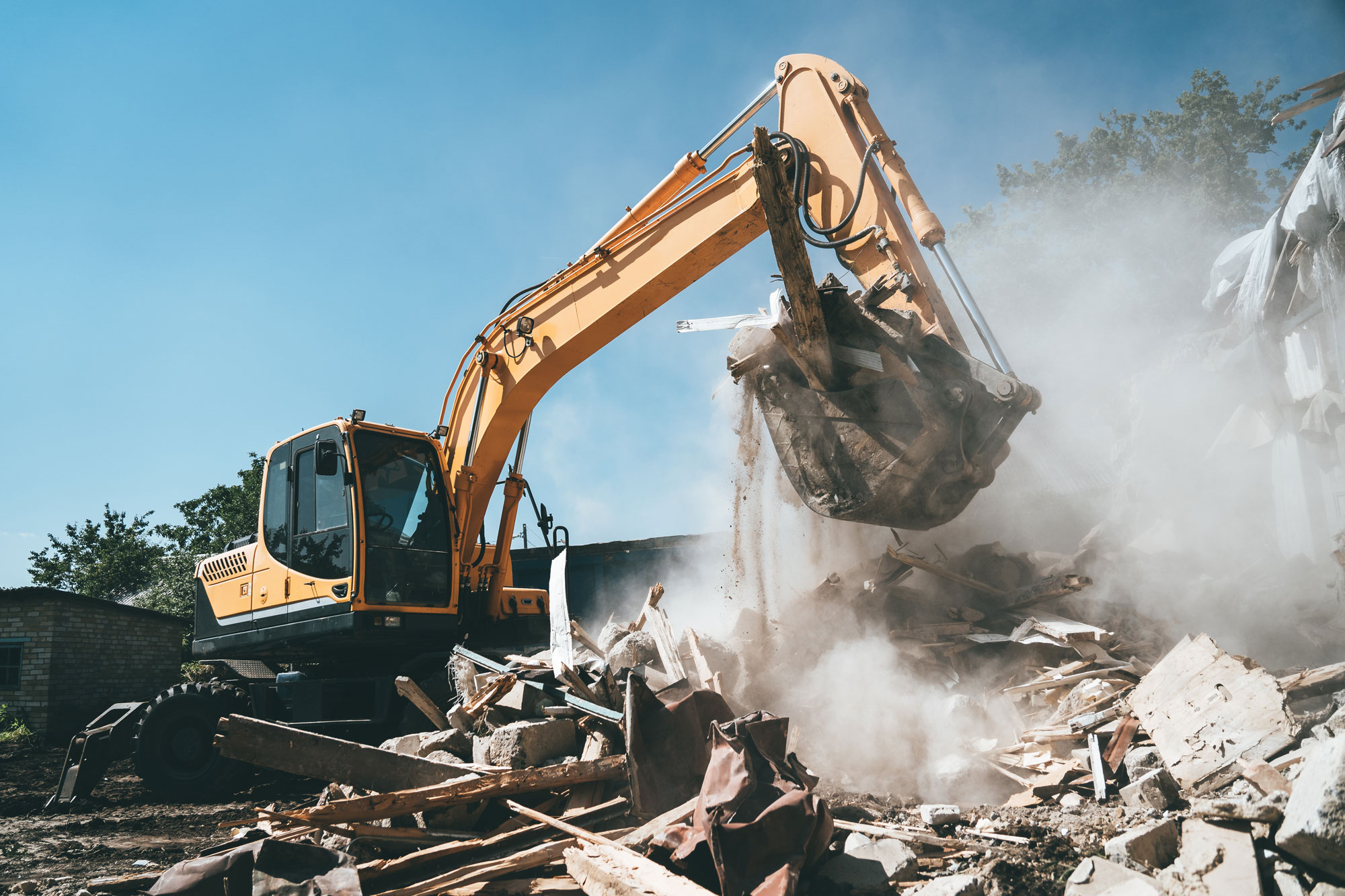
The demolition method should be selected according to the structure, site conditions, and surrounding environment. Mechanical demolition may involve excavators, loaders, skid steers, hydraulic breakers, grapples, shears, or other attachments. Selective demolition may be more appropriate when only part of a building needs to be removed or when certain structural elements must remain. The contractor’s assessment should determine which approach provides suitable control for the specific property.
Equipment placement is also an important safety consideration. Heavy machinery should operate on surfaces capable of supporting its weight, while operators need sufficient room to maneuver without unnecessarily approaching unstable structures or surrounding obstacles. OSHA’s demolition standards address mechanical demolition operations and establish requirements intended to reduce hazards associated with equipment and structural instability.
Controlling Dust, Falling Materials, and Site Access
Demolition can generate dust, airborne particles, falling materials, noise, and vibrations, depending on the structure and method being used. Contractors need to consider how these conditions could affect workers, nearby buildings, pedestrians, and neighboring properties. Appropriate controls should be selected according to the materials and site conditions. The goal is to keep demolition activity within a controlled work area while reducing unnecessary impacts outside the property.
Falling materials require particular attention because structural components can become unstable as the building is dismantled. Professional crews follow a planned sequence instead of randomly removing structural elements. The demolition plan should consider the direction of material movement, equipment location, worker positioning, and the stability of remaining portions of the structure. These controls help make the process more predictable as the building gradually comes down.
Handling and Removing Demolition Debris
Debris removal is a major part of completing a demolition project. A demolished structure may produce concrete, wood, metal, drywall, roofing materials, insulation, fixtures, and other components that need to be collected and managed. Contractors should establish a plan for moving material from the active work area to appropriate containers, vehicles, processing locations, or disposal facilities. Keeping debris organized can also improve equipment access and reduce unnecessary hazards on the site.
Different materials may require different handling methods. Metal may be separated for recycling, while other construction materials may require appropriate disposal based on their characteristics. Hazardous materials cannot simply be mixed with ordinary demolition debris. For asbestos-containing waste, Texas DSHS specifically recognizes contaminated debris and related materials as asbestos-containing waste material when applicable.
Final Cleanup and Site Preparation
Once the structure has been removed and major debris has been hauled away, the property may still require additional cleanup. Remaining concrete, foundations, buried materials, loose debris, or uneven areas may need to be addressed depending on the property’s future use. A contractor should clarify whether final cleanup, slab removal, foundation removal, and related work are included in the demolition agreement. This distinction is important because removing the building does not always mean the property is immediately ready for construction.
The next stage may involve grading, excavation, landscaping, or new construction. If vegetation also needs to be removed from the surrounding property, land clearing DFW TX services may become part of the broader site-preparation plan. Coordinating these activities can help create a smoother transition from demolition to redevelopment. Property owners should discuss the complete project sequence before work begins so each contractor understands how their responsibilities connect.
How Professional DFW Demolition Services Add Value
Professional DFW demolition services can bring together the many tasks involved in safely removing a structure, from initial assessment and utility coordination to controlled demolition, hazardous-material considerations, debris removal, and final cleanup. The contractor’s responsibilities should be clearly defined in the project agreement so property owners understand what is included. This may include equipment, labor, hauling, disposal, site protection, and specific cleanup services.
A well-managed demolition project is built around preparation rather than improvisation. Property owners should ask contractors about permits, structural assessments, utility disconnections, asbestos procedures, equipment, debris handling, and final site conditions before signing an agreement. Requirements vary by property and jurisdiction, so project-specific confirmation remains important. With careful planning and experienced oversight, demolition can provide a controlled starting point for construction, redevelopment, land clearing, or other improvements.