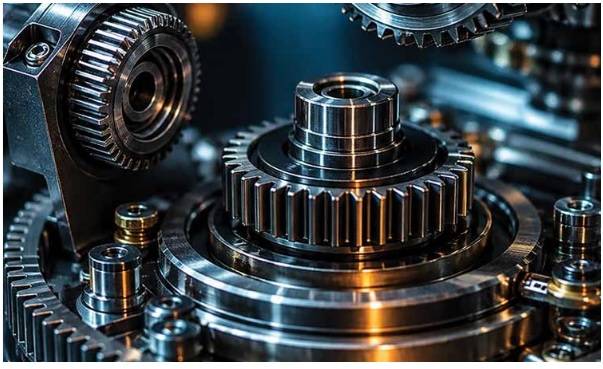
Modern manufacturing places constant pressure on companies to improve accuracy, production speed, and consistency. This is particularly true in industries where gears, threaded components, and precision mechanical parts must meet demanding specifications.
Advanced cutting and forming processes can help manufacturers achieve these goals. Power skiving has become an important machining method for producing certain gear components, while thread rolling provides an efficient approach to forming strong and accurate threads.
The quality of the tooling used in these processes has a direct influence on production results. Selecting suitable tools requires an understanding of the component design, material, machinery, accuracy requirements, and expected production volume.
Understanding Power Skiving
Power skiving is a gear manufacturing process that combines characteristics of cutting and hobbing. It uses a specialized cutter that rotates in coordination with the workpiece to remove material and generate the required tooth profile.
The process can be particularly useful when manufacturing gears that are difficult to produce efficiently using conventional methods.
Its advantages can include:
- Efficient material removal
- Flexible gear production
- Suitable machining of certain internal gears
- Reduced machining time in suitable applications
- Accurate tooth generation
- Potential for improved production efficiency
However, the success of the process depends heavily on tool geometry, machine capability, cutting conditions, and the accuracy of the workpiece setup.
The Importance of Power Skiving Tools
The cutter used in power skiving must be manufactured with considerable precision. Its geometry determines how the cutting edges interact with the workpiece during machining.
Companies evaluating power skiving tools manufacturers should therefore consider the technical capabilities of the supplier rather than focusing only on product availability.
Important considerations include:
Tool Geometry
The cutter needs to match the gear design and machining requirements. Tooth profile, dimensions, and other geometric characteristics must be carefully controlled.
Tool Material
The material of the tool affects durability, cutting performance, and service life. Selection should be based on the workpiece material and production conditions.
Machine Compatibility
Power skiving requires appropriate equipment and accurate synchronization between the cutter and workpiece. The tool should be suitable for the available machinery.
Production Volume
Manufacturers producing large quantities may need tools that provide stable performance over extended production cycles.
Required Accuracy
High precision applications demand close attention to tool manufacturing tolerances and inspection practices.
Why Tool Quality Matters in Power Skiving
A cutting tool does more than remove material. It directly influences the geometry of the finished gear.
An accurately manufactured tool can help maintain:
- Consistent tooth profiles
- Better dimensional accuracy
- Stable machining conditions
- Reduced variation
- Predictable production results
- Improved finished component quality
When manufacturing large numbers of similar components, these benefits become even more valuable.
Understanding Thread Rolling
Thread rolling is a forming process in which threads are created by pressing a workpiece between specially designed tools. Unlike cutting methods, the process forms the thread profile through controlled deformation of the material.
This approach can provide several advantages for suitable applications.
These may include:
- Strong thread profiles
- Good surface quality
- Efficient production
- Consistent dimensions
- Reduced material waste
- High production suitability
The actual results depend on the material, machine, tool design, and production conditions.
The Role of Flat Thread Rolling Dies
Flat thread rolling dies are used in thread rolling machines where the workpiece moves between flat tooling surfaces. As the dies move relative to each other, the thread profile is formed on the component.
The design and accuracy of the dies are important because they determine the shape and quality of the finished thread.
Flat thread rolling dies may be selected according to factors such as:
- Thread profile
- Pitch
- Workpiece diameter
- Material
- Production volume
- Required accuracy
- Machine specifications
Selecting the correct die is essential for achieving consistent thread formation.
Benefits of Thread Rolling for Industrial Production
Thread rolling can be an effective choice for applications where production volume and thread strength are important considerations.
Because the material is formed rather than removed, the process can create a continuous thread structure that may provide useful mechanical characteristics.
Manufacturers can benefit from:
Efficient Production
Thread rolling can produce components quickly when the process is properly configured.
Consistent Thread Geometry
Accurate tooling helps maintain uniform thread dimensions across production batches.
Good Surface Quality
The forming process can create a smooth thread surface suitable for many mechanical applications.
Material Efficiency
Since the process does not rely on conventional chip removal, material use can be efficient.
Repeatable Results
Properly selected tooling and controlled machine settings can support consistent production.
Choosing Suitable Thread Rolling Dies
Not every die is appropriate for every thread application. Manufacturers should carefully review the component specifications before selecting tooling.
Thread Profile
The die must correspond to the required thread form and dimensions.
Workpiece Material
Different materials respond differently to forming. Material properties should be considered when selecting the die and process parameters.
Component Dimensions
The diameter and geometry of the workpiece influence die selection.
Production Requirements
High volume production may require tooling designed for durability and repeatable performance.
Machine Specifications
The die must be compatible with the available rolling equipment.
A detailed review of these factors helps manufacturers avoid unsuitable tooling and unnecessary production adjustments.
How Precision Tooling Supports Manufacturing Efficiency
Manufacturing efficiency depends on more than speed. A fast process that produces inconsistent components can create additional inspection, rework, and production costs.
Precision tooling helps create a more controlled production environment.
For power skiving, accurate cutters help generate consistent gear profiles. For thread rolling, properly designed dies help form threads according to the required specifications.
Both applications demonstrate why tooling quality should be considered as part of the overall production strategy.
Factors to Consider When Choosing Tool Suppliers
A manufacturer should evaluate more than the price of a specialized tool. Supplier expertise, manufacturing capabilities, inspection procedures, and technical support can all influence the value of the tooling.
When comparing power skiving tools manufacturers, businesses should consider:
- Experience with specialized gear tooling
- Manufacturing precision
- Tool material options
- Quality inspection
- Technical knowledge
- Production consistency
- Customer support
Similar considerations apply when sourcing thread rolling dies.
A supplier that understands the manufacturing process can provide more useful guidance and help identify tooling that matches the actual application.
Applications Across Different Industries
Power skiving and thread rolling are used in a range of industrial manufacturing environments.
Potential applications include:
- Automotive components
- Industrial machinery
- Power transmission systems
- Engineering equipment
- Fastener production
- Mechanical assemblies
- Specialized manufacturing
The exact tooling requirements vary according to the component design and operating conditions.
Why SS Tools Can Be Considered for Specialized Tooling
SS Tools focuses on precision tooling solutions for industrial manufacturing applications. When selecting specialized tools, manufacturers can evaluate factors such as product accuracy, material quality, manufacturing capabilities, and technical support.
For companies looking for power skiving tools manufacturers, a supplier’s understanding of gear production and specialized cutting requirements is particularly important.
Likewise, manufacturers requiring flat thread rolling dies should consider tooling precision, compatibility with the rolling machine, material requirements, and expected production volume before making a decision.
Building a More Reliable Production Process
Good tooling decisions begin with a clear understanding of the finished component. Manufacturers should review the design, material, dimensional requirements, machine capabilities, production quantity, and quality expectations before selecting a tool.
This approach helps connect the tooling choice with the actual production objective.
It can also reduce the possibility of selecting a tool that performs adequately in theory but does not match the practical requirements of the manufacturing operation.
A Simple Tool Selection Checklist
Before ordering specialized tooling, manufacturers can review:
- Component design and dimensions
- Required profile or thread specification
- Workpiece material
- Available machine type
- Production volume
- Required accuracy
- Tool material
- Expected tool life
- Supplier technical support
- Quality inspection requirements
A structured evaluation makes purchasing decisions more practical and reduces avoidable production challenges.
Conclusion
Modern manufacturing depends on accurate tools that can support consistent production across demanding applications. Power skiving offers an efficient approach to producing certain gear components, while thread rolling provides an effective method for forming strong and consistent threads.
Working with experienced power skiving tools manufacturers can help businesses identify cutters suited to their gear production requirements. Similarly, selecting suitable flat thread rolling diescan support accurate thread formation, efficient production, and dependable component quality.
For manufacturers, the right tooling decision is not simply about purchasing a cutting or forming tool. It is about choosing equipment that fits the complete production process and supports reliable results over time.