Introduction
Cancer remains one of the world’s leading health challenges, with millions of new cases diagnosed every year. While medical innovation has transformed cancer treatment through targeted therapies, immunotherapies, and precision medicine, access to these life-saving medicines remains uneven across the globe.
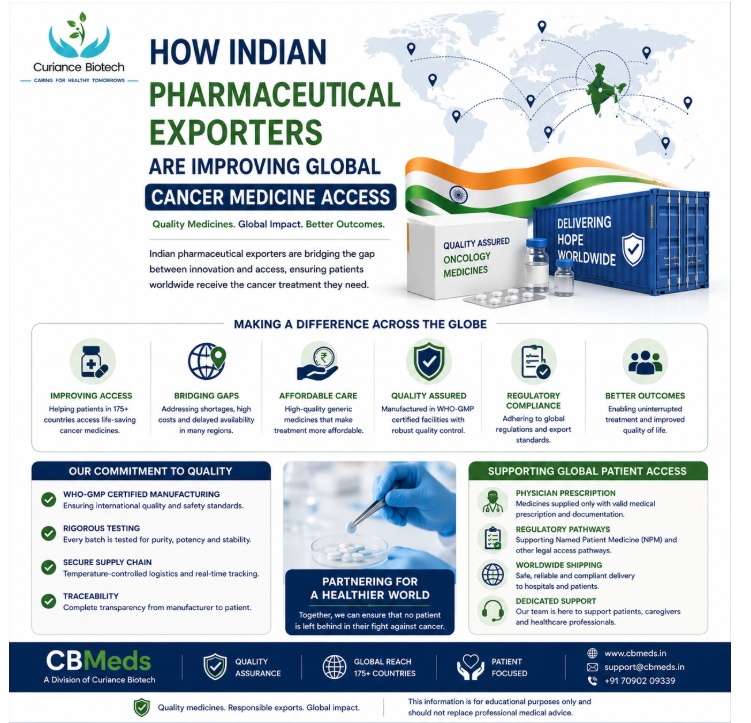
Many low- and middle-income countries continue to face challenges such as medicine shortages, delayed regulatory approvals, and affordability barriers. In response, Indian pharmaceutical exporters have emerged as an important part of the global healthcare ecosystem, helping improve access to quality-assured oncology medicines in many regions of the world.
With decades of pharmaceutical manufacturing expertise and a strong export infrastructure, India continues to play a significant role in supporting cancer care beyond its borders.
At CBMeds, a division of Curiance Biotech, we believe responsible pharmaceutical exports can help bridge treatment gaps while maintaining high standards of quality, compliance, and patient safety.
India: The Pharmacy of the World
India is often referred to as the “Pharmacy of the World” because of its significant contribution to the global supply of medicines.
Today, Indian pharmaceutical companies supply medicines to more than 200 countries and territories, serving hospitals, healthcare providers, governments, and international procurement organizations.
India is particularly recognized for:
- Large-scale pharmaceutical manufacturing
- Skilled scientific workforce
- WHO-GMP compliant production facilities
- Strong export capabilities
- Cost-efficient manufacturing
- Expertise in generic medicines
These strengths have helped improve medicine availability in many parts of the world.
Why Access to Cancer Medicines Matters
Cancer treatment often depends on timely access to medicines.
Delays in treatment may occur because of:
- Limited local availability
- Import restrictions
- Medicine shortages
- High treatment costs
- Delayed regulatory approvals
- Small domestic pharmaceutical markets
International pharmaceutical exports help reduce some of these barriers by expanding medicine availability through regulated supply chains.
The Role of Generic Oncology Medicines
High-quality generic medicines have become an important part of global cancer care.
When approved by the relevant regulatory authorities, generic medicines help:
- Improve treatment affordability
- Expand patient access
- Support healthcare systems
- Increase medicine availability
- Encourage market competition
For many countries, generic medicines have made advanced oncology treatments more accessible than ever before.
Quality Is the Foundation of Global Exports
International pharmaceutical exports require strict quality management.
Reputable exporters work with manufacturers that follow internationally recognized quality standards, including:
- WHO Good Manufacturing Practice (WHO-GMP)
- Quality management systems
- Batch testing
- Product traceability
- Proper storage and transportation
Maintaining these standards helps protect patients throughout the supply chain.
Regulatory Compliance Builds Trust
Exporting prescription medicines involves much more than international shipping.
Responsible exporters must comply with:
- Export regulations
- Import requirements
- Documentation standards
- Customs procedures
- Product traceability
- Country-specific regulatory requirements
Strong regulatory compliance helps ensure medicines reach patients safely and legally.
Supporting Precision Oncology Worldwide
Advances in molecular testing have led to the development of targeted therapies for cancers with specific genetic mutations.
Examples include medicines for:
- EGFR-mutated lung cancer
- ALK-positive lung cancer
- HER2-positive cancers
- BRAF-mutated cancers
- Other biomarker-driven diseases
International pharmaceutical exporters help support healthcare providers by improving access to these specialised treatments where permitted.
The Importance of Reliable Supply Chains
Reliable medicine supply depends on efficient logistics.
Experienced pharmaceutical exporters invest in:
- Temperature-controlled transportation
- Secure packaging
- International courier partnerships
- Customs documentation
- Shipment tracking
- Inventory management
These systems help minimise treatment interruptions and support continuity of care.
Patient Access Beyond Borders
In some situations, patients may require medicines that are unavailable in their home country.
Legal frameworks such as Named Patient Medicine (NPM) programmes allow eligible patients to access prescribed medicines internationally, subject to local regulations.
These programmes require:
- A valid physician’s prescription
- Appropriate medical documentation
- Regulatory compliance
- Responsible sourcing
Patient safety and legal compliance remain central to every step of the process.
How CBMeds Supports Global Oncology Care
CBMeds, a division of Curiance Biotech, works with patients, healthcare professionals, hospitals, and procurement teams to facilitate access to quality-assured oncology medicines through responsible international medicine access pathways.
Our services include:
- International patient support
- Regulatory documentation guidance
- Quality-assured medicine sourcing
- Worldwide shipping assistance
- Healthcare professional coordination
- Supply support across 175+ countries
Our mission is to help improve access to prescribed oncology medicines while maintaining the highest standards of quality, transparency, and regulatory compliance.
Frequently Asked Questions
Why is India a major pharmaceutical exporter?
India has extensive manufacturing capabilities, experienced scientific expertise, and internationally recognised pharmaceutical production standards, making it one of the world’s leading medicine exporters.
Do Indian pharmaceutical exporters supply cancer medicines internationally?
Yes. Many Indian pharmaceutical companies export oncology medicines through regulated international supply chains, subject to local import and export regulations.
How do exporters maintain medicine quality?
Quality is maintained through Good Manufacturing Practices (GMP), quality control testing, product traceability, proper storage, and regulatory compliance.
Can patients order medicines directly?
Access depends on the laws of the destination country. Many international medicine access programmes require a valid prescription and supporting medical documentation.
Final Thoughts
As cancer continues to affect millions of people worldwide, improving access to safe, high-quality medicines has become a shared global responsibility.
Indian pharmaceutical exporters play a valuable role in strengthening international healthcare by supporting medicine availability, expanding access to oncology treatments, and maintaining high standards of manufacturing and regulatory compliance.
With trusted supply chains, quality-focused manufacturing, and patient-centred services, responsible exporters help ensure that more patients receive the treatments their healthcare providers prescribe.
At CBMeds, a division of Curiance Biotech, we remain committed to supporting healthcare professionals, hospitals, and patients worldwide through responsible pharmaceutical exports and improved access to quality oncology medicines.