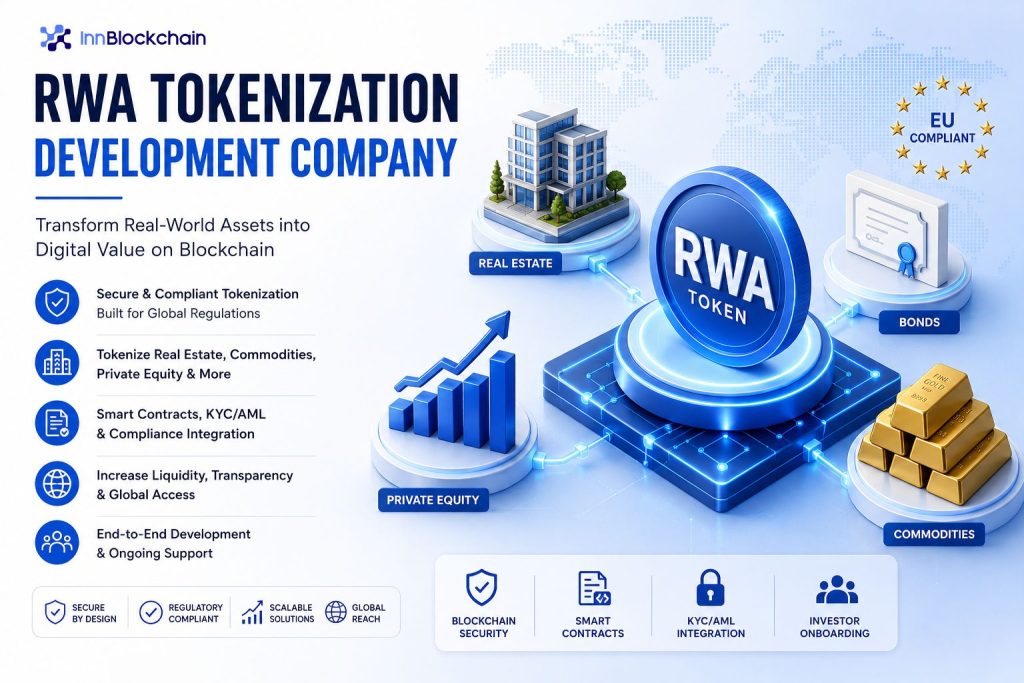
Real‑world asset tokenization is becoming a way to use blockchain technology. It links old‑fashioned assets to digital money systems. From houses and raw materials to loans, big projects and rare items tokenization can show who owns parts of real things or regular money assets on a digital ledger.
Real‑world asset tokenization is not just about making a new token. A good plan must mix ways safekeeping of the asset checks on who buys computer programs that enforce rules rules that follow the law and a safe blockchain system.
What Is RWA Tokenization?
Real‑world asset tokenization means turning a thing or the legal rights to that thing into tokens that live on a blockchain. The thing can be real like a house, a gold bar, a car or a painting. It can also be money‑related, like a loan, a bond, a fund or money that is due.
For instance of needing one person to buy a whole office building a good token plan can split the building into many small digital pieces. People can own those pieces. Only if they follow the law and the rules that apply.
It is very important that the token is usually not the thing itself. The token shows a claim, a share of ownership or a right to money that ties back to the real asset through the right legal setup and safe keeping.
How Does RWA Tokenization Work?
A usual real‑world asset tokenization journey has linked steps.
1.. Legal structuring: First the real thing is looked at. Put inside a suitable legal framework. For example a separate company might own the thing legally while people who own tokens get benefits or economic rights.
2. Token design: The rights of the thing become rules for the token. These rules cover how many tokens exist, who owns them, where they can move, how much they cost how they are shared and how long they must stay.
3. Investor verification: People who want to buy tokens might have to do identity and anti‑money‑laundering checks before they can buy or move tokens. Computer systems on the blockchain can make sure these rules are followed automatically.
4. Token issuance: After the thing the legal setup and the buyer checks are all ready tokens can be created and given out by computer programs called smart contracts.
5.. Servicing: Smart contracts can do the work of paying interest, rent, dividends or other money according to rules that were set before.
6. Secondary. Redemption: Depending on the thing and the laws people who own tokens can move them to a second market or get their money back according to the deal rules.
This way a bridge is made between assets that are not on a blockchain and the money system that lives on a blockchain.
What Assets Can Be Tokenized?
Real‑world asset tokenization can work with kinds of assets. Typical examples are:
– homes, office buildings and mixed‑use sites
– Gold, silver, farm goods and other raw items
– Loans, money that is due and trade finance items
– Cars, trucks, construction machines and other physical goods
– Priceless paintings, expensive goods and collectibles
– Big projects like roads and power and investment funds
Which token design works best depends on the real thing, who owns it who will buy it and the laws that apply.
Key Benefits of RWA Tokenization
A great benefit of real‑world asset tokenization is that people can own a part of a thing. Of needing to buy a whole expensive asset tokenization lets people own a small share or a right to money if the law allows it.
Tokenization can also make records clearer because blockchains keep a checkable log of every move. Smart contracts can do some of the work automatically which can cut down on work and slow steps.
Another possible good point is that it can be easier for people to get involved and for assets to change hands. Blockchains can help move assets between markets but real liquidity will still depend on the rules, who wants to buy how the market works and the legal setup.
Why Compliance Matters
The vital point in RWA tokenization development is that a blockchain does not take the place of laws or rules.
Depending on the thing and the country tokenized assets may need identity checks checks on who can buy limits on moving tokens, safe keeping, reporting and other rule‑making steps. A strong system must weave compliance into its design, from the start not put it on
Smart contracts can make sure that rules are followed, like keeping transfers to verified wallets keeping tokens locked for a time and controlling how many tokens are made. InnBlockchain’s method mixes setup, identity checks, rule controls, smart contracts, safety and records all together as linked parts.
Visit : https://www.innblockchain.com/solutions/rwa-tokenization
#𝐅𝐢𝐧𝐓𝐞𝐜𝐡 #𝐁𝐥𝐨𝐜𝐤𝐜𝐡𝐚𝐢𝐧𝐃𝐞𝐯𝐞𝐥𝐨𝐩𝐦𝐞𝐧𝐭 #𝐑𝐖𝐀𝐓𝐨𝐤𝐞𝐧𝐢𝐳𝐚𝐭𝐢𝐨𝐧 #𝐓𝐨𝐤𝐞𝐧𝐢𝐳𝐚𝐭𝐢𝐨𝐧