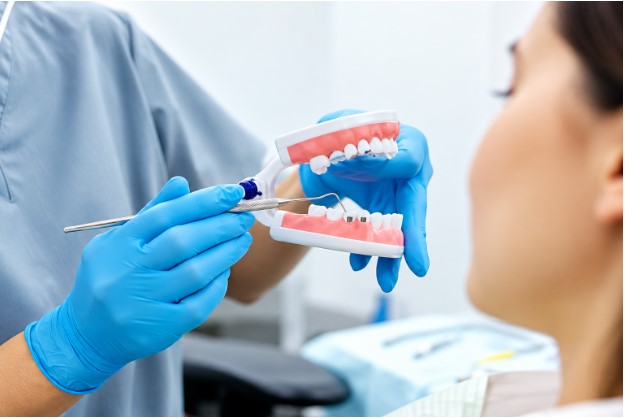
Missing teeth can affect much more than the appearance of a smile. They may make chewing certain foods difficult, influence speech, and reduce confidence in everyday social situations. Fortunately, modern dentures provide several options for replacing missing teeth while helping restore essential oral functions.
For individuals considering dentures in Windsor, understanding the available types, treatment process, maintenance requirements, and associated costs is an important first step. Whether someone needs to replace a few teeth or an entire dental arch, choosing the appropriate denture depends on oral health, jawbone condition, personal preferences, and professional recommendations.
What Are Dentures and How Do They Work?
Dentures are removable dental appliances designed to replace missing natural teeth and some of the surrounding tissues. They typically consist of artificial teeth attached to a gum-coloured base made from acrylic resin or other suitable dental materials.
Depending on their design, dentures may rest on the gums, receive support from remaining natural teeth, or attach to dental implants.
Properly fitted dentures can help improve chewing ability, speech, and facial appearance. However, they function differently from natural teeth, and some adjustment may be necessary.
The Canadian Dental Association emphasizes that dentures require regular cleaning and professional evaluation because the mouth continues to change over time.
What Types of Dentures Are Available in Windsor?
When exploring dentures in Windsor, patients may encounter several treatment options. Each serves a different purpose depending on the number of missing teeth and the condition of the mouth.
Complete Dentures
Complete dentures replace all natural teeth in the upper jaw, lower jaw, or both.
They rest on the gums and are designed to restore the appearance and basic function of a complete dental arch.
Conventional complete dentures are generally made after the gums have healed following tooth removal.
Partial Dentures
Partial dentures replace several missing teeth while preserving the remaining natural teeth.
They commonly use clasps or other attachments to provide support and stability.
These appliances can help restore chewing function and maintain the appearance of the dental arch.
Immediate Dentures
Immediate dentures are prepared before planned tooth extractions and inserted shortly after the teeth are removed.
They allow patients to avoid a period without replacement teeth, but changes in gum and bone shape during healing often require adjustments or relining.
Implant-Supported Dentures
Implant-supported dentures attach to dental implants placed in the jawbone.
They can provide greater stability than conventional removable dentures, particularly for some patients with lower complete dentures.
However, implant treatment involves additional procedures, healing time, costs, and an assessment of bone and oral health.
Who Is a Suitable Candidate for Dentures?
Dentures may be appropriate for adults who have lost teeth because of decay, periodontal disease, trauma, or other oral health conditions.
Suitability depends on several factors:
- The number and position of missing teeth.
- The health of the remaining natural teeth.
- Gum and jawbone condition.
- Existing dental infections or untreated disease.
- The patient’s ability to maintain oral hygiene.
- Personal preferences and treatment budget.
A dental examination is necessary to determine which option is most appropriate.
Patients with remaining healthy teeth may benefit from partial dentures, while complete dentures may be considered when an entire dental arch has no natural teeth.
Dentures are not automatically the best treatment for every patient. Depending on individual circumstances, dental bridges or implant-supported restorations may also be considered.
What Happens During the Denture Fitting Process?
Getting dentures in Windsor generally involves several appointments to ensure that the appliance fits properly and meets the patient’s functional needs.
Initial Dental Examination
The dentist examines the teeth, gums, jaw, and surrounding oral tissues.
Dental imaging may be recommended when necessary to assess bone conditions or plan additional treatment.
Impressions and Measurements
Impressions or digital scans are taken to record the shape of the mouth.
The dental team also evaluates the bite relationship and determines suitable dimensions for the replacement teeth.
Denture Design and Fabrication
The dentures are constructed using the recorded measurements.
Depending on the treatment plan, a trial fitting may be performed to evaluate tooth positioning, appearance, and bite alignment.
Final Fitting and Adjustments
Once the dentures are ready, the dentist checks their fit, stability, and function.
Small adjustments may be required to address pressure areas or improve comfort.
Additional appointments are sometimes necessary, especially during the first few weeks.
How Long Does It Take to Get Used to New Dentures?
Adjusting to new dentures varies from person to person.
Some patients adapt within several weeks, while others require additional time and professional adjustments.
Initially, dentures may feel bulky or unfamiliar. Increased saliva production, mild soreness, and temporary changes in speech can also occur.
Patients can make the transition easier by following a few practical recommendations.
Start with softer foods: Choose foods that are easy to chew and gradually introduce firmer textures.
Take smaller bites: Cutting food into smaller portions can make chewing more manageable.
Chew on both sides: Distributing pressure evenly can improve denture stability.
Practice speaking: Reading aloud can help patients become familiar with speaking while wearing dentures.
Report persistent discomfort: Ongoing pain, sores, or significant movement should be evaluated professionally.
Patients should not attempt to reshape or repair their dentures at home.
How Much Do Dentures Cost in Windsor?
The cost of dentures in Windsor depends on the type of appliance, materials, complexity of treatment, and any additional dental procedures required.
Complete and partial dentures may have different costs because their designs and fabrication requirements vary.
Implant-supported dentures generally involve additional expenses associated with implant placement, components, and restorative treatment.
Other factors affecting the overall cost include:
- Number of missing teeth.
- Need for extractions or preliminary treatment.
- Materials used in denture construction.
- Required adjustments and follow-up visits.
- Repairs, relines, or future replacements.
- Available dental insurance or public dental coverage.
Patients should request a written treatment estimate and confirm any insurance benefits before beginning treatment.
Coverage under the Canadian Dental Care Plan or private dental insurance depends on eligibility, applicable rules, and the specific services involved.
How Should You Clean and Maintain Dentures?
Daily cleaning is essential for maintaining denture hygiene and reducing the accumulation of plaque, food particles, and microorganisms.
The Canadian Dental Association recommends cleaning complete and partial dentures every day.
Important care practices include:
- Remove and rinse dentures after meals when practical.
- Brush them gently with a denture brush and an appropriate non-abrasive cleanser.
- Avoid regular toothpaste and harsh household cleaning products.
- Clean the gums, tongue, and remaining natural teeth daily.
- Remove dentures overnight unless specifically instructed otherwise by a dental professional.
- Store removable dentures in water or an appropriate soaking solution when not being worn.
- Avoid hot water because excessive heat can distort some denture materials.
Dentures should also be handled carefully to prevent accidental breakage.
Regular professional appointments remain important even when a patient no longer has natural teeth, because oral tissues still require examination.
When Should Dentures Be Repaired or Replaced?
Although dentures are designed for regular use, they do not last indefinitely.
Over time, changes in gum tissue and jawbone structure can affect how well an appliance fits.
Signs that professional attention may be necessary include:
- Frequent slipping or movement.
- Persistent gum irritation.
- Difficulty chewing foods that were previously manageable.
- Visible cracks or damaged artificial teeth.
- Changes in bite alignment.
- Increased reliance on denture adhesives.
A denture reline may improve fit when the appliance remains otherwise serviceable.
However, significant wear, damage, or changes in oral anatomy may require replacement.
The American College of Prosthodontists advises that denture replacement decisions should be based on professional examination rather than a fixed universal replacement schedule.
Conclusion
Dentures remain an important tooth-replacement option for individuals experiencing partial or complete tooth loss. Understanding the differences between complete, partial, immediate, and implant-supported dentures helps patients make informed decisions about their oral health and everyday comfort. When researching treatment options and professional denture care, patients may encounter Sandwich West Dental Centre while comparing available services, fitting procedures, and long-term maintenance requirements in the Windsor area. Ultimately, choosing suitable dentures in Windsor requires careful evaluation of oral health, personal needs, and treatment expectations. With proper fitting, consistent hygiene, and regular dental examinations, dentures can help restore essential oral functions and support better day-to-day comfort.