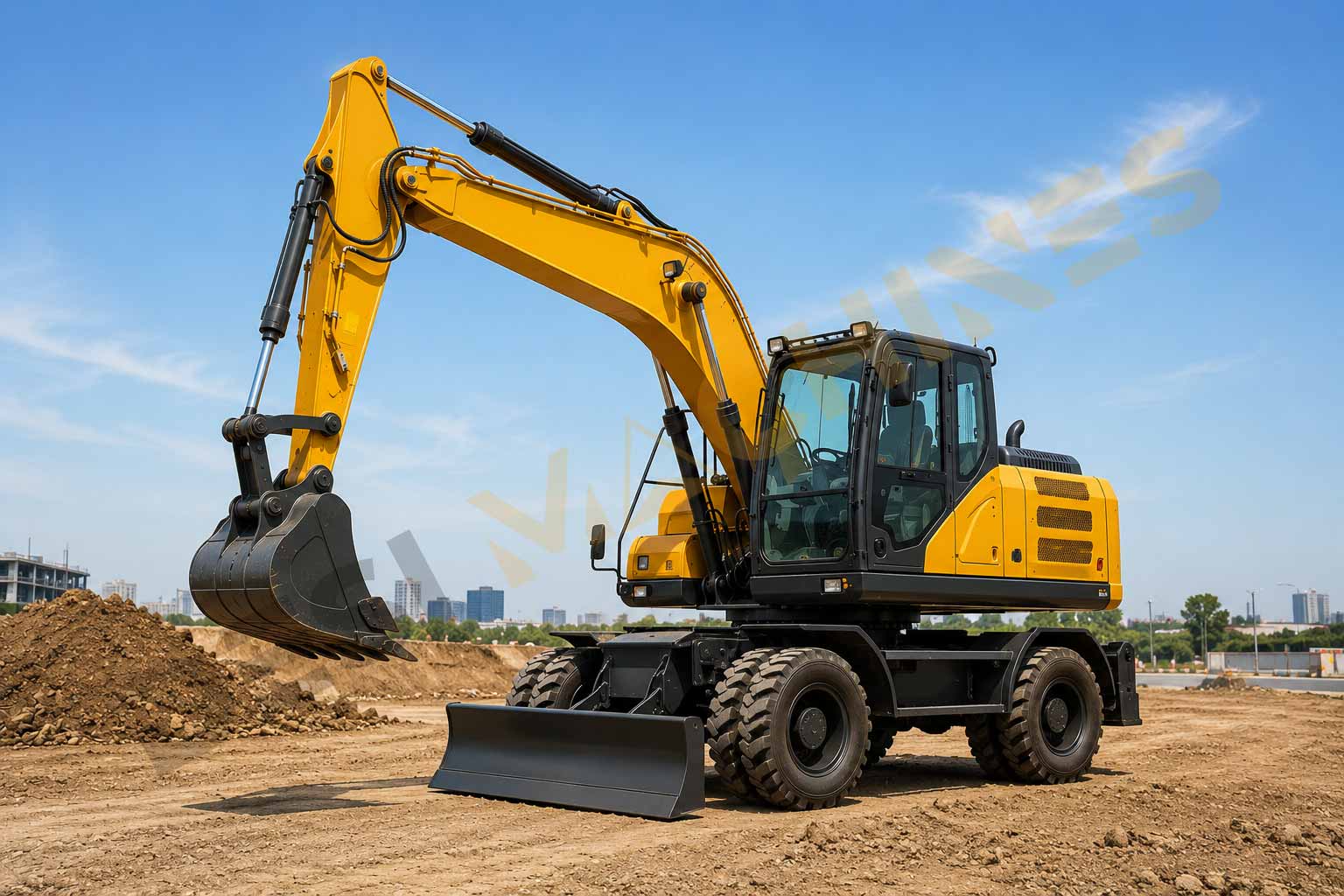
The question of crawler and wheeled equipment is a major dilemma to consider when purchasing a used machine. They both have different requirements when it comes to their operations, and the above decisions have a direct impact on productivity, cost management, and efficiency on the job. Price is what buyers will give attention to initially, but long-term performance is what is important. This is dependent on terrain conditions, movement needs, and working experience. Customers of used equipment should be in a position to compromise capability and practicality. The knowledge of crawler and wheeled machine functions can be useful in making sure that the buyers make decisions about the equipment to be purchased according to the actual needs and requirements, as opposed to assumptions and immediate cost reduction.
Fundamental Distinctions In Design And Movement
The crawler equipment, like a crawler excavator for sale, has continuous tracks that spread the weight over the surfaces evenly. It is a strong traction and stability design in uneven or soft ground. Wheeled equipment uses tires where they can be moved faster and transported easily to different locations. These are the structural differences that influence the performance of every machine. Crawler machines are more stable and pushing, whereas the wheeled machines are more manoeuvrable and fast. The buyers should consider the frequency of movement of the machine between the locations and the intensity of the conditions of the surfaces when the machine is working. Design is more about efficiency rather than looks.
Conditions Of Terrain And Site Are The Most Important
Terrain is critical in the choice of equipment. Crawler machines work effectively in loose soil, slopes, and uneven ground where most of the traction is important. They hold balance and decrease surface pressure, which contributes to heavy-duty work. Wheeled machinery works better on flat set job sites and solid grounds. Tires work well on paved or compacted surface grounds and cause minimal disturbance on the surface. Purchasers need to take into consideration the most frequent location of use of the machine. Terrain-matching equipment avoids performance and unwarranted wear.
Mobility And Transport Considerations
Buying decisions are usually oriented towards mobility requirements. Wheeled equipments have an advantage of having a higher speed of travel and easy movements in and out of job sites. This benefit lowers the logistics of transportation and costs. The crawler equipment usually demands extra planning of transport because it is slower and its tracks occupy the roads. Wheeled machines are useful to buyers who work in a variety of locations to help them to maintain flexibility. Some work with single, long-term sites, and thus, crawler stability can be of more importance. The buyer of used equipment should consider the daily movement requirement to ensure that operational inefficiency is eliminated.
Cost Considerations In The Secondary Market Of Equipment
Purchase price is not the only basis of cost evaluation that should be made when comparing crawler and wheeled machines. The cost of maintenance of crawler equipment tends to increase as a result of wear and the replacement of tracks. Wheeled machines usually provide lower maintenance costs and easier servicing. Consumption trends are also varied according to use and topography. The cost of operation should be evaluated by buyers on top of the cost of acquisition. Decisions made by buyers on the purchases of used equipment, when they are computed based on the total ownership value and not just on initial savings, would be successful. A long-term analysis of costs produces better results.
Maintenance And Wear Premises
The condition of used construction machines is an important factor in the selection of equipment. Wear of the track, roller, and undercarriage parts is experienced in crawler machines. There is wear and stress on tires in wheeled machines. Maintenance history gives an insight into the level at which the machine sustains itself during the past usage. Customers are to test the service history and the state of components. Machines that have been well-maintained have predictable performance irrespective of the type. The selection of the proper used machine would be dependent on how it has been maintained during its working life.
Job Requirements And Operational Efficiency
Efficiency is determined by the equipment with work requirements. The tasks that require stability, traction, and controlled movement are supported with the help of crawler machines. Wheeled machines are effective when the work involves speed, high frequency of relocation, and movement on the site-to-site. The buyers ought to consider job scopes, repetition of identical tasks, and intensity of operation. The equipment that is in use works best when its capabilities are in balance with the daily workloads. Strategic selection eliminates underutilization and increases productivity. The appropriate machine complements the workflow as opposed to compelling adjustment.
The Right Decision In Making Used Equipment
Crawler and wheeled equipment do not need compromise, but choice. When making a decision, buyers are supposed to consider terrain, mobility requirements, maintenance requirements, and the cost structure. The value of used machinery is powerful in the case of a strategic choice. The correct decision helps to be efficient, shortens downtimes, and enhances the confidence of the operations. The crawler and the wheeled machines are both a necessity in contemporary operations. The match of machine ability and the real world results in success. Careful choices make used equipment a valuable and useful tool.