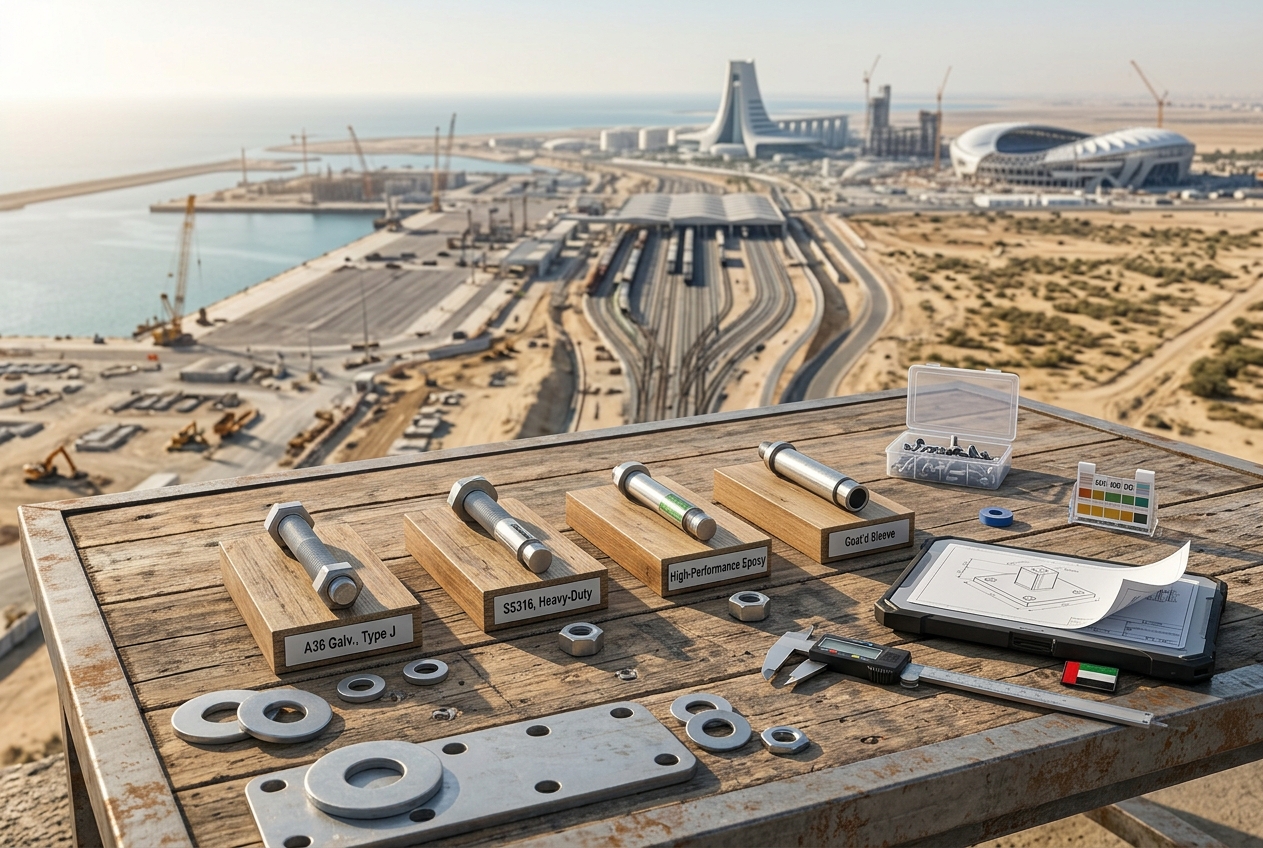
Anchor bolts play an important role in connecting structural components to concrete foundations across construction, manufacturing, infrastructure, and industrial facilities. Although their primary purpose is to provide secure and reliable connections, their long-term performance depends on more than bolt size and mechanical strength. Environmental conditions can significantly influence material selection, corrosion resistance, installation requirements, and overall service life.
From coastal construction sites exposed to saltwater to industrial facilities containing chemicals and high-temperature equipment, different environments create specific challenges for fastening systems. Selecting suitable Anchor Bolts requires engineers and construction professionals to understand these conditions and choose materials that can withstand the expected exposure while meeting structural requirements.
Understanding the Relationship Between Environment and Anchor Bolts
Environmental conditions affect how fastening materials perform throughout their service life. Moisture, temperature fluctuations, airborne contaminants, chemicals, and exposure to sunlight can influence the durability of bolts and their protective coatings.
For example, a fastening system installed inside a dry commercial building may face fewer corrosion-related challenges than one used near the sea or in a chemical processing plant. Similarly, bolts supporting outdoor equipment may experience repeated temperature changes that influence the surrounding materials and connection behaviour.
Environmental assessment should therefore be part of the initial design process. Engineers need to consider where the bolts will be installed, whether they will remain exposed or embedded, what substances they may contact, and how easily they can be inspected and maintained.
This information helps determine the appropriate bolt material, coating, dimensions, and installation method for the intended application.
The Impact of Moisture and Humidity
Moisture is one of the most common factors affecting anchor bolt durability. When steel remains exposed to water or humid conditions, corrosion can develop if the material and protective system are unsuitable for the environment.
Outdoor structures, parking facilities, water treatment plants, and buildings in humid regions may experience regular moisture exposure. Water can collect around bolt heads, nuts, washers, and base plates, particularly where drainage is poor or protective details are inadequate.
Corrosion may gradually reduce the effective cross-sectional area of a bolt and weaken its ability to resist applied forces. It can also make nuts difficult to remove during inspection or maintenance.
To address these risks, engineers should assess the expected moisture exposure and select an appropriate corrosion-protection system. Options may include galvanized carbon steel, suitable protective coatings, or corrosion-resistant stainless steel grades.
However, the best choice depends on the actual environment, project specifications, structural requirements, and maintenance plan. Proper drainage and detailing are also important because even a suitable protective coating may not eliminate every corrosion risk.
Why Coastal Environments Require Special Attention
Coastal environments can be particularly challenging because airborne salt and chloride-containing moisture can accelerate corrosion in susceptible metals. Structures near beaches, ports, marine terminals, and offshore facilities may experience repeated exposure to salt spray and humid air.
In these locations, standard carbon steel fasteners without suitable protection may deteriorate more quickly than expected. Corrosion can affect exposed threads, the area beneath nuts and washers, and other locations where moisture and contaminants accumulate.
Engineers should evaluate the severity of chloride exposure before selecting anchor bolts. Galvanized fasteners may be appropriate for certain applications, while suitable stainless steel grades or other engineered protection systems may be required for more aggressive environments.
Stainless steel should not automatically be considered immune to corrosion. Some grades can suffer localized corrosion in chloride-rich conditions, particularly in crevices or areas where deposits accumulate. Material selection should therefore reflect the actual exposure level rather than relying on a general label such as corrosion-resistant.
For coastal projects, appropriate detailing, material compatibility, and regular inspection can help maintain the reliability of anchoring systems over time.
Selecting Anchor Bolts for Industrial and Chemical Exposure
Industrial facilities may expose fastening systems to acids, alkalis, solvents, cleaning agents, process fluids, and other aggressive substances. The effect depends on the chemical involved, its concentration, temperature, and duration of contact.
A material that performs well in an ordinary outdoor environment may not provide sufficient resistance in a chemical processing facility. Protective coatings can also become damaged or degraded when exposed to incompatible substances.
Engineers should identify the chemicals likely to contact the bolts and consult suitable material compatibility information before finalising specifications. In some applications, specialized stainless steel grades or other corrosion-resistant alloys may be required.
Protective measures should be considered alongside the mechanical demands of the connection. The selected bolt must still meet the required tensile and shear capacities, fit the specified anchoring arrangement, and comply with applicable standards.
When sourcing industrial fastening products, project teams may consider suppliers such as Petrofast Middle East FZC, while verifying that the selected products meet the project’s material, dimensional, and performance requirements.
A careful assessment of chemical exposure helps prevent premature deterioration and reduces the likelihood of costly replacement work.
Temperature Changes and Thermal Performance
Temperature can influence both the bolt material and the surrounding concrete. Outdoor structures may experience significant daily and seasonal temperature changes, while industrial installations may operate near furnaces, engines, generators, or heated process equipment.
Repeated temperature fluctuations can cause connected materials to expand and contract. Differences in thermal behaviour between steel and concrete may influence connection movement and stress distribution, depending on the design and restraint conditions.
High temperatures may also affect the mechanical properties of steel, protective coatings, and other connection components. At very low temperatures, material toughness and the risk of brittle behaviour may require particular consideration for certain applications.
Engineers should evaluate the expected operating temperature range and confirm that the specified fasteners, coatings, and anchoring system are suitable. Where fire exposure is a design concern, the connection must be assessed according to the applicable fire-resistance requirements.
Temperature considerations are especially important for industrial equipment and structures that operate continuously under demanding thermal conditions.
Exposure to Sunlight, Dust, and Outdoor Conditions
Outdoor installations face more than moisture and temperature changes. Ultraviolet radiation, airborne dust, sand, and wind-driven debris can affect protective systems and increase maintenance demands.
Although sunlight does not generally damage bare steel in the same way it can degrade certain coatings, prolonged ultraviolet exposure may deteriorate unsuitable non-metallic protective materials. Dust and sand can also accumulate around connections, trap moisture, or contribute to abrasion under particular conditions.
In dry and dusty environments, engineers should consider how easily anchor bolt connections can be inspected and cleaned. Protective systems should be appropriate for the expected exposure, while the surrounding design should avoid unnecessary areas where contaminants can collect.
For projects in desert regions, high temperatures and airborne particles may occur together with occasional rainfall or condensation. These combined conditions should be considered when assessing the long-term durability of the fastening system.
Galvanic Corrosion and Material Compatibility
Another important environmental consideration is galvanic corrosion. This process can occur when dissimilar metals are electrically connected in the presence of an electrolyte, such as moisture containing dissolved salts.
For example, using different metals within a fastening assembly may create conditions that accelerate corrosion of the less noble material. The severity depends on the metals involved, their relative surface areas, and the surrounding environment.
Engineers should assess the compatibility of anchor bolts, nuts, washers, base plates, and protective coatings. Selecting compatible materials and suitable isolation measures, where appropriate, can help reduce galvanic corrosion risks.
Material compatibility is especially important in coastal and industrial environments, where moisture and contaminants may increase the likelihood of electrochemical reactions.
Installation, Inspection, and Maintenance Requirements
Environmental conditions should influence not only material selection but also installation planning and maintenance schedules. A fastening system exposed to aggressive conditions may require more frequent inspection than one installed in a protected indoor location.
Before installation, contractors should verify bolt dimensions, material specifications, coatings, and supporting documentation. Protective finishes should be handled carefully to avoid unnecessary damage, and the installation procedure should follow the approved design and manufacturer instructions.
After installation, inspections may focus on corrosion, damaged coatings, loose components, cracking around the anchorage, and signs of unexpected movement. Any serious deterioration should be evaluated by a qualified professional before repairs are undertaken.
Maintenance requirements should reflect the exposure conditions, structural importance, accessibility, and expected service life. Early identification of corrosion or other defects can help prevent minor issues from developing into more significant structural concerns.
Conclusion
Environmental conditions play a major role in determining the most suitable anchor bolts for a construction or industrial project. Moisture, salt exposure, chemicals, temperature changes, airborne contaminants, and contact between dissimilar metals can all influence fastening system durability.
Successful selection requires a balanced assessment of environmental exposure, mechanical loads, material compatibility, protective coatings, installation requirements, and long-term maintenance. By evaluating these factors before construction begins, engineers can specify fastening systems that provide dependable connections and reduce the risk of premature deterioration.
Choosing anchor bolts according to the actual service environment helps improve structural reliability, control maintenance costs, and support long-term performance across a wide range of applications.