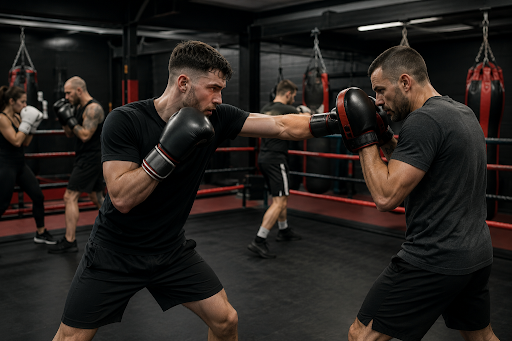
Boxing is often associated with competitive bouts, but modern boxing training can serve many purposes beyond preparing for a fight. Structured sessions can combine cardiovascular exercise, strength work, coordination drills, technique development, and mental focus. For beginners, learning the fundamentals in a supervised environment can also provide a practical way to develop fitness while becoming familiar with the discipline involved in combat sports.
For anyone considering Telford boxing, understanding what a typical class involves, what equipment is required, and how beginners can prepare can make starting the sport less intimidating. Boxing can accommodate different goals, from general fitness and skill development to competitive preparation, provided training is approached progressively and responsibly.
What Happens During a Boxing Class?
A typical boxing class may include several stages rather than simply spending the session punching a heavy bag. Training often begins with a warm-up designed to prepare the body for physical activity. This can include light cardiovascular work, mobility exercises, footwork, and dynamic movements.
The main portion of a session may involve stance, guard position, punching technique, defensive movements, pad work, bag work, footwork drills, and conditioning exercises. Depending on the class and experience level, participants may also practice controlled partner exercises or sparring.
Current boxing programmes in Telford can cater to different experience levels. Local facilities advertise sessions ranging from recreational fitness training to structured development for people interested in competitive boxing.
Can Beginners Learn Boxing?
Yes. Beginners do not need to arrive with previous boxing experience. The fundamental skills of boxing are learned progressively, beginning with basic movement, balance, posture, and punching mechanics.
A beginner’s first sessions may focus heavily on technique rather than intensity. Learning how to position the feet, rotate the hips correctly, maintain balance, and return the hands to a protective position provides a foundation for more advanced combinations.
Trying to move too quickly can increase the risk of poor technique and unnecessary fatigue. A structured progression allows beginners to develop skills while gradually becoming more comfortable with the physical demands of training.
What Are the Fitness Benefits?
Boxing training can provide a demanding full-body workout. Movement around the training area requires coordination between the legs and upper body, while punching drills involve the shoulders, arms, core, and lower body.
Regular physical activity is associated with improvements in cardiovascular fitness, muscular strength, endurance, and overall physical health. Boxing sessions can also include intervals of high-intensity activity followed by periods of lower-intensity movement or recovery.
The exact fitness benefits depend on factors such as training frequency, session intensity, existing fitness level, and other physical activity performed outside the gym.
Does Boxing Improve Coordination?
Coordination is an important part of boxing because punches do not happen independently of footwork and body positioning. A boxer needs to coordinate movement of the feet, hips, torso, arms, and eyes while maintaining balance.
Pad drills and combination exercises can challenge participants to remember sequences and respond to instructions. Footwork exercises can similarly improve the ability to move while maintaining an effective stance.
These skills can develop gradually through repetition. Beginners should focus on performing movements correctly before increasing speed.
Is Boxing Only for Competitive Fighters?
No. Boxing can be approached as a recreational activity without an intention to compete.
Some participants train primarily to improve their fitness, while others enjoy learning a technical skill or participating in a structured exercise environment. Competitive boxing represents one possible pathway, but it is not a requirement for participating in boxing classes.
Telford has several boxing training options with different approaches. For example, Telford Amateur Boxing Club states that it welcomes all abilities, while Reload Boxing offers community sessions aimed at learning fundamentals and building fitness alongside opportunities for competitive development.
What Equipment Do Beginners Need?
Beginners generally do not need to purchase a complete collection of boxing equipment immediately. However, hand wraps and properly fitted boxing gloves are commonly used during training.
Depending on the class, additional equipment may include headguards, mouthguards, shin protection, skipping ropes, and appropriate training clothing. Anyone participating in contact or sparring activities should follow the instructor’s equipment requirements.
Hand wraps help support and protect the hands and wrists underneath boxing gloves. Gloves should be suitable for the type of training being performed and fit securely without restricting normal hand movement.
How Important Is Technique?
Technique is central to boxing. Throwing punches repeatedly without understanding body mechanics can encourage inefficient movement and place unnecessary strain on the body.
Good technique involves more than the movement of the arms. Effective punching generally involves coordinated movement through the legs, hips, torso, shoulders, and arms.
Defensive technique is equally important. Beginners may learn how to maintain their guard, move their head, control distance, and use footwork to reposition themselves.
A qualified instructor can identify technical problems that may be difficult for a beginner to notice independently.
Is Sparring Necessary?
Sparring is not automatically required for everyone who attends boxing classes. Whether someone participates can depend on their experience, goals, confidence, physical readiness, and the policies of the training facility.
Beginners can spend considerable time learning technique, conditioning, pad work, and controlled drills before considering sparring.
If sparring is introduced, it should be appropriately supervised and matched to the participant’s experience. Protective equipment and clear rules are important for reducing avoidable risks.
How Often Should Beginners Train?
Training frequency should reflect an individual’s fitness level, schedule, recovery needs, and goals. Someone completely new to exercise may benefit from starting gradually rather than immediately training every day.
Two or three structured sessions per week can provide regular exposure to technique while allowing time for recovery. Rest days are important because physical adaptation occurs between training sessions rather than only during exercise.
Beginners should also pay attention to persistent pain, excessive fatigue, dizziness, or other unusual symptoms and seek appropriate medical advice when necessary.
How Can Boxing Support Mental Well-Being?
Boxing requires concentration because participants need to remember combinations, respond to instructions, coordinate movements, and remain aware of their surroundings.
Structured exercise can also provide a break from sedentary routines and everyday responsibilities. The combination of physical activity and focused technical practice may make boxing an engaging form of exercise for people who find conventional gym workouts repetitive.
However, boxing should complement rather than replace professional support for anyone experiencing a mental health condition.
What Should Beginners Look for in a Boxing Gym?
The quality of instruction and training environment should be important considerations when selecting a class. Beginners may want to look for qualified instructors, clear safety procedures, appropriate equipment, suitable beginner sessions, and a respectful atmosphere.
It is also useful to consider location and scheduling. A conveniently located class that fits consistently into a person’s routine may be more sustainable than a programme that is difficult to attend.
Telford boxing programmes currently include options for people of different abilities and objectives, including fitness-focused participants and individuals interested in progressing toward competition.
Conclusion
Telford boxing can offer a structured way to develop physical fitness, coordination, technique, discipline, and confidence while learning a demanding sport. Beginners do not need to be experienced athletes or competitive fighters to start. With appropriate instruction and gradual progression, boxing can be adapted to different fitness levels and personal objectives. For people considering martial arts for adults, boxing can be one option among several disciplines that combine physical conditioning with technical learning. The most suitable choice depends on individual goals, preferred training style, fitness level, and comfort with contact-based activities.