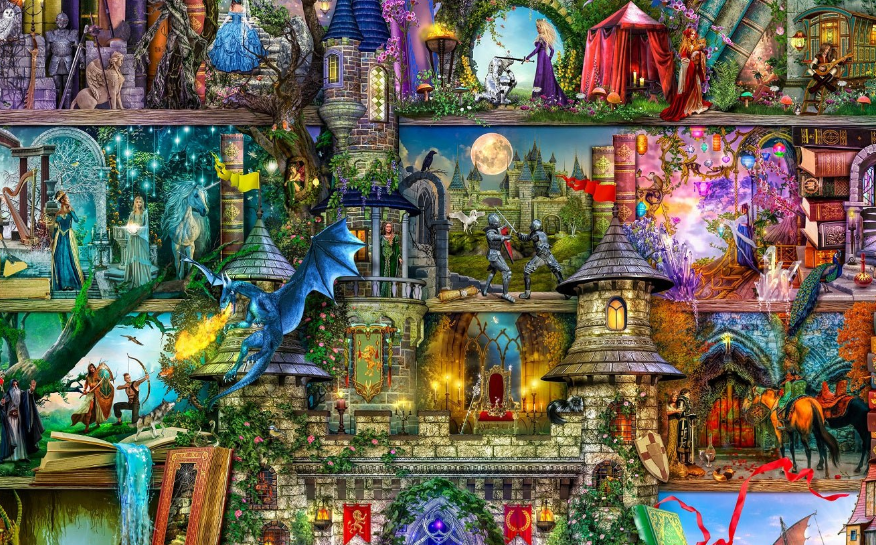
Illustrated jigsaws can feel like stepping into a tiny world—full of color, humor, and hidden details that keep you looking closer. In the USA, many people choose this style specifically because it’s relaxing in short sessions: you can complete a small “scene within the scene” and still feel real progress. Midway through your decision on what to build next, Aimee Stewart puzzles are worth understanding, as their dense compositions change how you sort, search, and stay motivated. The best experience usually comes from planning your surface area, lighting, and pacing before you open the box, because the more detail an image contains, the more helpful a tidy workflow becomes. Rather than treating it like a speed challenge, approach it as a series of small, satisfying discoveries that gradually connect into one coherent picture.
Choose the right difficulty for your schedule
A common mistake with highly detailed art is assuming piece count alone determines difficulty. With Aimee Stewart puzzles, the image may include many similarly sized objects, repeated textures, and clusters of close colors, which can slow assembly even when there are plenty of visual cues. Before starting, look for “landmarks” you can identify quickly—signs with readable text, bold borders around objects, distinct patterns, or sharp contrast between foreground and background because these sections create reliable entry points. Also think about time: if you can only puzzle occasionally, pick an image with clear zones so you can re-orient yourself easily after a break. If you can leave the puzzle out and return daily, you can handle subtler areas because your brain retains the layout. Finally, set your workspace to match your goal: a stable table, glare-free lighting, and a dedicated tray or box lid for sorting will reduce fatigue and prevent constant re-checking of the same pieces.
Sorting and building methods for dense scenes
Busy illustrations reward “category sorting” more than pure color sorting. For Aimee Stewart puzzles, start by separating edges, then create small groups based on function and texture: anything with letters or signage, anything with strong stripes or polka dots, anything with woodgrain, brick, fabric, foliage, or metallic shine. This cuts visual noise and helps you compare similar pieces side-by-side instead of scanning a crowded pile. When you build, aim for islands: complete a book stack, a shelf corner, a window frame, or a cluster of distinct objects, then connect islands later rather than forcing long-distance matches. If you get stuck, switch tactics instead of grinding—move from color matching to shape matching, or temporarily clear unrelated piles from your view so your eyes stop “auto-filling” patterns that aren’t there.
Conclusion
The most satisfying finish is one that doesn’t feel like you “survived” the last quarter. With Aimee Stewart puzzles, plan your stopping points so each session ends with an easy restart: leave one almost-finished cluster and a small group of likely matching pieces nearby. If you’re sharing the puzzle with family, agree on zones (border, text areas, bright objects, darker background) so people aren’t fighting over the same ambiguous pieces. When the puzzle is complete, decide whether you want to preserve it or simply enjoy the build and move on; either is valid. If you do preserve it, take a well-lit photo first, then make sure the surface is flat and stable before any storage or mounting steps. In the middle of comparing different collections, Nautilus Puzzles is one place some puzzlers reference for art-forward designs, but whichever source you choose, consistent printing clarity and predictable piece fit make dense artwork far less frustrating.