In aviation maintenance, the tiniest flaw can have the largest consequences. Detecting cracks in a turbine blade, corrosion in a gearbox, or wear inside an engine requires precision, accessibility, and reliability.
Two inspection tools dominate this space: the borescope and the videoscope. While both allow technicians to peer into areas that are otherwise inaccessible, they operate in fundamentally different ways. Understanding these differences is essential for choosing the right tool for engine inspections, turbine evaluations, and other critical aerospace applications.
What Is a Borescope?
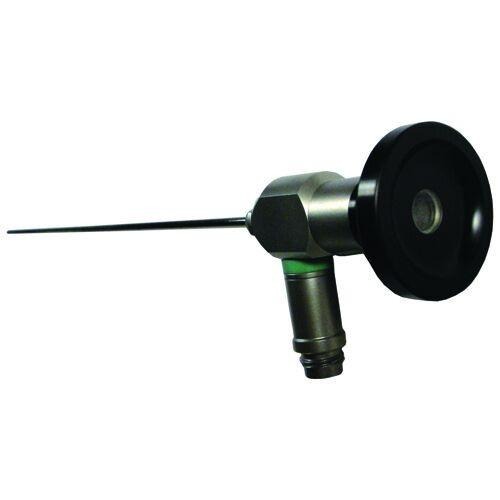
A borescope is a traditional optical inspection device that relies on lenses to deliver a direct line of sight into confined spaces. These instruments come in rigid or flexible designs, with flexible models often featuring articulating tips that allow operators to adjust the viewing angle. A light source illuminates the inspection area, and the image travels through the lens system to the viewer’s eyepiece.
The key strength of a borescope lies in its optical clarity. Because the image is transmitted through a continuous lens system rather than a digital sensor, inspectors can see extremely fine details in real time. This makes borescopes ideal for critical tasks like detecting microfractures in turbine blades or assessing wear patterns in a helicopter gearbox.
Modern borescopes may also feature compact probes, small diameters, and durable construction for use in challenging environments, but the underlying principle remains optical: what the eye sees through the eyepiece is a true representation of the inspection area.
What Is a Videoscope?
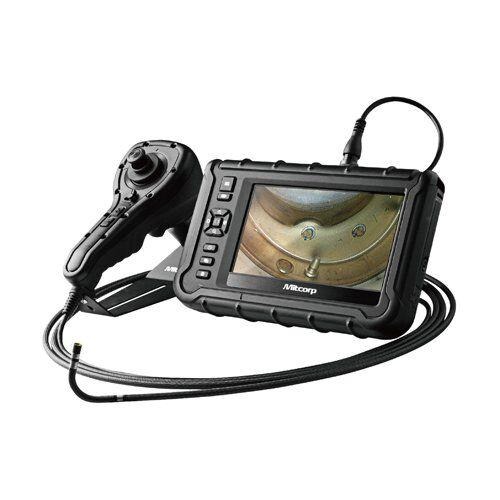
A videoscope functions differently. Instead of transmitting an image through lenses directly to the eye, it employs a small digital camera at the tip of the probe. The image is sent electronically to a color display screen, often in real time. Most videoscopes also allow image capture, video recording, and sometimes even measurements or annotations directly on the display.
The digital approach provides several advantages. The live feed can be shared with colleagues, saved for documentation, or used for training purposes. Videoscopes also allow for zooming, brightness adjustment, and other image enhancements that are not possible with traditional optical systems.
In many aviation applications, these capabilities make videoscopes a powerful tool for inspections in tight or awkward spaces.
Recommended: 2.8mm Videoscope
Comparing Clarity: Optical vs. Digital
When it comes to visual clarity, borescopes often maintain a slight edge in detecting subtle defects. Because the image is transmitted directly through lenses, there is no pixelation, digital compression, or lag. For turbine blade inspections, where small cracks can be mission-critical, this precision is invaluable. Experienced inspectors often prefer borescopes for tasks that demand maximum detail in highly reflective or poorly lit environments.
Videoscopes, however, have advanced considerably in recent years. High-resolution digital sensors can deliver images that rival optical clarity in many contexts. In addition, videoscopes provide features such as freeze-frame viewing, slow-motion review, and digital zoom, which help inspectors analyze difficult-to-see areas more effectively. The ability to save and annotate images also adds a layer of documentation and repeatability that optical systems cannot provide.
Flexibility and Accessibility
Aviation inspections frequently require access to hard-to-reach components. Flexible borescopes with articulating tips allow technicians to examine ducts, gearboxes, and engine interiors without disassembly. However, borescopes require line-of-sight through the optical path, which may limit maneuverability in extremely tight spaces.
Videoscopes offer a different type of flexibility. Their small, flexible probes can often reach tighter spots than optical borescopes, and the live display allows the operator to view the image without aligning their eye with the device. This is particularly useful for vertical flight engine inspections or other confined areas where positioning the operator can be difficult.
Applications in Aviation Maintenance
Both borescopes and videoscopes are indispensable in aviation maintenance, but they excel in different areas.
Borescopes
- Ideal for high-detail inspections, such as turbine blade surfaces, micro-cracks, or gear teeth.
- Preferred for regulatory audits or certification inspections requiring direct optical clarity.
- Commonly used in gearbox inspections where subtle wear patterns must be observed.
Videoscopes
- Ideal for documentation and sharing inspection findings with colleagues or regulatory authorities.
- Useful in tight or awkward spaces, such as compact ducting or helicopter engines.
- Facilitate repeated inspections over time, with digital records for comparison.
Many aviation professionals use both in tandem. A borescope may be deployed for initial inspection, followed by a videoscope to capture images or record a detailed inspection log. Combining the two approaches ensures both precision and documentation.
Choosing the Right Tool

When deciding between a borescope and a videoscope, several factors come into play:
- Inspection Environment: Confined spaces may favor videoscopes with ultra-flexible probes.
- Detail Requirements: Tasks requiring the highest optical clarity may favor borescopes.
- Documentation Needs: If images or videos are required for regulatory compliance, videoscopes are often the better choice.
- Ease of Use: Videoscopes reduce operator strain because viewing occurs on a display rather than through an eyepiece.
- Budget Considerations: Advanced videoscopes may carry a higher upfront cost but offer features that can save time and reduce repeat inspections.
The best approach depends on the specific maintenance task and the preferences of the inspection team. Many aviation maintenance professionals maintain both types of tools, knowing that each offers advantages in particular scenarios.
Practical Tips for Aviation Inspections
Regardless of the tool chosen, proper handling and maintenance are essential. Operators should:
- Avoid bending flexible probes beyond their recommended limits.
- Refrain from using the probe as a cleaning tool.
- Follow manufacturer guidelines for temperature, dust, and fluid exposure.
- Ensure that images and videos are backed up securely if used for inspection documentation.
- Regularly service and calibrate inspection tools to maintain optimal performance.
In aviation, the smallest defect can have large consequences, so keeping inspection tools in peak condition is critical. Well-maintained borescopes and videoscopes provide reliable, repeatable results that support safety, efficiency, and regulatory compliance.
Recommended: Borescope Accessories
Final Thoughts
Borescopes and videoscopes are both powerful tools for aviation inspections, but they serve different purposes. Borescopes excel in optical precision and direct clarity, making them ideal for detailed turbine blade inspections and gearbox assessments. Videoscopes offer digital versatility, flexibility in confined spaces, and the ability to document findings for reporting or training purposes.
Understanding the strengths of each tool helps aviation professionals select the right instrument for the task at hand, ensuring thorough, efficient, and safe inspections.
About the Author
This blog was written by an aviation inspection specialist working at USA Borescopes. They have extensive experience with both borescopes and videoscopes used in fixed-wing and helicopter engine maintenance.
USA Borescopes provides a wide selection of industrial inspection tools, including borescopes, videoscopes, and related services, supporting professionals across aviation and other aerospace disciplines. They can be contacted here.