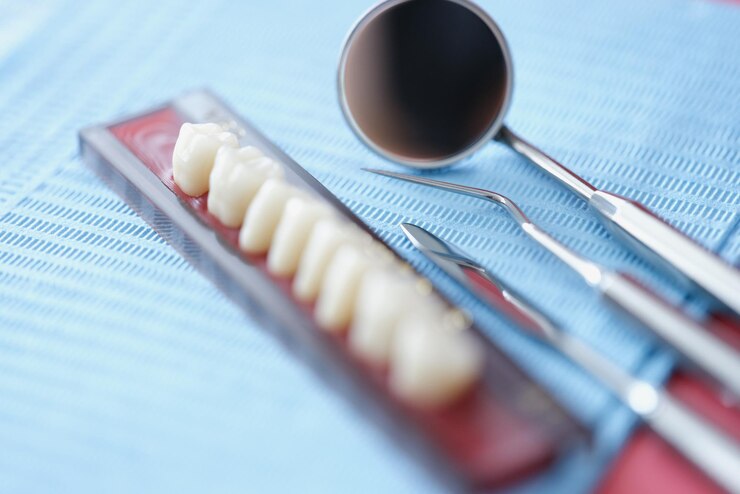
A dental crown serves as a tooth-shaped covering that is affixed to a damaged tooth, aimed at restoring its original shape, strength, size, and aesthetic appeal. These crowns can be constructed from a variety of materials, such as metal, porcelain, or a combination thereof. They are frequently employed to shield teeth that are decayed, fractured, weakened, or worn down, in addition to being utilized for encasing dental implants and teeth that have undergone root canal procedures.
Types of Crowns Are Available
Permanent crowns can be fabricated from several materials, including stainless steel, all-metal options (such as gold or other alloys), porcelain-fused-to-metal, all-resin, or all-ceramic compositions. Stainless steel crowns are typically prefabricated and are primarily used on permanent teeth as a temporary solution. They serve to protect the tooth or filling while a more permanent crown is being created.
In pediatric dentistry, stainless steel crowns are often placed over primary teeth that have been prepared for this purpose, effectively covering the entire tooth and safeguarding it against further decay. As the primary tooth eventually falls out to make way for the permanent tooth, the crown is naturally expelled along with it.
The metals utilized in dental crowns Georgetown KY include high-content gold or platinum alloys, as well as base-metal alloys like cobalt-chromium and nickel-chromium. Metal crowns are particularly resilient, capable of withstanding the forces of biting and chewing, and they tend to have a longer lifespan in terms of wear. Additionally, dental crowns Georgetown KY are less prone to chipping or breaking. However, the metallic appearance and the elevated cost associated with gold crowns are notable disadvantages. Consequently, metal crowns are often recommended for molars that are not visible when smiling.
Dental crowns Georgetown KY made from porcelain fused to metal offer the advantage of being color-matched to the surrounding teeth, a feature not available with purely metallic crowns. However, it is important to note that this type of crown can cause increased wear on opposing teeth compared to metal or resin alternatives. Additionally, the porcelain layer may be susceptible to chipping or breaking.
Among the various dental crowns Georgetown KY options, porcelain-fused-to-metal crowns closely resemble natural teeth, although there is a possibility that the underlying metal may become visible as a dark line, particularly at the gum line, especially if gum recession occurs. These crowns are suitable for both anterior and posterior teeth, as well as for long bridges where additional strength is required.
All-resin dental crowns present a more economical option compared to other crown types. Despite their lower cost, they tend to wear down more quickly and are more vulnerable to fractures than porcelain-fused-to-metal crowns. This makes them less ideal for patients seeking long-term durability in their dental restorations.
All-ceramic or all-porcelain crowns offer superior aesthetic qualities, providing a more natural color match than any other crown type. They are particularly advantageous for individuals with metal sensitivities or allergies. These dental crowns Georgetown KY are versatile and can be effectively utilized for both front and back teeth, making them a popular choice for those prioritizing both appearance and biocompatibility in their dental treatments.
Temporary crowns differ from permanent crowns in several key aspects. While temporary crowns can be fabricated directly in a dental office, permanent crowns are generally produced in a specialized dental laboratory. The materials used for temporary crowns often include acrylic-based substances or stainless steel, serving as a provisional solution until the permanent crown is ready for placement.
How Should I Care for My Temporary Dental Crown?
Given that temporary crowns are intended as a short-term measure; dental professionals typically recommend certain precautions to ensure their longevity. Patients are advised to refrain from consuming sticky or chewy foods, such as chewing gum or caramel, as these can easily dislodge the crown. Additionally, it is advisable to limit the use of the side of the mouth where the temporary crown is located, thereby redistributing chewing activity to the opposite side.
Furthermore, individuals should avoid hard foods, like raw vegetables, which pose a risk of breaking or displacing the temporary crown. When it comes to oral hygiene, it is important to slide dental floss out rather than lifting it, as this technique minimizes the risk of inadvertently removing the temporary crown during cleaning. By adhering to these guidelines, patients can help ensure the effectiveness of their temporary crowns until the permanent solutions are available.