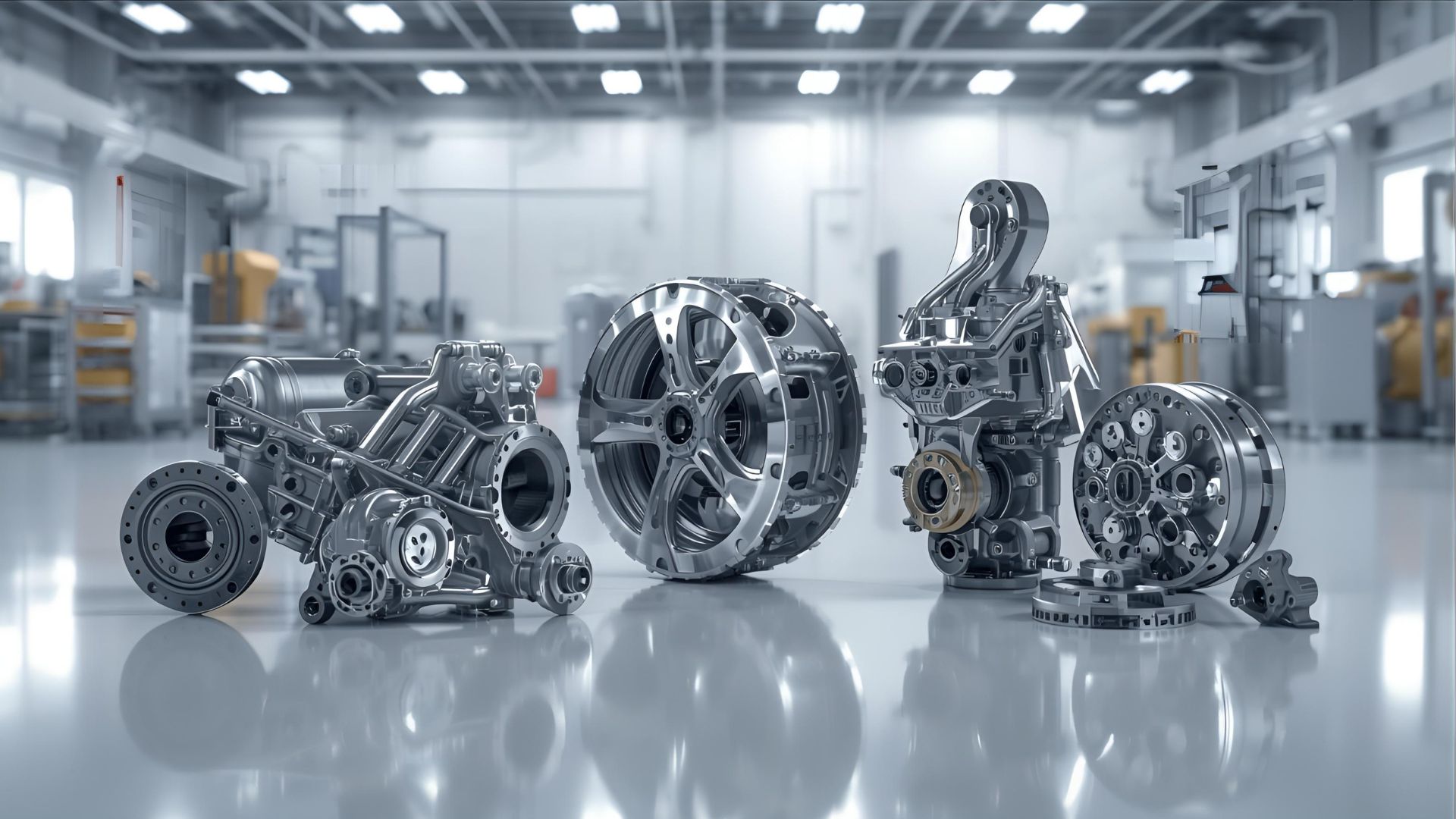
In the rapidly advancing world of transportation, the demand for stronger, lighter, and more durable components has never been higher. Commercial vehicles—whether used for logistics, public transportation, or industrial applications—operate under conditions that require exceptional reliability. At the heart of this evolution is precision casting, a manufacturing technique that is reshaping how commercial vehicle parts are designed, produced, and integrated. When paired with high-performance materials such as OEM carbon steel, precision casting unlocks new levels of strength, accuracy, and efficiency that the industry increasingly depends on.
The Rise of Precision Casting in Modern Manufacturing
Precision casting has long been valued across industries, but its significance in the commercial vehicle sector has grown considerably in recent years. Unlike traditional casting methods, precision casting allows for complex shapes, thinner walls, and detailed geometries to be created with remarkable accuracy. This means engineers can design parts that optimize weight distribution, improve aerodynamics, or integrate multiple functions into a single component.
Commercial vehicles often operate in demanding environments where parts must withstand heavy loads, high temperatures, constant vibration, and long operational hours. Precision casting offers the ability to craft components that maintain integrity under these extreme conditions. The enhanced dimensional accuracy achieved through precision casting minimizes the need for additional machining, reduces production waste, and shortens overall manufacturing time—an advantage that benefits both manufacturers and vehicle operators.
OEM Carbon Steel: A Material Built for Performance
While precision casting provides the method, OEM carbon steel provides the muscle. Known for its exceptional strength, toughness, and resistance to wear, carbon steel remains one of the most trusted materials in vehicle manufacturing. OEM-grade carbon steel, in particular, is engineered to meet specific tolerances and performance standards required by manufacturers, ensuring reliability from production to road use.
In commercial vehicle parts, OEM carbon steel is frequently used for components such as brackets, suspension elements, hinges, levers, and structural supports. These parts must bear significant stress over long periods, making material choice crucial. When used in precision casting, carbon steel achieves shapes and structures that would be difficult to form through traditional manufacturing techniques. This combination allows designers to create parts that are not only stronger but also more efficient in weight and layout.
The durability of carbon steel also plays directly into cost-effectiveness. Components made from OEM carbon steel tend to have longer lifespans, require fewer replacements, and reduce maintenance downtime—all critical factors for fleet operators who rely on consistent performance.
The Perfect Blend: Precision Casting Meets Material Innovation
The synergy between precision casting and OEM carbon steel is shifting expectations for what commercial vehicle parts can achieve. This combination allows manufacturers to create components with exceptional surface quality and structural integrity without sacrificing design freedom.
Through precision casting, OEM carbon steel parts can be produced with intricate internal channels, optimized material distribution, and smooth contours that enhance strength without adding unnecessary weight. These characteristics contribute to improved fuel efficiency, better handling, and an overall increase in vehicle lifespan.
Furthermore, the precision casting process supports tight tolerances and repeatability. For commercial vehicles that may include thousands of moving parts, consistency is vital. Every bracket, hinge, gear housing, or connecting component must align perfectly with others. Precision casting ensures that these parts fit seamlessly into larger assemblies, improving workflow during manufacturing and enhancing performance once the vehicle hits the road.
Advancing Sustainability Through Smart Manufacturing
As the transportation industry moves toward cleaner and more energy-efficient solutions, sustainability in manufacturing has become a core priority. Precision casting helps meet these goals by reducing material waste, lowering energy consumption, and increasing production efficiency. The ability to cast near-net shapes significantly reduces the amount of excess material that must be machined away, minimizing scrap and lowering environmental impact.
OEM carbon steel contributes to sustainability as well. It is highly recyclable and maintains its strength even after multiple recycling cycles. This makes it a key player in the push for circular manufacturing systems—an increasingly important focus in the commercial vehicle industry.
Driving the Future of Commercial Vehicle Parts
The combination of precision casting and OEM carbon steel is setting a new standard for commercial vehicle manufacturing. As technology continues to evolve, the demand for lighter, stronger, and more efficient vehicle components will only increase. Precision casting provides the accuracy and design freedom needed to innovate, while OEM carbon steel delivers the reliability and endurance essential for real-world performance.
Together, they are shaping a new generation of commercial vehicle parts—parts that promise better efficiency, longer lifespan, and superior safety. With this powerful pairing, manufacturers are not just improving vehicles—they are redefining what modern transportation can achieve.