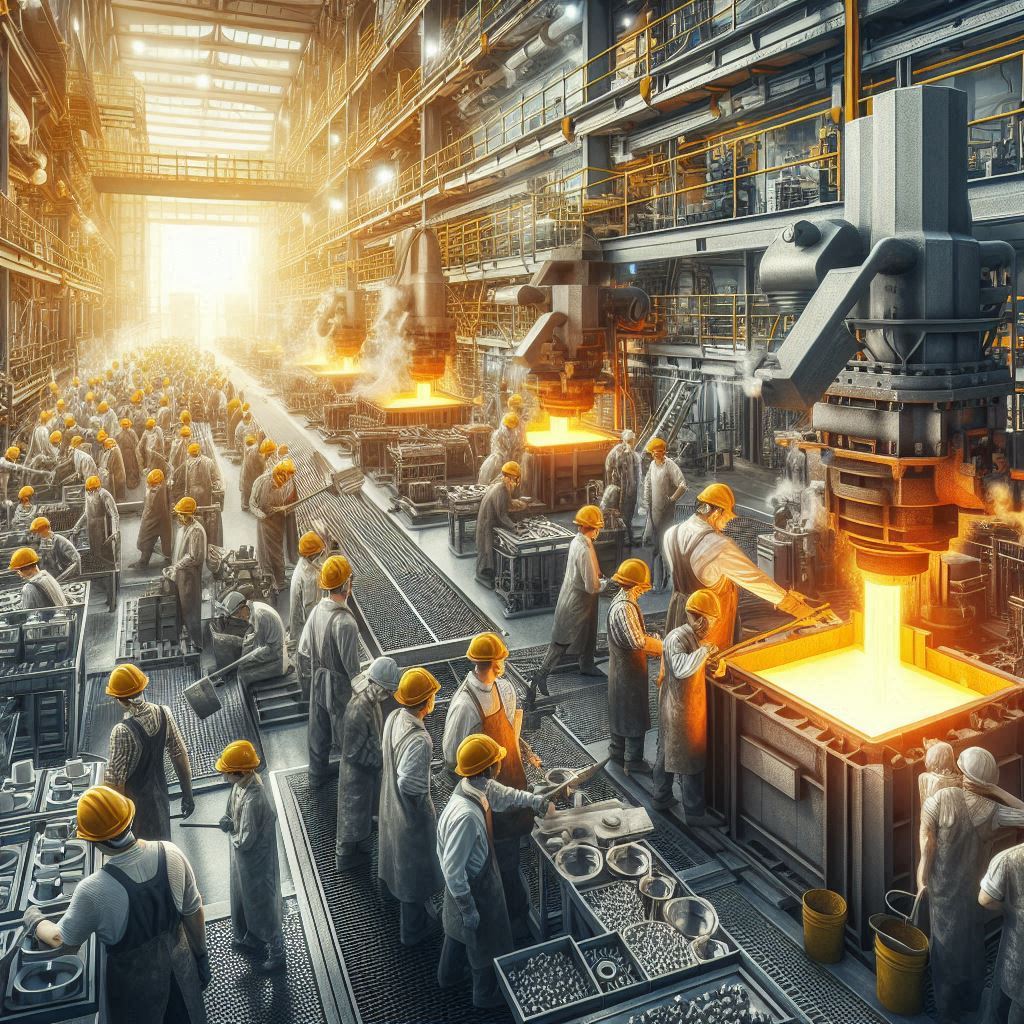
Investment casting foundries ensure precision and quality through a combination of advanced technology, skilled craftsmanship, and rigorous quality control processes. The journey begins with precise wax pattern creation, often supported by CAD design and 3D printing for enhanced accuracy. Each mold undergoes meticulous ceramic coating and controlled burnout to maintain dimensional integrity. Foundries use high-grade alloys and closely monitor melting and pouring conditions to avoid defects. Post-casting processes like CNC machining, heat treatment, and surface finishing further refine the components. In addition, non-destructive testing, dimensional inspections, and certifications such as ISO or AS9100 help guarantee that each part meets stringent industry standards for performance and reliability.
The Role of Investment Casting Foundries in Modern Manufacturing
Investment casting foundries play a crucial role in modern manufacturing by enabling the production of complex, high-precision metal components that are essential across a wide range of industries. These foundries use the lost-wax casting process to create intricate shapes with excellent surface finishes and tight tolerances, reducing the need for extensive machining. Their ability to work with various alloys makes them vital in sectors like aerospace, automotive, medical, defense, and energy. By combining traditional craftsmanship with advanced technologies like CAD modeling, 3D printing, and automated quality control, investment casting foundries help manufacturers achieve greater design flexibility, reduce material waste, and accelerate product development cycles, making them indispensable to today’s high-performance manufacturing landscape.
Choosing the Right Investment Casting Foundry for Your Project
Choosing the right investment casting foundry for your project is critical to ensuring the quality, cost-efficiency, and timely delivery of your components. Start by evaluating the foundry’s experience in your specific industry and its ability to work with the metals and alloys required for your application. Assess their technological capabilities, such as CAD/CAM integration, 3D printing for pattern making, and in-house machining and finishing services. It’s also important to check their quality control standards, certifications (like ISO or AS9100), and ability to meet tight tolerances. A reliable foundry should offer transparent communication, flexible production capacity, and strong after-sales support to handle both prototyping and large-scale production. Selecting a partner who aligns with your technical needs and business goals will ensure long-term success.