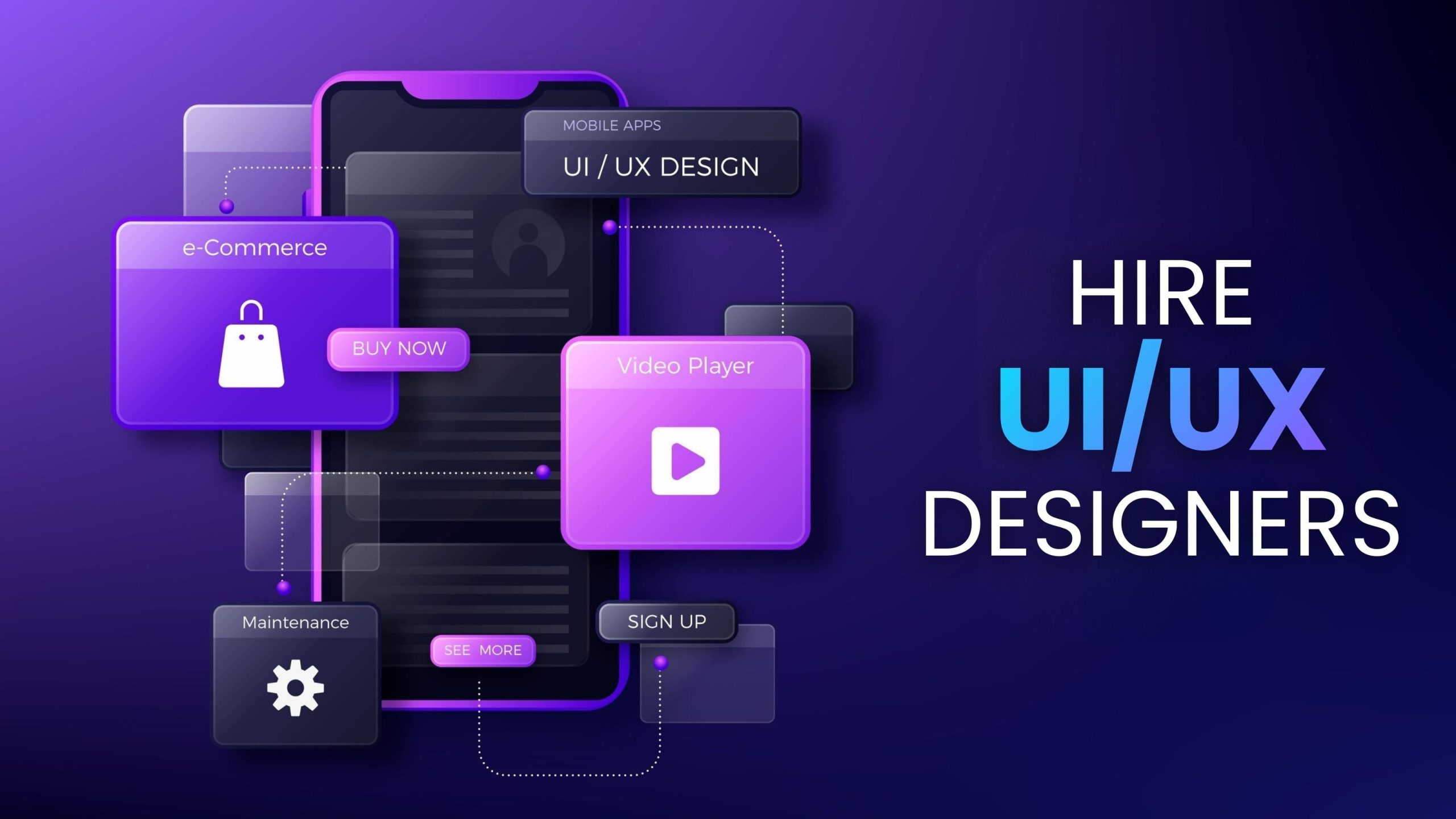
Remember the last time you abandoned an app because you couldn’t figure out how to complete a simple task? Or when you chose one product over another simply because it “felt” better to use? That’s the power of great UI/UX design, and exactly why hiring the right designer has become one of the most critical decisions companies make today.
As we navigate through 2025 and look ahead to 2026, the demand for talented UI/UX designers continues to outpace supply. Companies that once viewed design as an afterthought now recognize it as a competitive advantage that directly impacts their bottom line. Whether you’re a startup founder building your first product or an enterprise leader scaling your team, understanding how to hire UI UX designers has never been more important.
Why UI/UX Design Matters More Than Ever
The numbers tell a compelling story. Research consistently shows that every dollar invested in UX design returns between $2 and $100, with the median ROI hovering around $100 for every dollar spent. Companies that prioritize user experience see conversion rates improve by up to 400%, while poor design costs businesses billions in lost revenue annually.
But beyond the statistics, there’s a fundamental shift happening in how users interact with digital products. Today’s consumers have zero tolerance for clunky interfaces or confusing user flows. They expect seamless, intuitive experiences across every touchpoint, from mobile apps to smart home devices to augmented reality interfaces. Meeting these expectations requires designers who understand not just aesthetics, but human psychology, accessibility, and emerging technology.
Understanding the Role: What Do UI/UX Designers Actually Do?
Before you start your hiring process, it’s crucial to understand what you’re actually looking for. While UI (User Interface) and UX (User Experience) are often bundled together, they represent distinct skill sets.
UX designers focus on the overall feel and journey of a product. They conduct user research, create wireframes and prototypes, map out user flows, and constantly test and iterate based on real user feedback. Think of them as architects designing the blueprint of your digital experience.
UI designers concentrate on the visual and interactive elements, the colors, typography, buttons, animations, and micro-interactions that users directly engage with. They’re the interior designers who make the space not just functional, but beautiful and emotionally engaging.
Many designers specialize in one area, while others offer full-stack design capabilities. Understanding which skills you need depends on your product stage, team structure, and business goals.
Key Trends Shaping UI/UX Hiring in 2026
The design landscape is evolving rapidly, and your hiring criteria should reflect these changes.
AI-Augmented Design is no longer science fiction, it’s here. The best designers in 2026 aren’t threatened by AI tools like Midjourney, Figma AI, or automated design systems. Instead, they leverage these technologies to work faster and focus on higher-level strategic thinking. Look for candidates who demonstrate comfort with AI-assisted workflows and can articulate how they use these tools to enhance, not replace, their creative process.
Accessibility-First Thinking has moved from nice-to-have to non-negotiable. With approximately 16% of the global population experiencing some form of disability, designing inclusive experiences isn’t just ethical, it’s essential for reaching your full market potential. Top designers now bake accessibility considerations into every stage of their process, not as an afterthought.
Cross-Platform Consistency matters more as users seamlessly switch between devices. Your designer needs to think beyond single-platform solutions and create cohesive experiences across mobile, tablet, desktop, wearables, and whatever comes next.
Choosing Your Hiring Model: In-House vs. Flexible Engagement
One of the first decisions you’ll face is how to structure your design team. The traditional in-house model offers continuity and deep product knowledge, but it comes with significant overhead, recruitment costs, benefits, office space, and the risk of extended hiring timelines.
This is where flexible engagement models have transformed how companies access top design talent. Companies are increasingly turning to specialized tech talent platforms that offer both dedicated team arrangements and fixed-price project models, allowing businesses to scale their design capabilities up or down based on current needs.
For instance, if you’re launching a complete product redesign with a clear scope and timeline, a fixed-price engagement ensures predictable costs and defined deliverables. Conversely, if you need ongoing design support for continuous product iteration, a dedicated UI/UX designer who integrates seamlessly with your existing team might be the better choice.
The key advantage of these flexible models is speed and quality. Rather than spending months recruiting, onboarding, and hoping your hire works out, you can access pre-vetted designers who are ready to contribute immediately. This approach has proven particularly valuable for startups that need enterprise-level design expertise without the enterprise-level overhead.
Where to Find Top Design Talent
The traditional job board approach still works, but the most successful companies are getting creative with their sourcing strategies.
Design communities like Dribbble, Behance, and Designer News aren’t just portfolios, they’re networking hubs where you can observe how designers think, collaborate, and contribute to the community. Engaging with designers in these spaces before you have an opening builds relationships that pay off when you’re ready to hire.
Specialized talent platforms have emerged as powerful alternatives to traditional recruiting. Platforms like AB Ark connect businesses with vetted UI/UX designers across various engagement models, eliminating much of the risk and friction from the hiring process. These platforms typically maintain pools of pre-screened talent, handle administrative complexities, and offer flexibility that traditional hiring can’t match.
Remote work has permanently expanded your talent pool. With geographic barriers dissolved, you can access world-class design talent regardless of location. However, this also means you’re competing globally, making your employer brand and compensation packages more important than ever.
Evaluating Candidates: Beyond the Portfolio
A gorgeous portfolio is table stakes, but it doesn’t tell the whole story. The best hiring processes dig deeper.
Focus on process, not just pixels. During interviews, ask candidates to walk you through their design process for a specific project. How did they approach user research? What constraints did they face? How did they handle feedback and iteration? The thinking behind the design often matters more than the final deliverable.
Review real-world project experience. Look at the types of projects they’ve tackled, AI-powered platforms, mobile applications, enterprise software, or consumer apps. A designer who’s successfully navigated complex projects like mental health platforms or AI-driven waste detection systems brings valuable experience in balancing sophisticated functionality with intuitive interfaces.
Give them a real problem to solve. Paid design exercises, when scoped appropriately, reveal how candidates approach unfamiliar challenges, communicate their ideas, and incorporate feedback. Just ensure the project is reasonable in scope and compensate candidates fairly for their time.
Assess collaboration skills. Designers rarely work in isolation. They need to collaborate with product managers, engineers, marketers, and stakeholders. Look for evidence of strong communication skills, empathy, and the ability to advocate for users while balancing business constraints.
The Build vs. Buy Decision
Here’s a reality check: building an exceptional in-house design team from scratch can take 6-12 months and cost significantly more than you anticipate. Between recruitment fees, salaries, benefits, software licenses, and the opportunity cost of delayed projects, the true cost of hiring becomes substantial.
For many companies, particularly those in growth mode or working on time-sensitive projects, partnering with established talent providers offers a faster, lower-risk path to exceptional design work. Companies like AB Ark have built reputations by delivering skilled UI/UX designers who’ve already proven themselves on diverse projects across industries including AI, mobile development, and web applications.
This doesn’t mean abandoning the idea of in-house design entirely. Many successful companies use a hybrid approach: maintaining a small core design team while augmenting with specialized external talent for specific projects or peak periods. This gives you stability and institutional knowledge while maintaining the flexibility to scale quickly when opportunities arise.
Building an Attractive Offer
Whether you’re hiring in-house or engaging talent through flexible models, top designers have options, lots of them. Standing out requires more than competitive compensation.
Design culture matters immensely. Designers want to work where design has a seat at the table, where user research informs strategy, and where they have autonomy to do their best work. Be honest about your company’s design maturity and your commitment to investing in it.
Growth opportunities keep great designers engaged. Whether it’s access to conferences, education budgets, mentorship programs, or clear career progression paths, show candidates how they’ll continue developing their craft on your team.
Flexibility and work-life balance have become non-negotiable for many designers. Remote work options, flexible hours, and a culture that respects boundaries attract stronger candidates than rigid, office-centric policies.
Interesting challenges attract the best talent. Designers want to work on problems that matter, whether that’s improving healthcare access, building AI-powered solutions, or creating experiences that genuinely improve people’s lives. Highlight the meaningful impact their work will have.
Red Flags to Avoid
Not every designer or design partnership will be a good fit. Watch out for these warning signs:
- Portfolio without process explanation – Beautiful work means nothing if the designer can’t articulate their problem-solving approach
- Inability to discuss trade-offs – Great design involves constant decision-making and compromise
- Lack of user research involvement – Designers who rely solely on intuition or aesthetic preferences often miss critical user needs
- Poor communication skills – If they can’t clearly explain their ideas during interviews, they likely can’t collaborate effectively with your team
Summary
As we move deeper into 2026, the role of UI/UX designers will only become more central to business success. The companies that invest in hiring exceptional design talent, whether through traditional employment, dedicated team models, or project-based engagements, will build products that users love, recommend, and return to repeatedly.
The hiring process might feel daunting, especially in a competitive market. But by understanding what great design looks like, exploring flexible engagement models that reduce risk and speed time-to-market, and focusing on candidates who combine technical skills with strategic thinking, you’re positioning your company to create experiences that stand out in an increasingly crowded digital landscape.
Get a free consultation today, explore partnerships with proven talent providers like AB Ark, refine your interview process, and most importantly, cultivate a culture where design thinking permeates every decision. The investment you make in hiring the right UI/UX designer isn’t just filling a role, it’s shaping the future of your product and your company.