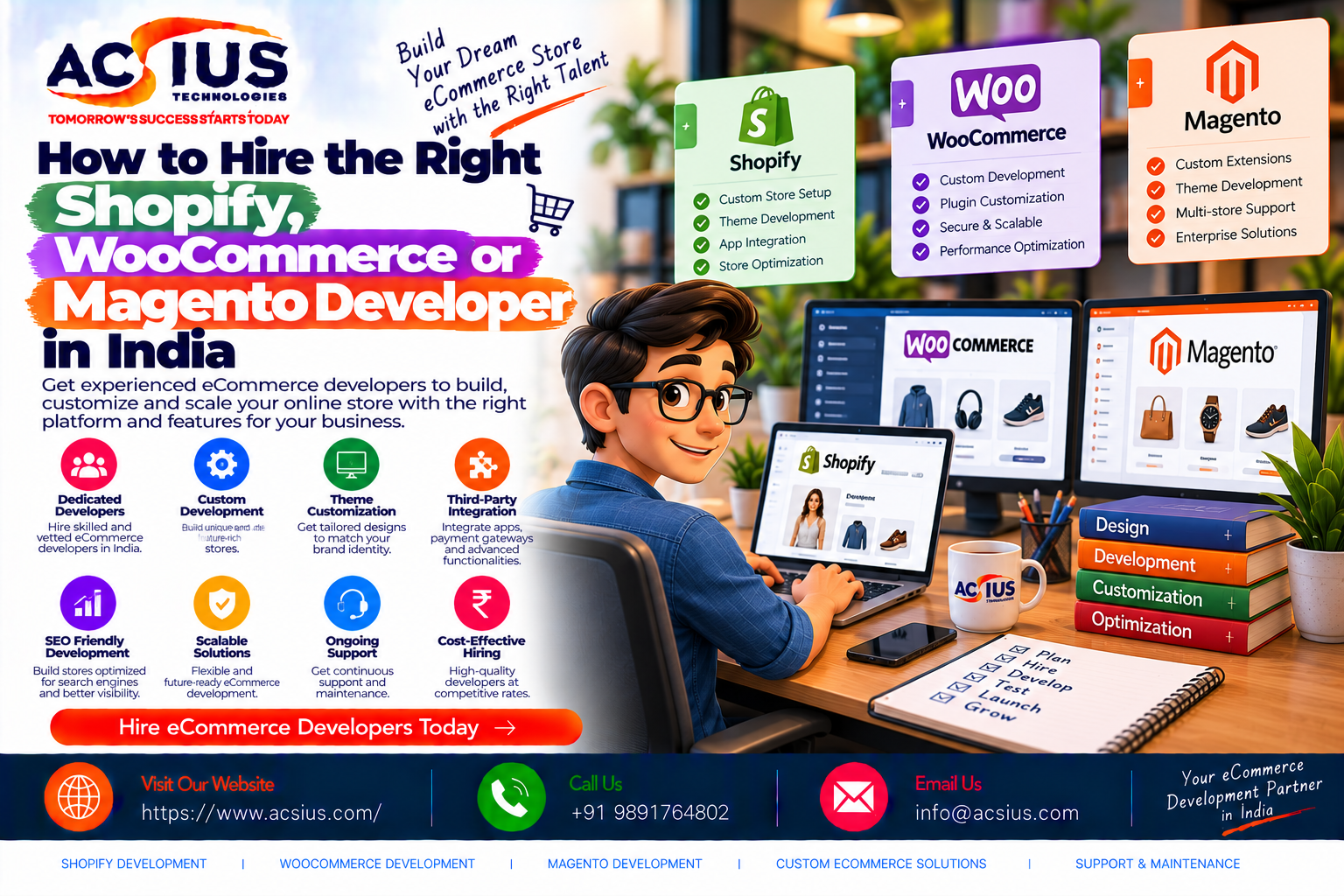
Choosing an ecommerce platform is only half the decision. The other half is choosing who builds and maintains your store. A skilled developer can turn a modest catalog into a fast, reliable sales channel. A poor match can leave you with slow pages, broken checkouts, and a codebase nobody wants to touch.
India has become one of the largest sources of ecommerce development talent, offering strong technical skills, English-language communication, and competitive pricing. But a big talent pool also means wide variation in quality. Platform choice shapes the kind of expertise you need, and many merchants start by looking to hire shopify developers when they want a managed, quick-to-launch store with strong built-in infrastructure. This guide explains how to match the platform to the right developer, what to evaluate, and how to structure the engagement so the project succeeds.
Start With the Right Platform
Developers specialize, so your platform decision comes first. Each of the three major platforms suits a different kind of business.
Shopify is a hosted platform that handles hosting, security updates, and payments for you. It suits small and mid-sized brands, direct-to-consumer sellers, and teams that want to launch quickly without managing servers. Customization happens through themes, the Liquid templating language, apps, and APIs. Shopify Plus extends this for high-volume merchants.
WooCommerce is a plugin that turns WordPress into a store. It offers deep flexibility, full ownership of your data, and strong content marketing capabilities. It works well for brands that combine blogging and selling, or that need unusual product types, subscriptions, or custom checkout logic. You manage hosting, performance, and security yourself, or through a partner.
Magento (Adobe Commerce) is built for large catalogs, complex pricing, multi-store setups, and B2B features. It offers powerful customization, but it needs experienced developers and solid hosting to perform well.
Ask yourself how many products you sell, how unusual your business rules are, how much technical upkeep your team can handle, and where you expect to be in three years. The answers point to the right platform, and from there to the right specialist.
Skills to Look For by Platform
A developer who is excellent on one platform may struggle on another, so check for platform-specific depth.
Shopify developers should be fluent in Liquid, theme architecture (including Online Store 2.0 sections and blocks), the Storefront and Admin APIs, and app development. For Plus stores, they should understand checkout extensibility, scripts or functions, and multi-currency setups.
WooCommerce developers need strong PHP and WordPress knowledge, including hooks, custom post types, REST API use, and database optimization. They should know how to keep a store fast with caching, lean plugins, and efficient queries, and how to secure a self-hosted install.
Magento developers require deep PHP experience, understanding of Magento’s module system, dependency injection, EAV database structure, and caching with tools like Redis and Varnish. For complex or high-traffic stores, many merchants decide to hire magento developers who have handled version upgrades, performance tuning, and custom module work on real production sites, since mistakes on this platform tend to be expensive and slow to fix.
Across all three, look for competence in front-end basics (HTML, CSS, JavaScript), responsive design, payment and shipping integrations, and SEO fundamentals such as clean URLs, schema markup, and page speed.
Define Your Project Before You Interview
Vague briefs produce vague quotes. Before you contact anyone, write down:
- Scope: new build, redesign, migration from another platform, or ongoing support.
- Must-have features: payment gateways, subscriptions, multi-language, B2B pricing, product configurators, marketplace features.
- Integrations: ERP, inventory, CRM, shipping carriers, accounting software, marketing tools.
- Performance and scale: expected traffic, catalog size, peak seasons.
- Timeline and budget range: even a rough range helps developers propose realistic solutions.
- Success metrics: conversion rate, page speed targets, or revenue goals.
A clear brief lets you compare proposals fairly and reveals which developers ask smart questions.
Where to Find Developers in India
There are several routes, each with tradeoffs.
Freelance marketplaces offer flexibility and low entry cost, but quality varies, and continuity can be a risk if the freelancer takes on other work.
Development agencies provide a coordinated team of developers, designers, QA testers, and project managers. This reduces your management burden and gives you backup if someone is unavailable.
Dedicated developer arrangements place full-time developers on your project through a partner, working as an extension of your team. This suits long-running stores with continuous improvements.
Referrals and communities such as platform forums, LinkedIn groups, and peers in your industry often lead to trustworthy recommendations.
For stores with ongoing needs, dedicated or agency models usually beat one-off freelancers, because the developer builds knowledge of your store over time.
How to Evaluate Candidates
A polished pitch is not proof of skill. Use a structured process.
Review live work. Ask for stores they have built or maintained, then test them yourself. Check mobile layout, loading speed, checkout flow, and search functionality. Look for polish on real devices, not just screenshots.
Ask platform-specific questions. Ask a Shopify candidate how they would build a custom product bundle without slowing the theme. Ask a WooCommerce candidate how they would diagnose a slow admin panel. Ask a Magento candidate how they approach a major version upgrade with heavy customizations. Specific, practical answers signal experience.
Assign a small paid task. A short exercise, such as customizing a template section or fixing a performance issue, shows coding quality, communication, and attention to detail far better than an interview alone.
Check code quality. If possible, review a code sample for structure, naming, comments, and use of platform best practices instead of hacks that break on updates.
Verify references. Speak with past clients about deadlines, responsiveness, and how the developer handled problems after launch.
Assess communication. Do they ask clarifying questions, explain tradeoffs in plain language, and report progress honestly? Remote work depends heavily on communication.
Think Beyond the Website: Mobile and Omnichannel
Many ecommerce brands eventually want a mobile app to deepen customer loyalty, send push notifications, and offer faster repeat purchases. Planning for this early saves headaches, especially around APIs and data structure.
Cross-platform frameworks let you build for iOS and Android from one codebase. Flutter is a popular option for polished, consistent interfaces and smooth performance. Merchants preparing to extend their store into a shopping app often hire flutter app developers who can connect the app to Shopify, WooCommerce, or Magento through their APIs, so product data, inventory, orders, and customer accounts stay in sync. The strongest results come when the store developers and app developers coordinate from the start, agreeing on API structure, authentication, and release schedules rather than treating the app as a disconnected project.
Engagement Models and Pricing
India offers flexible commercial structures, and understanding them helps you budget accurately.
Fixed-price projects suit clearly defined work with stable requirements. They give cost certainty, but changes can be slow and expensive.
Time-and-materials billing works for evolving scopes, though it demands active oversight to keep costs in check.
Dedicated monthly engagements provide a developer or team at a set monthly rate. This model works best for continuous development, maintenance, and optimization.
Costs depend on platform, seniority, and scope. Magento specialists generally command higher rates than Shopify or WooCommerce developers because of the platform’s complexity. Rather than focusing only on hourly rates, compare total value: code quality, speed of delivery, maintenance burden, and how well the developer avoids expensive rework. Ask exactly what is included, such as testing, project management, post-launch support, and hosting setup, and watch for hidden extras.
Red Flags to Avoid
Some warning signs show up repeatedly in poor engagements:
- No verifiable portfolio or refusal to share live store examples.
- Prices far below market, which often signal inexperience or heavy subcontracting.
- One-size-fits-all recommendations, such as pushing one platform without understanding your needs.
- Vague answers about security, performance, or testing practices.
- Pressure to sign quickly without a clear scope or contract.
- No staging environment, meaning changes go straight to the live store.
- Unclear ownership terms, leaving you without full control of your code, accounts, and data.
- No post-launch support plan, which leaves you stranded when issues arise.
Setting Up the Engagement for Success
A good hire still needs a good start. Put these practices in place from day one.
Sign a clear contract. Define scope, milestones, payment terms, intellectual property ownership, confidentiality, and support obligations. Make sure you own the code, store accounts, and data.
Use a staging environment. All changes should be tested before reaching the live store, especially around checkout, payments, and inventory.
Agree on communication rhythms. Set overlapping hours for time zone differences, regular check-ins, and a shared project board so priorities are visible.
Document everything. Technical decisions, customizations, and credentials should be recorded in a shared location so knowledge does not live in one person’s head.
Protect access. Give developers only the permissions they need, use secure credential sharing, and revoke access when work ends.
Plan for maintenance. Platform updates, security patches, performance monitoring, and backups require ongoing attention. Decide who handles them and how quickly issues will be resolved.
Measuring Developer Performance
Once the work begins, track outcomes instead of activity. Useful indicators include page speed and Core Web Vitals scores, checkout completion rate, bug frequency after releases, on-time delivery of milestones, and the quality of documentation. Review progress regularly, and give specific feedback early. A developer who responds well to feedback and communicates problems quickly is usually worth keeping.
Final Thoughts
Hiring the right ecommerce developer in India comes down to fit: the right platform specialist, the right engagement model, and the right communication habits. Define your needs clearly, test real skills instead of trusting pitches, plan for mobile and integrations early, and put a solid contract and process in place. Do that, and you gain a technical partner who helps your store load faster, convert better, and scale without constant firefighting.
If you are ready to build or improve your online store with experienced specialists, ACSIUS provides skilled Shopify, WooCommerce, and Magento developers, along with mobile and backend expertise, helping businesses launch and grow ecommerce stores with transparent communication and dependable ongoing support.