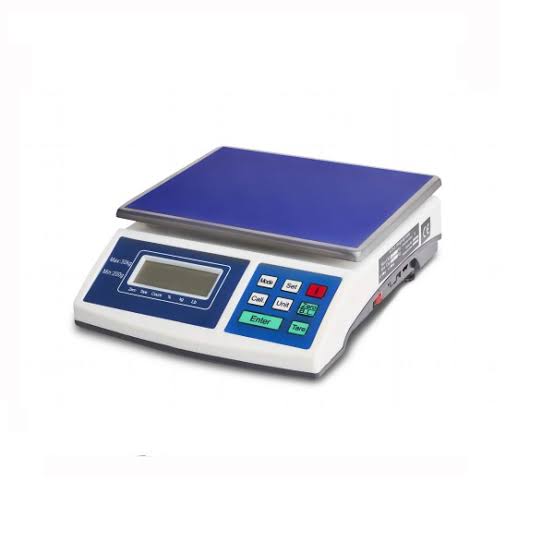
Accurate weighing is essential for businesses that deal with products, ingredients, packages, components, and materials on a daily basis. A reliable Table Top Weighing Scale in UAE provides a practical solution for businesses that need precise measurements without using large floor-based equipment. With a compact design, easy operation, and digital weight display, table top scales can support retail, food processing, packaging, manufacturing, warehousing, and other commercial applications across the UAE.
What Is a Table Top Weighing Scale?
A table top weighing scale is a compact weighing machine designed to operate on a counter, table, workbench, or other stable surface. It normally consists of a weighing platform, electronic weighing sensors, and a digital indicator that displays the measured weight.
These scales are available in different capacities, sizes, and configurations. Businesses can select a model according to the type of products they handle, required accuracy, available workspace, and frequency of weighing.
Unlike large industrial floor scales, table top models are designed to provide convenient weighing in areas where space is limited. Their compact structure also makes them easy to position close to production, packaging, or sales activities.
Why Businesses Need Table Top Weighing Scales
Accurate weight measurement can directly affect inventory management, product quality, packaging, pricing, and production efficiency. Manual estimation can result in inconsistent quantities and unnecessary material waste.
A suitable table top scale can help businesses:
- Improve weighing accuracy and consistency
- Reduce manual measurement errors
- Speed up routine weighing tasks
- Maintain better inventory records
- Control product quantities
- Improve packaging accuracy
- Reduce material wastage
For businesses that perform frequent weighing throughout the day, having a dedicated scale at the workstation can make operations more efficient.
Common Applications of Table Top Weighing Scales
Table top weighing equipment is versatile and can be used across different industries.
Retail and Commercial Businesses
Retailers may use table top scales to measure products sold by weight. The digital display allows employees to quickly determine product quantities and provide accurate measurements.
Food Processing and Restaurants
Food businesses frequently need to measure ingredients, portions, and prepared products. A table top scale can help maintain consistent quantities during food preparation and packaging.
Packaging Operations
Weight control is an important part of packaging. Operators can use table top scales to check whether packages contain the required quantity before they are prepared for delivery or sale.
Warehouses
Warehouses can use compact weighing equipment for smaller cartons, packages, components, and other goods. The scale can be placed at receiving, packing, or dispatch stations.
Manufacturing
Manufacturing companies may use table top scales for measuring components, raw materials, parts, and production samples. Consistent measurements can support quality control and production accuracy.
Important Features to Consider
Not every weighing scale is suitable for every application. Businesses should evaluate the features that match their specific requirements before purchasing equipment.
Important considerations include:
- Maximum weighing capacity
- Accuracy and readability
- Platform dimensions
- Digital display quality
- Tare function
- Overload protection
- Power and battery options
- Construction material
- Ease of cleaning
- Calibration requirements
- Operating environment
Selecting the right features can help businesses achieve dependable performance while avoiding unnecessary equipment costs.
Choosing the Right Weighing Capacity
Capacity is one of the most important factors when selecting a table top scale. Businesses should determine the maximum weight of the products or materials they expect to measure regularly.
A scale should not be overloaded or continuously operated near unsuitable limits. Choosing an appropriate capacity can help maintain accurate measurements and protect the weighing components.
For example, a business weighing small food ingredients may require a different capacity from a packaging company weighing cartons or components. Understanding the actual application makes it easier to select the correct equipment.
Importance of Weighing Accuracy
Accuracy is critical when weight measurements affect pricing, production, inventory, or product quality. Even small measurement differences can become significant when a business handles large quantities every day.
A table top scale should be placed on a stable and suitable surface. Operators should also avoid unnecessary vibration, impact, and overload conditions. Regular inspection and calibration can further support consistent weighing performance.
Businesses should always follow the manufacturer’s operating and maintenance recommendations to achieve reliable results.
Digital Display and User-Friendly Operation
One of the main advantages of modern table top weighing scales is the digital display. Clear weight readings allow operators to quickly understand the measurement without complicated manual calculations.
Depending on the model, useful functions may include tare, zero adjustment, unit selection, counting, and overload indication. These features can simplify weighing tasks and improve productivity in busy work environments.
A user-friendly interface is especially valuable when multiple employees use the same weighing equipment throughout the day.
Platform Size and Construction
The size of the weighing platform should match the products being measured. A platform that is too small can make it difficult to position larger items correctly, while an unnecessarily large platform may take up valuable workspace.
Construction quality is another important consideration. Businesses should select equipment suitable for their operating environment. For applications involving frequent cleaning or moisture exposure, the weighing platform and overall construction should be appropriate for those conditions.
Benefits of Table Top Weighing Equipment
A table top scale can provide several benefits for businesses that require convenient and reliable weighing.
Space Efficiency
Its compact design allows the scale to be installed on tables, counters, and workbenches. This makes it suitable for businesses with limited workspace.
Improved Productivity
Quick digital measurements can reduce the time employees spend weighing products and recording quantities.
Consistent Measurements
Using the same weighing equipment for routine tasks can help businesses maintain greater consistency across products and production processes.
Flexible Use
Depending on its capacity and design, a table top scale can be used for different products, ingredients, packages, and components.
Maintenance and Calibration
Proper maintenance is essential for keeping a weighing scale accurate and functional. The platform should be cleaned regularly, and operators should make sure that nothing is touching or interfering with the weighing surface.
Businesses should also:
- Avoid placing loads beyond the recommended capacity
- Keep the scale on a stable surface
- Protect the equipment from unnecessary impacts
- Check cables and electrical connections
- Monitor unusual or inconsistent readings
- Keep the weighing area clean
- Arrange professional calibration when required
Regular maintenance can help identify potential problems early and support longer equipment life.
How to Select the Right Table Top Weighing Scale in UAE
Businesses should evaluate their weighing requirements before selecting a scale. The type of products, maximum load, required accuracy, platform size, available workspace, and operating environment should all be considered.
It is also important to consider how frequently the scale will be used. A business with continuous daily weighing requirements may need a more durable solution than an organization that only performs occasional measurements.
Choosing equipment from an experienced weighing equipment provider can also make it easier to identify a suitable solution based on the intended application.
Why Choose Al Falah Scales?
Al Falah Scales offers weighing solutions for different commercial and industrial requirements in the UAE. When selecting weighing equipment, businesses can consider their specific application, required capacity, accuracy, platform size, and operating environment.
A professional weighing equipment provider can help businesses understand their requirements and select equipment that supports accurate and efficient daily operations.
Table Top Weighing Solutions for UAE Businesses
The UAE has a diverse commercial and industrial sector, including retail, logistics, manufacturing, food processing, warehousing, and packaging. Each industry has different weighing requirements.
A properly selected table top weighing scale can provide businesses with a convenient method of measuring products and materials directly at the workstation. This can improve workflow, support better quantity control, and reduce unnecessary manual measurements.
From small commercial applications to demanding production environments, businesses should select weighing equipment based on actual operational requirements rather than choosing a scale based only on price or appearance.
Conclusion
A table top weighing scale is a practical solution for businesses that require accurate, convenient, and space-efficient weight measurement. With the right capacity, platform size, features, and maintenance routine, it can support retail, food, packaging, warehouse, and manufacturing operations. UAE businesses can improve their weighing processes by selecting reliable equipment that matches their specific application.
FAQs
1. What is a table top weighing scale used for?
A table top weighing scale is used to measure products, ingredients, packages, components, and other materials on a counter, table, or workbench.
2. How do I choose the right table top weighing scale?
Consider the maximum load, required accuracy, platform size, frequency of use, operating environment, and features needed for your specific application.
3. Why is calibration important for a table top scale?
Calibration helps verify that the scale is providing reliable weight measurements. Regular calibration can help maintain accuracy and consistent performance over time.