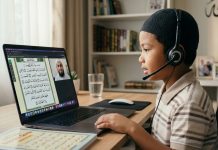
Long before a child enters a classroom, faith is learned at the dinner table. It lives in the whispered salawat of a grandmother, in the sound of a father reciting dua before a journey and in the quiet respect given to the name of Imam Ali. Online Quran classes strengthen that home foundation instead of replacing it. When a lesson takes place in the living room, the Quran becomes part of the household rhythm, and parents and children discover the book together.
Bridging Generations
Many British Shia families span three generations under one roof or across several cities. Grandparents remember the majalis of their childhood, parents juggle careers and children speak fluent English with a British accent. Online classes help these generations meet in the middle. A grandmother can listen as her grandson recites a surah she once learned herself, and the moment becomes a gift. Shia Quran Academy Online encourages this kind of sharing, because faith grows when it is passed from heart to heart.
Teachers support this bridge by explaining meanings in simple English. Children begin to see that the Quran is not a distant language but a message that speaks to their daily choices, from honesty at school to kindness towards neighbours.
Standing With the Ahlulbayt
For Shia families, love of the Prophet’s family is not an optional extra. It colours the way the year is lived, from the mourning of Muharram to the joy of the blessed birthdays. Children who learn the Quran in an environment that respects this love discover that recitation and devotion belong together. They learn to honour the Prophet, to remember Karbala with dignity and to carry a sense of justice into ordinary life.
Teachers never need to apologise for these beliefs or dilute them. A student can ask why the family places a turbah during prayer or why certain names are mentioned in supplication, and receive a thoughtful, age-appropriate answer.
Building a Community Online
Distance can make religious life lonely. A family in a small town may be the only Shia household for miles, and children can feel different from classmates. Online classes quietly solve that loneliness. Students realise that thousands of other children are learning the same verses, praying the same prayers and loving the same Imams. That awareness is powerful. It turns an individual routine into a shared journey and creates a sense of community without any travel.
Parents benefit too. They meet like-minded families, share tips on routines and gain confidence that they are not raising their children alone.
Learning That Feels Personal
Every learner arrives with a different story. One child struggles with Arabic sounds, another races ahead, and a teenager needs motivation more than instruction. Personal attention allows the teacher to respond to each case. Lessons can focus on fluency, memorisation, translation or simply building the courage to recite aloud. Shia Quran Academy Online keeps lessons flexible and encouraging, so progress never feels like a competition.
Small celebrations matter. A teacher who praises a perfectly pronounced letter or a first completed surah gives a child something to remember for years, and that memory becomes the root of lifelong love for the Quran.
Practical Support for Busy Parents
Parents are asked to do a great deal, and religious teaching should not become another stressful task. Online classes simplify the process. There is no travel, no waiting outside a hall and no struggle to coordinate lifts. Timings are agreed in advance, reminders keep the routine steady and feedback tells parents exactly how to help with revision. Even a few minutes of encouragement at home can multiply the benefit of each lesson.
Muharram, Ramadan and the Spiritual Calendar
The Islamic calendar gives Shia families some of the most meaningful weeks of the year. Muharram brings gatherings, reflection and remembrance of Karbala, while Ramadan invites extra recitation, fasting and prayer. Online classes can adjust to these seasons. During Ramadan, students may focus on reading with understanding, and during Muharram lessons can be lighter so families can attend majalis. Shia Quran Academy Online treats these times as opportunities rather than interruptions.
Nurturing Teenagers
Teenagers are often the hardest group to reach. They are busy, self-conscious and full of questions. Yet they are also capable of deep thought and sincere devotion. A good online tutor treats them as young adults, listening carefully, answering honestly and never lecturing. Teenagers who feel respected tend to return to the lesson willingly, and many discover that the Quran offers calm during the pressure of exams and friendships.
Keeping Motivation High
Every learner has days when the lesson feels hard. Teachers keep motivation alive with variety, praise and clear goals. A student may aim to complete a surah before a family gathering or to recite in front of relatives during a special occasion. Small targets like these make effort meaningful, and the pride that follows encourages children to continue long after the first excitement fades.
Encouraging Questions
Curiosity is a blessing, and good teachers never discourage it. Students are invited to ask why a verse was revealed, what a word means or how a teaching applies to modern life. Honest questions lead to understanding, and understanding makes faith strong. When a teacher does not know an answer immediately, saying so and returning with it teaches humility, which is itself a valuable lesson. That honesty builds trust, and trust is what keeps a student returning to the Book with an open and willing heart.
Taking the First Step
If your family has been thinking about starting, there is no better moment than now. Choose a quiet corner, open a screen and let your child meet a teacher who treats the Quran with love and respect. Shia Quran Academy Online is ready to welcome families across the United Kingdom into a faith-filled learning journey.
Frequently Asked Questions
What courses are available for UK students?
Courses include Noorani Qaida, Quran reading with Tajweed, memorisation, translation and basic supplications, arranged to suit each learner.
Are male and female teachers available?
Families can usually request a teacher that matches their comfort and preference, especially for girls and young children.
How often should my child attend?
Most students attend three to five times a week, though schedules can be adjusted to suit school commitments and the child’s focus.
Do you teach about Ahlulbayt as well as recitation?
Lessons centre on Quranic recitation, while teachers also share respectful guidance about the Ahlulbayt, manners and daily supplications where families request it.
Can I change the lesson timings later?
Yes. Timings can be adjusted when school terms, exams or family routines change.