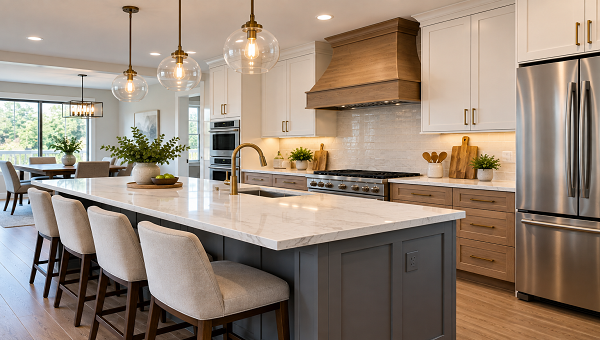
The kitchen has become much more than a place for cooking. Today, it often serves as a gathering space, dining area, work zone, and central part of the home. Therefore, cabinet design plays an important role in making the kitchen comfortable, organized, and attractive. Well-planned cabinetry can improve storage while also giving the room a stronger visual identity. For homeowners in Dublin, Columbus, Ohio, cabinet selection can also reflect the character of the home and the way the household uses the kitchen. However, choosing cabinets based only on appearance can create problems later. Instead, homeowners should consider storage, materials, layout, hardware, lighting, and long-term use before making a final decision.
Key Takeaways
- Modern cabinet design should support daily routines, storage needs, and comfortable kitchen movement.
- Cabinet materials, colors, hardware, lighting, and countertops should work together as one complete design.
- Careful planning and accurate installation can help create a kitchen that remains practical and attractive for years.
Why Cabinet Design Matters in Modern Kitchens
Kitchen cabinets occupy a large part of the visible wall and storage space. Therefore, their design can influence how the entire room looks and functions. A cabinet system should provide enough storage while leaving useful workspace for cooking and preparation. Additionally, modern kitchen planning often focuses on creating clean lines and practical storage. Instead of filling every available area with cabinets, homeowners can select layouts that provide better access and organization. As a result, the kitchen can feel more spacious without requiring a larger floor plan.
Choosing Cabinets Around Everyday Kitchen Needs
Every household uses the kitchen differently. Therefore, cabinet selection should begin with daily routines rather than trends. A family that cooks frequently may need deep drawers for cookware, larger pantry storage, and easy access to frequently used ingredients. Meanwhile, a smaller household may prefer a more open layout with fewer cabinets and more display space. For homeowners comparing modern kitchen cabinets, Keystone Granite can be considered alongside the overall layout, storage requirements, finish preferences, and countertop design. The goal is not simply to select attractive doors. Instead, the complete cabinet system should work with the way the kitchen is actually used.
Creating Better Storage With Modern Cabinet Designs
Storage is one of the biggest reasons homeowners update their kitchens. Therefore, modern cabinetry should make better use of available space. Traditional cabinet layouts sometimes leave corners, deep shelves, and lower cabinets difficult to access. However, thoughtful planning can turn these areas into useful storage.
Making Lower Cabinets More Practical
Lower cabinets often hold heavy cookware, appliances, and larger kitchen items. Therefore, drawers can sometimes provide easier access than traditional doors. A wide drawer allows homeowners to see stored items without reaching deep inside a cabinet. Additionally, different drawer sizes can serve different purposes. Shallow drawers can hold utensils, while deeper drawers can store pots, pans, or small appliances. As a result, the kitchen can remain organized while keeping frequently used items within easy reach.
Using Tall Storage Efficiently
Tall cabinets can provide valuable storage without taking additional floor space. Therefore, they can work well in kitchens that need more pantry capacity. A tall cabinet can store dry goods, small appliances, or other household items while keeping countertops clear. Furthermore, tall storage can create a balanced appearance when positioned carefully alongside refrigerators and other major appliances.
Selecting Cabinet Styles That Fit the Kitchen
Cabinet style influences the personality of a kitchen. Therefore, homeowners should consider the existing architecture and overall interior design before selecting a door profile. Simple cabinet doors can create a clean contemporary appearance. Meanwhile, more detailed profiles can add traditional character. Shaker-inspired designs can work across several interior styles because their simple framing provides visual detail without becoming overwhelming.
Matching Cabinets With Countertops
Cabinets and countertops should work together rather than compete for attention. Therefore, homeowners should compare samples before finalizing both materials. A patterned countertop may look better with simpler cabinet finishes. In contrast, plain countertops can allow cabinet color or texture to become a stronger design feature. Additionally, the relationship between cabinet color and countertop tone can influence how spacious or warm the kitchen feels. Light finishes can create an open appearance, while natural wood tones can add warmth and visual depth.
Choosing Cabinet Colors for a Comfortable Kitchen
Color selection can change the atmosphere of a kitchen. Therefore, homeowners should consider both natural and artificial lighting before choosing a cabinet finish. Warm cream, beige, and natural wood tones can create a comfortable appearance. Meanwhile, gray, white, and other neutral finishes can provide a cleaner visual foundation. However, cabinet color should not be selected in isolation. Flooring, countertops, backsplash materials, wall colors, and lighting can all affect how the final cabinet finish appears. For example, a cabinet color that looks warm under showroom lighting may appear different in a kitchen with strong natural daylight. Therefore, reviewing samples in the actual space can help homeowners make more confident decisions.
Understanding Cabinet Materials and Construction
Appearance matters, but cabinet construction also deserves attention. Therefore, homeowners should look beyond the visible door finish when comparing cabinetry. The cabinet box, hinges, drawer slides, shelves, and hardware all contribute to daily performance. Additionally, frequently used cabinets need construction that can handle repeated opening, closing, loading, and cleaning. A quality cabinet system should support the intended use of the kitchen. Therefore, homeowners should consider both the visible design and the components behind it.
Considering Hardware and Cabinet Function
Hardware may seem like a small detail. However, it can affect both appearance and usability. Handles and pulls should feel comfortable while also complementing the cabinet style. Additionally, soft-close hinges and drawer systems can improve everyday convenience. These features reduce harsh closing and can make the kitchen feel more refined. As a result, cabinet hardware can contribute to the overall experience without requiring major changes to the room.
Designing Cabinets Around Kitchen Lighting
Lighting and cabinetry work closely together. Therefore, cabinet planning should consider where natural and artificial light enters the kitchen. Upper cabinets can affect how light moves across countertops and work areas. Meanwhile, under-cabinet lighting can improve visibility during food preparation. Additionally, lighting can highlight cabinet textures and finishes. Natural wood may show more variation under daylight, while painted surfaces can appear different under warm evening lighting. For this reason, lighting should form part of the cabinet planning process rather than being treated as a final decoration.
Creating a More Open Kitchen Appearance
Modern kitchens often aim for a sense of openness. Therefore, cabinet design can help create visual space even when the actual kitchen footprint remains unchanged. One approach involves using consistent cabinet finishes throughout the room. Another approach uses carefully positioned open areas, glass elements, or contrasting materials to prevent the walls from feeling too heavy. Additionally, keeping countertops organized can make a significant difference. When cabinets provide enough storage, appliances and everyday items can remain stored rather than occupying valuable work surfaces. The result is a kitchen that feels cleaner and easier to use.
Planning Cabinet Layouts in Dublin Homes
Cabinet planning should respond to the existing kitchen rather than forcing every home into the same layout. Therefore, measurements, door locations, windows, appliances, plumbing, and walking paths should all receive attention. In Dublin, Columbus, Ohio, homeowners may have different architectural layouts and renovation goals. Consequently, cabinet designs should be adapted to each home’s available space. A well-planned layout can improve movement between the refrigerator, sink, cooking area, and storage zones. Additionally, it can create more usable countertop space without making the kitchen feel crowded.
Choosing a Cabinet Provider Carefully
The cabinet supplier can influence the overall renovation experience. Therefore, homeowners should consider more than product appearance when evaluating available options. Material selection, cabinet construction, design assistance, measurements, delivery, and installation coordination can all affect the final result. Additionally, clear communication can reduce confusion during a renovation. For homeowners researching a Cabinet in Dublin Ohio, comparing available cabinet options with the kitchen’s layout and design goals can help create a more informed purchasing decision.
Combining Cabinets With Functional Kitchen Zones
Modern kitchen design often divides the room into practical zones. Therefore, cabinet storage should support the activities performed in each area. The preparation zone may need drawers for knives, cutting boards, and mixing tools. Meanwhile, the cooking zone can benefit from convenient storage for cookware and cooking utensils. The cleaning zone may require space for cleaning products, waste bins, and related supplies. Additionally, pantry storage can keep dry ingredients organized and separate from the main preparation area. This approach makes the kitchen easier to use because each item has a logical place.
Planning a Kitchen That Can Adapt Over Time
A kitchen should continue working as household needs change. Therefore, cabinet design should provide enough flexibility for future use. Families may change, cooking habits may evolve, and storage requirements can increase over time. Consequently, adjustable shelving, versatile drawers, and flexible cabinet configurations can provide useful long-term benefits. Additionally, neutral cabinet finishes can make future updates easier. Hardware, lighting, wall colors, and decorative elements can change without requiring the entire cabinet system to be replaced.
Balancing Style With Long-Term Practicality
A visually attractive kitchen can lose its appeal if it becomes difficult to use. Therefore, style should always work alongside functionality. Cabinet doors should be easy to operate, storage should be accessible, and frequently used items should remain within comfortable reach. At the same time, finishes should complement the home’s overall design. For kitchens balance can create spaces that feel modern without becoming overly dependent on short-term trends.
Professional Planning Can Improve Cabinet Results
Cabinet installation requires more than placing boxes against a wall. Therefore, accurate measurements and careful planning are essential. Professionals can account for wall conditions, appliance dimensions, cabinet clearances, countertop requirements, and other details before installation begins. Additionally, proper planning helps reduce gaps, alignment problems, and unnecessary changes during construction. The result is a cabinet system that looks more cohesive and functions more effectively.
Final Thoughts
Modern kitchen cabinets can significantly change the way a kitchen looks and functions. However, the best results come from considering storage, layout, materials, colors, hardware, lighting, and daily routines together. A successful cabinet design should make everyday tasks easier while creating a comfortable visual environment. Therefore, homeowners should look beyond cabinet appearance and consider how every component contributes to the complete kitchen. Thoughtful cabinet planning can help homeowners create kitchens that feel organized, practical, and visually balanced. With careful material selection and a layout designed around real household needs, modern cabinetry can provide lasting functionality while giving the kitchen a fresh and contemporary appearance.