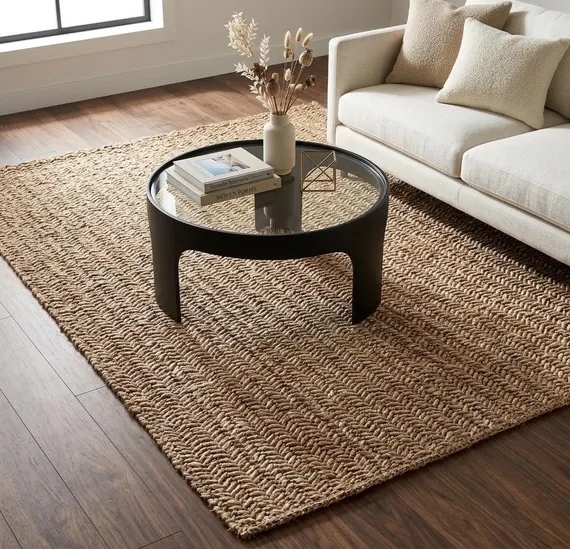
Natural materials have an ability to make an interior feel warmer without adding unnecessary decoration. Timber brings grain, linen introduces softness, wool adds comfort and woven fibres create texture.
Among the less commonly discussed natural flooring materials is abaca, a plant fibre that can be woven into distinctive rugs and floorcoverings.
Abaca Rugs can be particularly interesting for interiors where the objective is to introduce natural texture without relying on strong colours or complicated patterns. Their woven appearance can work with contemporary, coastal, minimalist and more traditional interiors, depending on how the surrounding space is designed.
As with any natural floorcovering, however, appearance is only one part of the decision. Understanding where abaca works well, how it should be maintained and how it compares with other natural fibres can help homeowners and designers make a more informed choice.
What Is Abaca?
Abaca is a natural fibre obtained from the leaves of the abaca plant, which is sometimes known as Manila hemp.
Despite the name “hemp” being associated with the plant, abaca is a different botanical material. It has traditionally been valued for its strength and has been used in ropes, cordage, textiles and other products.
When used in interiors, the fibre can be woven to create rugs and other decorative floorcoverings.
The result is a material with a naturally structured appearance.
The individual fibres and weaving pattern contribute to its visual character, making the rug look less manufactured than many synthetic alternatives.
Why Natural Texture Matters
Texture has become increasingly important in contemporary interior design.
Many modern rooms use relatively simple colour palettes. Walls may be white or neutral, furniture may have clean lines and flooring may be understated.
Without texture, however, such interiors can sometimes feel visually flat.
A natural rug can solve this without introducing strong colour.
Abaca can add another tactile layer to the room, creating contrast against smooth surfaces such as polished timber, stone, glass and painted cabinetry.
This makes it useful for interiors where subtle detail is more important than bold decoration.
Abaca Rugs in Living Rooms
The living room is one of the most versatile places to use a natural rug.
An abaca rug can help bring together a sofa, chairs and coffee table while adding texture underneath the furniture.
Its natural appearance works particularly well with timber and neutral upholstery.
For a contemporary living room, an abaca rug can soften clean architectural lines.
For a more relaxed interior, it can complement linen cushions, timber furniture and woven accessories.
The important consideration is proportion.
A rug should be large enough to relate visually to the main furniture grouping. If it is too small, the seating arrangement can appear disconnected.
Creating a Natural Focal Point
A rug does not necessarily need a dramatic pattern to become a focal point.
Texture can perform the same function in a quieter way.
An abaca rug can draw attention through its weave and natural variation rather than through bright colours.
This can be particularly effective in rooms where artwork, furniture or architectural features already provide visual interest.
Instead of competing with those elements, the rug supports them.
Abaca in Bedrooms
Bedrooms are often designed around comfort and calm.
Natural fibres can contribute to that atmosphere by introducing subtle texture and warmth.
An abaca rug can be positioned beneath a bed or used as a defined floor feature beside it.
The choice of rug size should take the bed, bedside tables and available circulation space into account.
A larger rug can provide stronger visual continuity, while a smaller rug may work where floor space is limited.
As with any natural fibre, the specific construction should be assessed according to the intended use.
Home Offices and Study Areas
A home office doesn’t necessarily need to look like a commercial workspace.
Many people prefer their study area to blend into the rest of their home.
Natural materials can help achieve this.
An abaca rug beneath or around a desk can visually establish the workspace while maintaining a residential character.
Timber desks, neutral cabinetry and simple lighting can work naturally with the woven texture of the rug.
Where an office chair with wheels is used frequently, however, the rug should be assessed for suitability. Continuous chair movement can create concentrated wear that differs from normal walking traffic.
Working with Coastal Interiors
Abaca is naturally suited to interiors that use organic materials.
This makes it a natural choice for coastal-inspired spaces, particularly when paired with timber, linen, rattan and neutral colours.
However, an abaca rug does not need to make a room look overtly coastal.
The surrounding design determines the overall impression.
Combine it with pale timber and soft fabrics and the room may feel relaxed and coastal.
Pair it with dark timber, structured furniture and modern lighting and it can become part of a more sophisticated contemporary interior.
Contemporary and Minimalist Spaces
Minimalist interiors benefit from carefully selected textures.
When decoration is limited, the floor becomes more important because large areas of the room may otherwise remain visually plain.
An abaca rug can introduce texture without disrupting a restrained colour palette.
A neutral rug against a simple timber or hard floor can create enough contrast to define the space while keeping the overall design understated.
This is particularly useful in apartments and modern homes where simplicity is an important design objective.
Natural Colour Variation
One characteristic of natural fibre rugs is variation.
Abaca fibres can display differences in tone and texture, depending on the fibre and weaving process.
This means the finished rug may not look completely uniform.
For some homeowners, this natural variation is exactly what makes the material attractive.
It gives the rug a sense of authenticity.
Others may prefer a highly consistent manufactured appearance.
Neither preference is necessarily right or wrong. The important thing is to understand what natural materials look like before installation.
Choosing Between Abaca and Other Natural Fibres
Abaca is only one of several natural fibres available for interior flooring.
Each has different characteristics.
Sisal Rugs are often selected where a firmer and more structured natural texture is desired.
Jute Rugs generally have a softer and more relaxed woven appearance.
Seagrass Carpets offer their own distinctive natural texture and visual character.
Natural COIR Floorcovering can be considered for particular high-wear applications.
There are also combinations such as Natural JUTE & WOOL Carpets, which bring together characteristics from two different fibres.
The best choice depends on the room and how it will be used.
Matching the Rug to the Room
A common mistake is choosing flooring material based entirely on appearance.
Instead, start with the room.
Ask how much traffic it receives.
Consider whether people regularly enter from outdoors.
Think about pets, children, furniture movement and cleaning.
Consider whether the rug will sit beneath heavy furniture.
Then think about the aesthetic.
A material that is perfect for a quiet bedroom may not be the right choice for a busy entrance.
This simple process can prevent many flooring problems.
Abaca Rugs in Dining Areas
Dining areas can be visually enhanced by a well-proportioned rug.
The rug can connect the dining table and chairs while creating a defined zone within a larger room.
However, chair movement should be considered carefully.
When chairs are pulled backwards, all four legs should ideally remain on a suitable portion of the rug rather than repeatedly catching on the edge.
Food and drink spills are another consideration.
A natural rug placed under a dining table needs a maintenance approach appropriate to its material.
Prompt attention to spills is particularly important.
Using Abaca in Open-Plan Interiors
Open-plan rooms can benefit from multiple textures.
An abaca rug can establish a seating area within a larger space without requiring a physical partition.
This can make the room feel organised while retaining its open character.
For example, the same flooring may continue through the room while an abaca rug visually identifies the lounge area.
Furniture placement then becomes part of the zoning strategy.
This is particularly useful in apartments and contemporary homes where the kitchen, dining and living areas share one large floor.
Custom Abaca Rugs
Not every room can be served effectively by a standard rug size.
An unusually large living room, long dining area or irregularly shaped space may require a more specific solution.
Custom Rugs can allow the dimensions to be planned around the room and furniture.
This is especially useful when the rug needs to sit beneath a particular furniture arrangement.
The objective is not simply to create a larger rug.
It is to achieve the correct proportions.
Natural Flooring and Layering
Layering natural materials can create a more sophisticated interior.
An abaca rug can be placed over another suitable natural floorcovering to create contrast and define an area.
For example, a broader natural floor can provide the base, while an abaca rug establishes the main seating zone.
This technique allows different textures to coexist without making the room feel overly decorated.
The materials should still complement each other in colour and scale.
Maintenance and Everyday Care
Natural rugs should be cared for according to their specific product recommendations.
Regular vacuuming helps remove dust and everyday debris.
Furniture should not be dragged across the surface.
Spills should be dealt with as soon as practical using an appropriate method.
Excessive moisture should be avoided unless the manufacturer’s care instructions specifically allow it.
This is particularly important with natural fibres because they can respond differently to water and cleaning chemicals compared with synthetic flooring.
The Importance of Placement
Even a high-quality rug can perform poorly if it is placed in the wrong location.
An abaca rug may be well suited to a decorative living area but less suitable for a location exposed to constant moisture or unusually heavy traffic.
Placement should therefore be part of the purchasing decision.
Think about what happens in the room every day rather than simply how the room looks when nobody is using it.
A practical floorcovering should work with everyday life.
Natural Materials and Interior Longevity
One reason natural materials remain popular is their ability to age as part of an interior rather than constantly appearing trend-driven.
A neutral woven rug can work with changing furniture.
If the sofa is replaced in five years, the natural rug may still complement the new design.
This makes neutral natural flooring particularly useful for homeowners who don’t want to redesign their interiors every few years.
A timeless material can provide continuity as decorative trends change.
When Abaca May Be the Right Choice
Abaca Rugs can be considered when an interior needs:
- Natural woven texture
- A subtle decorative feature
- A neutral foundation for furniture
- An organic alternative to highly manufactured-looking rugs
- A material that works with timber and other natural finishes
- A way to define a zone within an open-plan room
The material should still be assessed according to traffic, moisture, furniture and maintenance requirements.
Looking at the Complete Interior
A rug should never be considered separately from the rest of the room.
Look at the flooring underneath it.
Consider the wall colour.
Observe the furniture finishes.
Think about natural light throughout the day.
Consider how the rug will look from different parts of the room.
Natural materials can change character depending on lighting and surrounding colours.
A rug that looks subtle in one environment may become much more prominent in another.
Floorspace Abaca Rugs offer an understated way to introduce natural texture into contemporary Australian interiors. Their woven appearance can complement timber, linen, leather, stone and other natural finishes while providing enough visual interest to prevent neutral rooms from feeling flat. They can be particularly effective in living rooms, bedrooms, studies and selected open-plan spaces where texture and proportion are important design considerations.
For homeowners, interior designers and businesses across Melbourne and surrounding suburbs, Floorspace offers a range of natural flooring solutions, including Abaca Rugs, Sisal, Jute, Seagrass and Custom Rugs. Selecting the right natural fibre is ultimately about finding the balance between the appearance you want and the practical demands of the space.