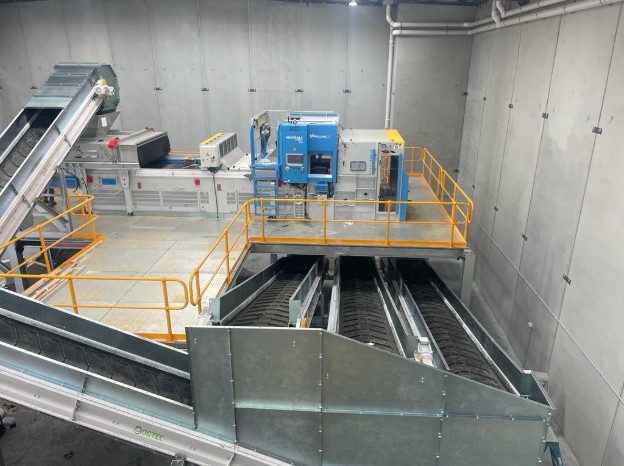
Managing growing volumes of waste requires more than collection and disposal. Modern facilities increasingly focus on sorting, recovering, processing, and reusing materials that would otherwise be sent to landfill. This makes Sydney waste management an important consideration for municipalities, commercial facilities, construction operations, and industrial sites seeking efficient ways to handle different waste streams.
Why Waste Streams Need Different Solutions
Waste is not a single material. Municipal waste can contain food, paper, cardboard, plastics, metals, and other household materials, while construction and demolition waste may contain timber, aggregates, metals, and other building materials. Commercial and industrial facilities can generate additional streams such as textiles, glass, organics, and plastics.
Because materials have different physical characteristics, processing systems need to be designed accordingly. OGTEC identifies municipal, construction, industrial, commercial, green, plastic, and commingled waste among the streams that can require dedicated processing approaches.
Separating materials into appropriate streams can improve the potential for recovery and reduce contamination between recyclable materials.
The Role of Sorting Technology
Sorting is a central stage in modern recycling facilities. Mixed materials can pass through different pieces of equipment designed to separate them according to size, weight, composition, or other characteristics.
Screens can separate materials by size or shape, while magnets can extract ferrous metals. Eddy current separators can recover non-ferrous metals, and optical sorting systems can use near-infrared technology to identify particular materials and direct them into separate streams.
These technologies can work together as part of a larger processing line rather than operating independently. The configuration depends on the incoming material, desired recovery rates, contamination levels, and required output quality.
Improving Commercial and Industrial Processing
For businesses, waste management in Sydney, Australia can involve significantly more than routine waste collection. Commercial and industrial facilities may need systems capable of handling substantial volumes while maintaining consistent processing.
Integrated systems can include bag openers, conveyors, shredders, screens, optical separators, windshifters, balers, and automated control systems. Each component can perform a specific function within the overall process.
System design should account for current waste volumes as well as potential changes in the composition or quantity of incoming material. A flexible processing line can make it easier to accommodate variations without requiring an entirely new facility.
Shredding and Size Reduction
Shredders are commonly used when incoming materials need to be reduced in size before further processing. Primary shredders can handle larger material, while secondary shredders can produce smaller fractions suitable for subsequent stages.
Different waste streams require different shredding approaches. Plastic, timber, green waste, construction materials, and other feedstocks can vary significantly in density, size, moisture, and composition. Equipment selection therefore needs to reflect the characteristics of the material being processed.
Proper size reduction can also make downstream separation more consistent by creating material fractions that are easier for screens or other sorting technologies to process.
Organics and Food Waste Recovery
Organic materials represent another important waste stream. Food and garden organics can be processed through systems designed to remove contaminants and prepare suitable material for composting or other recovery processes.
FOGO processing can include sizing equipment, pneumatic separation, magnets, and final sorting stages. Once unwanted materials have been removed, the organic fraction can undergo further treatment before being used in applications such as landscaping or agriculture.
The quality of the final organic material depends heavily on contamination control throughout the process.
The Growing Role of Automation
Automation can improve consistency and reduce the amount of manual intervention required within a processing facility. Electrical and automation systems can monitor equipment, control material movement, and adjust operations according to processing requirements.
Artificial intelligence is also being incorporated into some modern facilities to monitor material flows and equipment performance. Robotic technology can assist with targeted picking and automated sorting, potentially improving precision and reducing repetitive manual tasks.
Automation does not eliminate the need for skilled personnel. Instead, it changes the responsibilities of operators toward monitoring, maintenance, troubleshooting, and system management.
Designing for Long-Term Performance
An effective waste processing facility needs to consider maintenance as well as initial installation. Equipment accessibility, component durability, system layout, safety, and future upgrades can all influence long-term performance.
A properly planned system can also be adapted as waste composition changes. OGTEC describes its approach as covering consultation, design, manufacturing, installation, and ongoing support, illustrating how waste-processing projects can involve multiple stages rather than simply purchasing individual machines.
Conclusion
Modern waste processing focuses increasingly on recovering useful materials rather than treating every discarded item as residual waste. For organisations evaluating waste management in Sydney, understanding the waste streams involved and matching them with appropriate processing technologies can provide a practical starting point for developing an efficient recycling system.