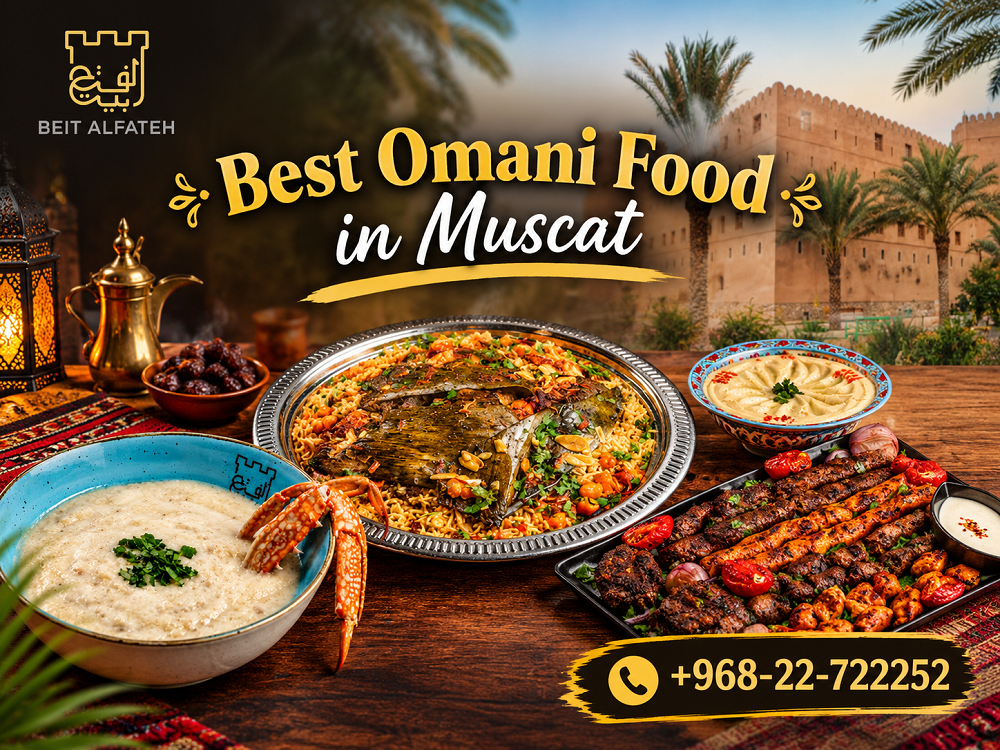
Muscat is a city where the Arabian Sea meets rugged mountains, and its food tells the same story of trade, tradition, and generous hospitality. Omani cuisine is gentler than many of its neighbours, built on slow cooking, fragrant spices, and fresh ingredients rather than fiery heat. If you are landing in the capital for the first time, knowing where to begin can feel overwhelming. This guide walks you through the dishes, drinks, and dining spots that make up the best Omani food in Muscat, so you can eat like a local from your very first day.
Understanding Omani Cuisine
Omani cooking reflects centuries of maritime trade with India, Persia, and East Africa. Expect rice, tender meat, fresh fish, dates, and a signature spice blend called bizar, which combines turmeric, cumin, coriander, and cardamom. Meals are communal, served on large platters meant for sharing. Because chili is used sparingly, most travellers find the flavours warm and comforting rather than overpowering.
Must-Try Dishes for First-Timers
1. Shuwa
Shuwa is Oman’s celebratory dish. Lamb or goat is marinated in spices, wrapped in banana or palm leaves, and slow-cooked in an underground sand oven for up to two days. The result is meltingly tender meat with deep, smoky flavour. Traditionally prepared for Eid, it is now available at many Muscat restaurants, so you do not have to wait for a festival to try it.
2. Majboos
Often called the national comfort food, majboos is spiced rice cooked with chicken, lamb, or fish. Dried lime, saffron, and cinnamon give it a fragrant, slightly tangy character. It is an ideal first order because it is familiar, filling, and rarely too spicy.
3. Harees
Harees is a simple, creamy porridge of wheat and meat, cooked for hours until smooth. It is especially popular during Ramadan, but many traditional restaurants serve it year-round. Ask for it topped with a little melted ghee for the full experience.
4. Mishkak
For a quick street-food fix, order mishkak. These marinated skewers of beef, chicken, or lamb are grilled over charcoal and served with flatbread and a tangy sauce. You will find them at roadside stalls and casual eateries, especially in the evening.
5. Fresh Seafood
With a long coastline, Oman takes its fish seriously. Grilled kingfish, tuna, and lobster are all popular, often seasoned simply with lemon and spices. Visit the Mutrah Fish Market in the morning to watch the day’s catch arrive, then head to a nearby restaurant to have your pick cooked to order.
Sweet Endings and Traditional Drinks
No Omani meal is complete without halwa, a glossy, gelatinous sweet made from sugar, ghee, rosewater, cardamom, and nuts. It is served in small portions and is deliciously rich. Pair it with kahwa, Omani coffee flavoured with cardamom and sometimes saffron, poured into tiny cups by your host. Dates are usually served alongside, and it is polite to accept at least one cup.
Where to Find Authentic Flavours
Your best bet for the best Omani food in Muscat is to mix traditional restaurants with local casual spots. Here are a few areas and places to explore:
- Mutrah Corniche and Souq: Wander the historic market, then dine at a waterfront restaurant such as Bait Al Luban, known for Omani classics in a heritage setting.
- Al Qurum: This district offers well-regarded traditional dining, including Bait Al Naham, where you can sample a range of local dishes on one table.
- Kargeen Caffe: A relaxed garden-style spot that pairs Omani-inspired dishes with shisha and a laid-back atmosphere.
- Local eateries in Ruwi and Seeb: Smaller, no-frills restaurants serve some of the most authentic majboos and mishkak at budget-friendly prices.
Opening hours and menus can change, so check before you go, especially during Ramadan when daytime dining is limited.
Practical Tips for First-Time Diners
- Eat with your right hand if you are sharing from a communal platter, as this is the traditional custom.
- Order to share. Portions are generous, and trying several dishes is the best way to explore.
- Dress modestly when visiting traditional restaurants and local markets.
- Try the local hospitality. If you are invited into a home, accepting coffee and dates is a warm gesture of respect.
- Ask for recommendations. Omanis are proud of their cuisine and are usually happy to suggest their favourite dishes.
Final Thoughts
Exploring Omani cuisine is one of the most rewarding ways to understand the country’s culture. From slow-cooked shuwa to fragrant majboos and sweet halwa served with cardamom coffee, every meal reflects a story of heritage and hospitality. Use this guide as your starting point, stay curious, and let your appetite lead the way. With a little planning, you will discover the best Omani food in Muscat and leave with flavours and memories that last long after your trip ends.