Horror games come in many forms, but two of the most recognizable styles are psychological horror games and survival horror games. Although both aim to make players feel fear, tension, and uncertainty, they approach those emotions in very different ways. Psychological horror usually focuses on the mind, perception, atmosphere, and emotional discomfort, while survival horror emphasizes danger, limited resources, exploration, and the struggle to stay alive.
Understanding the difference between these two styles can help players choose games that match their preferred type of horror experience.
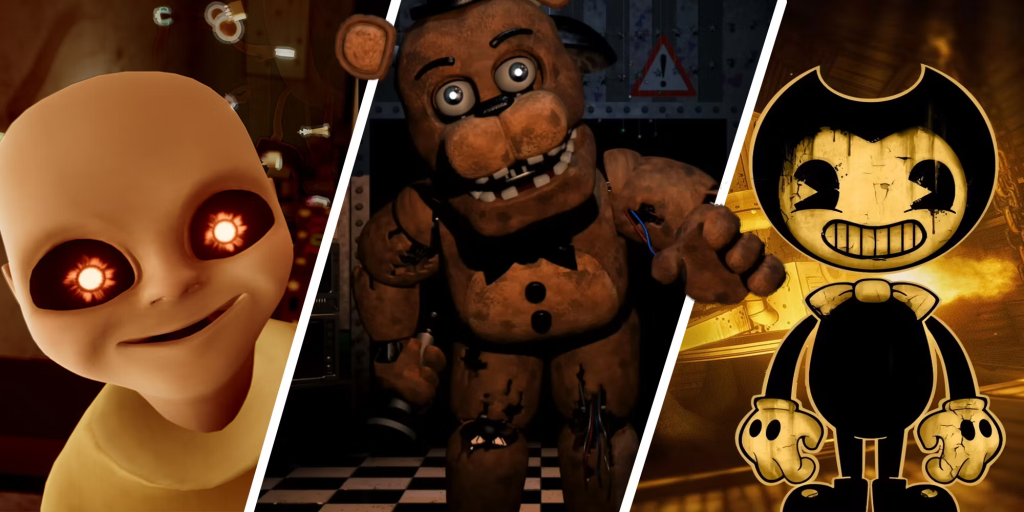
What Are Psychological Horror Games?
Psychological horror games are designed to create fear through the player’s thoughts and emotions. Instead of relying primarily on monsters or combat, these games often explore themes such as isolation, paranoia, trauma, guilt, grief, identity, and distorted reality.
A psychological horror game may make players question whether what they are seeing is real. The environment might change unexpectedly, familiar locations may become disturbing, and characters may behave in unpredictable ways. Sometimes the game deliberately provides incomplete information, forcing players to interpret events for themselves.
This uncertainty is one of the most powerful elements of psychological horror. When players cannot understand exactly what is happening, their imagination can become part of the horror.
What Are Survival Horror Games?
Survival horror games focus more directly on survival in a dangerous environment. Players typically explore threatening locations while dealing with enemies, puzzles, limited ammunition, health items, weapons, or other resources.
A major feature of survival horror is vulnerability. Even when the player has a weapon, fighting may not always be the best option. Running away, hiding, conserving ammunition, or carefully planning the next move can be essential.
Classic survival horror experiences often combine exploration, puzzle solving, resource management, and combat. Modern games may expand these mechanics with stealth, crafting, larger environments, or more sophisticated enemy behavior.
The Main Difference in How They Create Fear
The biggest difference between psychological horror and survival horror is the source of the fear.
Psychological horror asks questions such as: Can I trust what I see? What is happening to this character? Is reality being distorted?
Survival horror is more likely to ask: Where is the enemy? Do I have enough ammunition? Should I fight or run? Can I survive the next encounter?
Psychological horror therefore tends to create internal fear, while survival horror often creates immediate physical danger.
However, the two styles are not mutually exclusive. A single game can use psychological horror elements while also relying heavily on survival mechanics.
Atmosphere and Setting
Atmosphere is particularly important in psychological horror. Developers may use darkness, silence, strange sounds, unsettling music, unusual architecture, and subtle environmental details to make ordinary locations feel threatening.
Instead of constantly showing the source of danger, the game may leave players waiting for something to happen. A quiet hallway can become frightening simply because the player expects something to be there.
Survival horror also uses atmosphere, but its environments often serve a practical purpose. Players may need to explore abandoned buildings, hospitals, laboratories, forests, underground facilities, or other dangerous locations while searching for supplies and solving puzzles.
The environment becomes both a source of fear and a gameplay space.
Combat and Player Vulnerability
Combat is another important distinction.
Psychological horror games may minimize combat or remove it entirely. This can make players feel powerless because they cannot simply defeat whatever threatens them. Avoidance, exploration, and understanding the story become more important than fighting.
Survival horror games generally allow some form of combat, although weapons are often limited or deliberately difficult to use. Scarce ammunition can turn an ordinary enemy encounter into a stressful decision.
A player might have enough resources to defeat one enemy but not enough to handle several more. This creates tension even when the player technically has a weapon.
Storytelling and Character Development
Psychological horror often places greater emphasis on character psychology and narrative interpretation. The protagonist may be dealing with memories, fears, relationships, or personal trauma. The horror can therefore be connected directly to the character’s emotional state.
Storytelling may also be deliberately ambiguous. Players might need to interpret conversations, environmental clues, documents, dreams, or symbolic events to understand what is really happening.
Survival horror can also feature deep storytelling, but its narrative is frequently connected to the player’s physical journey. Discovering a new area, finding important items, solving puzzles, and encountering enemies can gradually reveal the larger mystery.
Pacing and Tension
Psychological horror often uses slow pacing. Long periods without obvious danger can make players increasingly uncomfortable. The game may allow tension to build gradually before delivering a disturbing event.
This approach relies heavily on anticipation. The player may become frightened simply because they know something could happen at any moment.
Survival horror tends to alternate between exploration, puzzle solving, resource management, and encounters with enemies. Its pacing can therefore be more varied. A quiet exploration section may suddenly turn into a chase or combat sequence.
Both approaches can be effective, but they create different rhythms.
Which Style Is Scarier?
There is no universal answer because fear is highly subjective.
Players who enjoy mysteries, disturbing stories, ambiguity, and emotional tension may prefer psychological horror games. These experiences can remain unsettling even after the game ends because players continue thinking about the meaning behind what they experienced.
Players who prefer action, exploration, resource management, and direct threats may enjoy survival horror more. The tension comes from having to make difficult decisions while facing immediate danger.
Some of the strongest horror games combine both approaches. They may provide weapons and survival mechanics while also using psychological themes, disturbing storytelling, and unreliable perceptions.
Psychological Horror vs Survival Horror: A Quick Comparison
| Feature | Psychological Horror | Survival Horror |
|---|---|---|
| Main source of fear | Mind and uncertainty | Physical danger and survival |
| Combat | Often limited or absent | Usually present |
| Resources | Usually less important | Often extremely important |
| Story | Psychological and symbolic | Mystery, survival, and exploration |
| Pacing | Often slow and atmospheric | Variable and encounter-driven |
| Player experience | Unease and uncertainty | Tension and vulnerability |
| Common focus | Perception, trauma, isolation | Enemies, exploration, resources |
Can a Game Be Both?
Absolutely. The distinction between psychological horror and survival horror is useful for understanding design, but many games combine both styles.
A game might give players limited ammunition and dangerous enemies while also questioning the protagonist’s memories or perception. In this case, the player experiences both physical vulnerability and psychological uncertainty.
This combination can be especially effective because different forms of fear reinforce one another. A player who is already uncomfortable because they do not understand reality may become even more stressed when they also have limited resources and a dangerous enemy nearby.
Final Thoughts
Psychological horror games and survival horror games share the goal of creating fear, but they achieve it through different methods. Psychological horror focuses on the mind, uncertainty, atmosphere, and emotional discomfort. Survival horror emphasizes survival, resource management, exploration, enemies, and difficult decisions.
Neither approach is inherently better. The best choice depends on what kind of experience a player wants. If you enjoy unsettling stories and questioning reality, psychological horror may be the better fit. If you prefer managing resources and trying to survive dangerous encounters, survival horror may be more appealing.
For many horror fans, however, the most memorable experiences are those that combine both. When psychological tension is supported by survival mechanics, a game can create fear that is both deeply personal and immediately threatening.