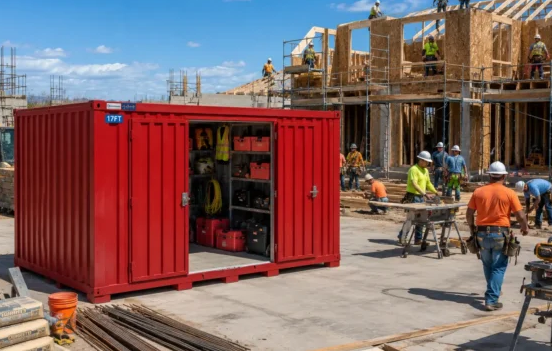
Space shortages can affect homes, construction sites, retail properties, workshops, farms, and many other types of facilities. Garages become crowded, tools need protection from the weather, seasonal items take up valuable indoor space, and businesses may need temporary room for equipment or inventory. In these situations, portable storage buildings can provide a flexible alternative to permanent construction. Their appeal comes from the ability to create additional secure storage without committing to a fully fixed structure. Depending on the design, they may also be assembled in locations with restricted access, moved when requirements change, and configured for different residential or commercial uses.
What Are Portable Storage Buildings?
Portable storage buildings are structures designed to provide enclosed storage while offering greater flexibility than traditional permanent buildings. They can be manufactured from steel, wood, or other durable materials and may be delivered fully assembled or supplied in modular sections for on-site installation.
Flat-pack designs are particularly useful when access is limited. Instead of transporting a complete structure into a backyard or worksite, individual panels can be carried through narrow entrances and assembled at the final location.
This can make storage possible in spaces that may be difficult to reach with large trucks, cranes, or preassembled sheds.
Why Are Portable Storage Buildings Useful for Homes?
Residential storage needs often increase gradually. Gardening equipment, bicycles, tools, camping gear, sports equipment, seasonal decorations, and outdoor furniture can eventually overwhelm a garage or utility area.
Adding portable storage buildings can help homeowners separate outdoor and seasonal belongings from frequently used indoor space.
This type of storage can be particularly useful when:
- Garage space is needed for vehicles
- Garden equipment needs weather protection
- Bicycles and recreational gear are difficult to organise
- Seasonal items are used only a few times each year
- Home renovations temporarily reduce indoor storage
Dedicated storage also makes organisation easier because similar items can be kept together instead of being spread across several rooms.
How Does Material Choice Affect Durability?
The material used in a storage structure influences strength, weather resistance, maintenance requirements, and lifespan.
Steel is commonly used because it offers good structural strength and resistance to impact. Galvanised or coated steel can provide additional protection against corrosion and moisture exposure.
Timber structures may offer a traditional appearance but can require more regular maintenance to protect against moisture, insects, and weathering.
When evaluating portable storage buildings, buyers should consider local climate conditions as well as how long the structure is expected to remain outdoors.
Roof design, drainage, ventilation, coating quality, and door seals can all influence how well stored items are protected.
Can Portable Storage Work for Commercial Sites?
Yes. Portable storage is widely applicable in commercial and industrial environments.
Construction contractors may use storage structures for tools, materials, and equipment. Retailers may need temporary room for seasonal stock. Property managers may require secure areas for maintenance supplies, while event businesses may need flexible storage that can be relocated between locations.
Portable structures may also be adapted for offices, kiosks, workshops, or segmented storage compartments depending on the system.
Because commercial requirements are often more demanding, businesses should examine factors such as floor capacity, access width, security, ventilation, shelving, and equipment handling before selecting a model.
How Do Portable Buildings Help With Changing Storage Needs?
One of the main advantages of portable storage buildings is adaptability.
Storage requirements rarely remain identical over time. A family may accumulate more outdoor equipment, while a business may expand, relocate, or begin handling different inventory.
Modular systems can respond to these changes more easily than fixed construction in some situations. Certain structures can be disassembled and moved, while others can be reconfigured or replaced with larger units.
This flexibility can be useful for temporary projects as well as long-term storage because the structure does not necessarily have to remain permanently tied to one location.
What Size Storage Building Should You Choose?
Choosing the correct size requires more than measuring the largest item that needs to be stored.
Users should think about how they will move through the building, whether shelves will be installed, and how frequently different items will need to be accessed.
A structure that technically holds everything may still be frustrating if belongings need to be removed every time an item at the back is needed.
Before choosing portable storage buildings, consider:
- Current storage volume
- Expected future storage
- Door width
- Interior walking space
- Shelving requirements
- Equipment dimensions
- Available yard or site area
Leaving some unused capacity can make the storage area easier to manage over time.
How Important Is Security?
Security is especially important when storing tools, machinery, bicycles, inventory, or valuable equipment.
The building itself should provide a sturdy enclosure, but locking hardware also deserves careful attention. Reinforced doors, protected locking points, quality padlocks, and secure hinges can make unauthorised access more difficult.
Location can also influence security. Placing a storage building in a visible, well-lit, or fenced area may provide additional deterrence.
For commercial sites, access control procedures and inventory records can supplement the physical security of the structure.
What Should You Check Before Installation?
Before installing portable storage buildings, examine the site carefully.
The ground should generally be stable and level so the structure sits properly and doors operate as intended. Drainage is another important consideration because water should not regularly collect around the base.
Users should also check local planning rules, property restrictions, utility locations, and any requirements that could apply to accessory structures.
Access routes should be measured in advance, especially when a structure will be assembled in a backyard, narrow side passage, or confined worksite.
How Can Storage Space Be Organised Efficiently?
Good organisation can significantly increase usable capacity.
Shelving helps keep boxes and smaller items off the floor, while hooks and wall-mounted systems can make better use of vertical space. Heavy or frequently used items are usually easier to access when stored near the entrance and at lower levels.
Grouping belongings by purpose can also help. Gardening tools, sports equipment, seasonal decorations, and maintenance supplies should ideally have clearly defined areas.
Labelling containers can reduce time spent searching and help prevent unnecessary duplicate purchases.
Conclusion
Flexible storage can solve a wide range of space problems for both homeowners and businesses. The most effective solution is one that matches available space, provides suitable weather protection, allows convenient access, and offers enough capacity for future needs. When comparing portable storage units, users should look beyond basic dimensions and consider materials, security, ventilation, site conditions, accessibility, and the possibility of relocating the structure later. Well-selected portable storage buildings can provide an organised and adaptable way to protect equipment, inventory, seasonal items, and household belongings. By planning the site and interior layout carefully, users can gain useful extra space without relying entirely on permanent construction or off-site storage.