Electricity is a fundamental necessity in modern life, powering everything from household appliances to industrial machinery. However, electrical systems come with risks, including overloads, short circuits, and electrical fires. This is where miniature circuit breakers (MCBs) play a crucial role in providing safety and preventing damage to electrical circuits.
An MCB connection ensures that an electrical system is protected from excessive current and short circuits by automatically disconnecting the circuit in case of faults. Unlike traditional fuses, MCBs do not require replacement after tripping; they can be reset and used again, making them a cost-effective and reliable solution.
In this comprehensive guide, we will discuss miniature circuit breakers, their working principles, types, installation processes, and benefits. Whether you are an electrical engineer, contractor, or homeowner looking to understand MCBs, this article will provide all the information you need.
What Are Miniature Circuit Breakers (MCBs)?
A miniature circuit breaker (MCB) is an electrical protection device designed to automatically switch off an electrical circuit when it detects an overload or short circuit. It acts as a switch that trips when an unsafe current level is detected, preventing potential electrical hazards.
Key Features of MCBs:
Automatic Operation: Instantly trips when detecting a fault.
Resettable: Unlike fuses, MCBs can be manually reset after tripping.
Fast Response: Reacts quickly to prevent circuit damage.
Compact Size: Fits easily in residential and industrial electrical panels.
Durability: Long-lasting and requires minimal maintenance.
How Miniature Circuit Breakers Work
The working principle of an MCB is based on two primary mechanisms:
Thermal Protection (Overload Protection)
MCBs contain a bimetallic strip that expands when exposed to excessive current.
When the strip heats up due to an overload, it bends and triggers the switch to disconnect the circuit.
Once the system cools down, the MCB can be manually reset to restore the connection.
Magnetic Protection (Short Circuit Protection)
A magnetic coil inside the MCB generates a strong magnetic field when an excessive current surge occurs due to a short circuit.
This force instantly trips the switch, cutting off the current flow to prevent further damage.
The reaction happens in milliseconds, ensuring quick and effective protection.
Types of Miniature Circuit Breakers (MCBs)
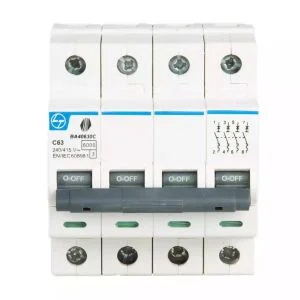
MCBs are classified based on their tripping characteristics, which define how quickly they respond to current surges.
Type B MCB
Trips at 3 to 5 times the rated current.
Used in residential and light commercial applications.
Ideal for lighting and small appliance circuits.
Type C MCB
Trips at 5 to 10 times the rated current.
Suitable for commercial and industrial applications.
Commonly used in motors, air conditioners, and large appliances.
Type D MCB
Trips at 10 to 20 times the rated current.
Designed for heavy-duty industrial applications.
Ideal for welding machines and transformers.
Type K MCB
Sensitive to sudden power surges.
Used for capacitor banks and inductive loads.
Type Z MCB
Highly sensitive and trips at 2 to 3 times the rated current.
Best for delicate electronic devices.
Understanding MCB Connection: Wiring and Installation
A proper MCB connection ensures the safety, efficiency, and longevity of electrical systems. Below is a step-by-step guide to mcb installing and wiring an MCB.
Step 1: Choosing the Right MCB
Before installation, determine:
Load capacity (amperage rating).
Type of circuit (residential, commercial, or industrial).
Trip curve characteristics based on electrical load.
Step 2: Switch Off the Main Power Supply
To avoid electrical hazards, turn off the main circuit breaker before installation.
Step 3: Mount the MCB in the Distribution Box
Fit the MCB onto a DIN rail inside the electrical panel.
Ensure the MCB is securely fixed to prevent loose connections.
Step 4: Connect the Wires
Live Wire (L): Connect the input terminal of the MCB to the phase wire.
Neutral Wire (N): Attach the neutral wire to the neutral bar.
Earth Wire (E): Secure the grounding wire to prevent shocks.
Step 5: Test the MCB Connection
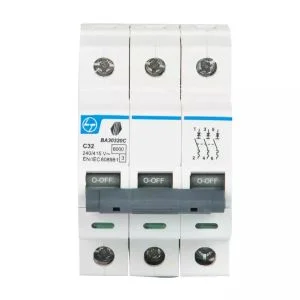
Restore power and check voltage readings using a multimeter.
Manually switch the MCB on and off to verify its functionality.
Advantages of Using Miniature Circuit Breakers
Enhanced Safety
MCBs protect against electrical fires, shocks, and damage caused by overloads and short circuits.
Quick Restoration
Unlike fuses, MCBs can be reset after tripping, eliminating the need for replacements.
Reliable and Durable
MCBs last longer and require minimal maintenance.
Cost-Effective
They save money by preventing damage to electrical devices and eliminating frequent fuse replacements.
Environmentally Friendly
Since MCBs are reusable, they reduce electronic waste.
Common MCB Connection Issues and Troubleshooting
MCB Trips Frequently
Cause: Overloaded circuit.
Solution: Reduce the load by unplugging unnecessary appliances.
MCB Does Not Trip When Expected
Cause: Faulty MCB or incorrect wiring.
Solution: Check wiring connections and replace the MCB if needed.
Loose MCB Connection
Cause: Improper wiring or loose terminal screws.
Solution: Tighten connections and inspect for overheating signs.
Burning Smell from MCB Panel
Cause: Faulty MCB or overheating wires.
Solution: Turn off the power immediately and replace damaged components.
Choosing the Right Miniature Circuit Breaker
When selecting an MCB, consider the following factors:
Current Rating: Choose an MCB based on the maximum current required by the circuit.
Breaking Capacity: Ensure the MCB can handle short-circuit currents.
Trip Curve: Pick an appropriate trip characteristic (B, C, D, K, or Z).
Number of Poles:
Single-Pole (1P): Protects one-phase circuits.
Double-Pole (2P): Protects both phase and neutral.
Triple-Pole (3P): Used for three-phase systems.
Four-Pole (4P): Protects three-phase circuits with neutral.
Conclusion
Understanding the working principle of miniature circuit breakers (MCBs) and ensuring a proper MCB connection is crucial for maintaining a safe and efficient electrical system. Whether protecting a home, commercial space, or industrial plant, MCBs play a vital role in preventing electrical hazards.
For high-quality MCB solutions and expert guidance, Lauritz Knudsen Electrical & Automation offers reliable electrical protection systems tailored to meet modern safety standards. Choosing the right MCB ensures enhanced security, efficiency, and long-term cost savings.